GUEST OPINION: In the ever-evolving digital landscape, organisations worldwide are grappling with the dual challenge of securing expanding hybrid cloud infrastructures while adapting to the rapid acceleration of AI technology. According to the Gigamon 2025 Hybrid Cloud Security Survey, nearly 91 percent of security leaders are recalibrating their security strategies as AI-driven risks escalate, in many cases pushing their existing security frameworks to their limits.
The Rising Threats of AI-Driven Cybersecurity Compromises
AI has become a double-edged sword in cybersecurity. While it offers advancements in automation and machine learning, it’s also enabling adversaries to exploit vulnerabilities faster than traditional defences can keep up. The study highlights a troubling surge in cyberattacks, with Australia seeing a 17 percent increase in breach rates over the past year. More concerning, AI-generated threats are now a top priority for 46 percent of security leaders, who face increasingly sophisticated tactics that outpace conventional security measures.
The findings show that the growing adoption of large language models (LLMs) has led to a surge in targeted attacks on these AI-powered systems, with 56 percent of Australian respondents reporting heightened risks to their LLM deployments. Moreover, AI-powered ransomware attacks have jumped 17 percent year-on-year, indicating a worrying trend where adversaries leverage AI to create faster, more effective attacks, generally using AI to create more sophisticated outreach.
Hybrid Cloud Strains and the Shift in Risk Perception
As AI further fuels digital transformation, the security landscape of hybrid cloud infrastructures is becoming more strained. As such, security leaders are confronting a paradox. Cloud environments are essential for scaling operations, but they also present new attack vectors. In fact, the survey reveals that public cloud environments, once seen as a cost-effective solution, are now viewed as the highest risk area by 70 percent of organisations. This shift in perception has led many to rethink their reliance on public cloud infrastructure, with 70 percent of leaders actively exploring the repatriation of data to private clouds to mitigate these security risks.
The basis of this concern lies in the increased exposure that organisations face as they rely on public cloud services for AI workloads. The lack of comprehensive visibility into cloud environments, especially concerning lateral movement (East-West traffic), is further compounding the issue. According to the survey, 47 percent of security teams struggle to maintain a clear view of their hybrid cloud networks, which increases the difficulty of detecting potential threats before they escalate.
The Call for Complete Visibility: Deep Observability
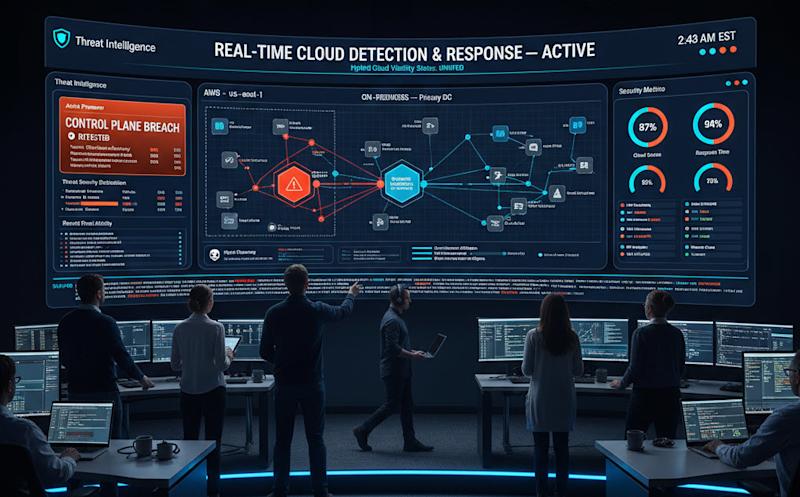
Amid these challenges, some organisations are realising that their traditional security tools are insufficient. The lack of visibility into hybrid cloud environments is identified as a core issue, with 60 percent of Australian leaders expressing a lack of confidence in their current tools to detect breaches effectively. The call for “deep observability” has never been louder. The research underscores the the need for having a comprehensive, real-time view into all data in motion across the enterprise to improve threat detection and response.
Deep observability, combining metadata, network packets, and flow data has become a cornerstone of hybrid cloud security strategies. It provides security teams with actionable insights into their environments, allowing them to spot potential threats in real time. In fact, 89 percent of survey respondents agree that deep observability is critical to securing AI workloads and managing complex hybrid cloud infrastructures. Being proactive with this approach is seen as a vital way to bridge the visibility gap and ensure comprehensive security coverage across hybrid cloud environments.
While AI can exacerbate cybersecurity risks, it also holds the key to a more secure future. Security teams are increasingly leveraging AI to enhance their threat detection capabilities, using it to process vast amounts of data at speeds and accuracy levels well beyond human capabilities. However, this shift introduces new complexities in managing AI tools effectively. Security leaders are faced with balancing the power that AI can bring to threat detection, while preventing it being exploited by bad actors.
The survey’s findings highlight the need for an evolving approach to cybersecurity, one that incorporates AI-driven insights into hybrid cloud security strategies. As organisations continue to scale their operations and adopt AI technologies, security teams must prioritise real-time visibility, robust threat intelligence, and a deep understanding of their hybrid environments.
Looking ahead, organisations should prioritise investments in deep observability to ensure they can manage the evolving threat landscape and protect critical assets. With AI continuing to drive change, security teams must evolve their strategies to stay one step ahead, ensuring that their hybrid cloud environments remain resilient and secure in an increasingly complex threat landscape.