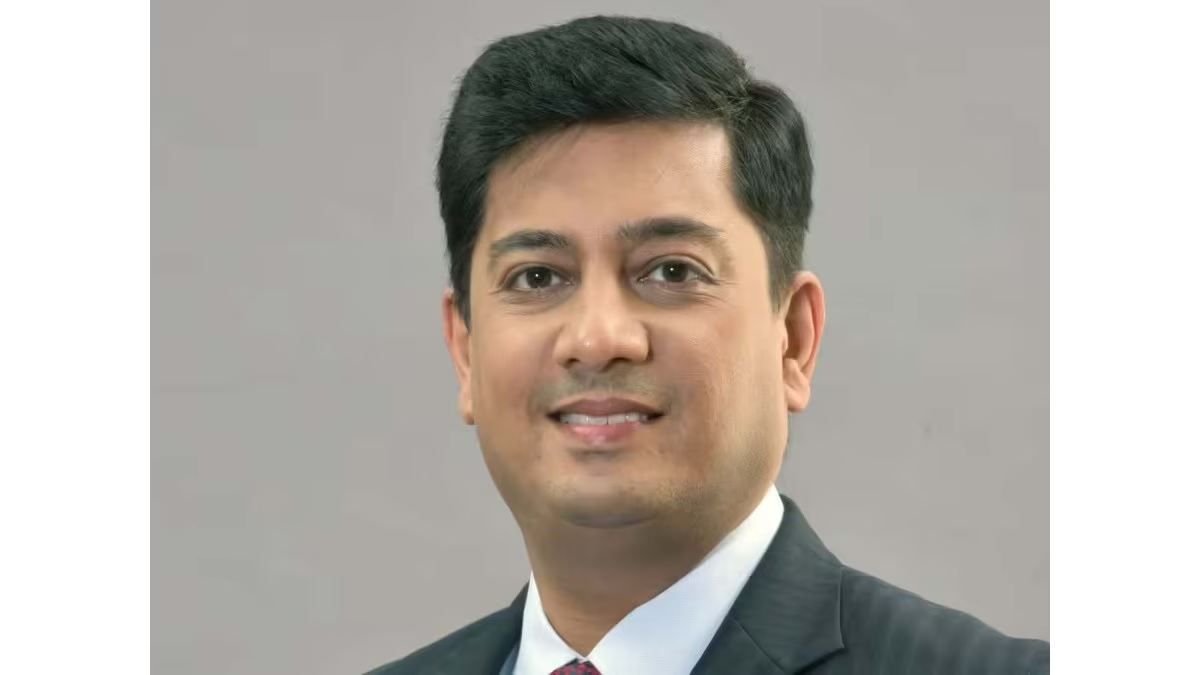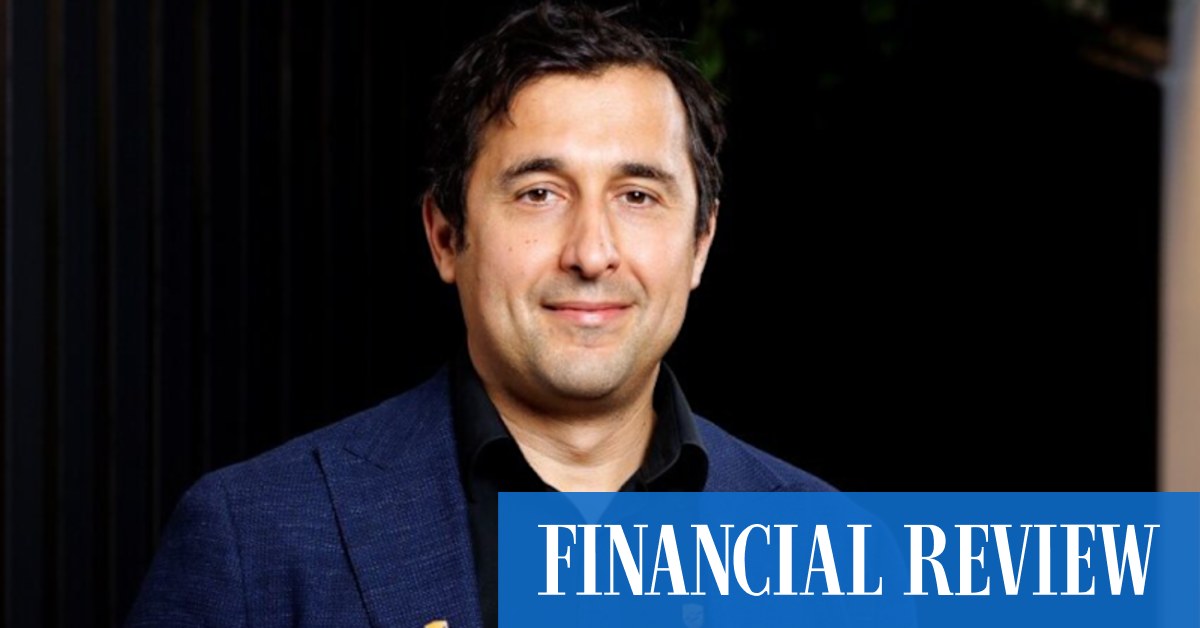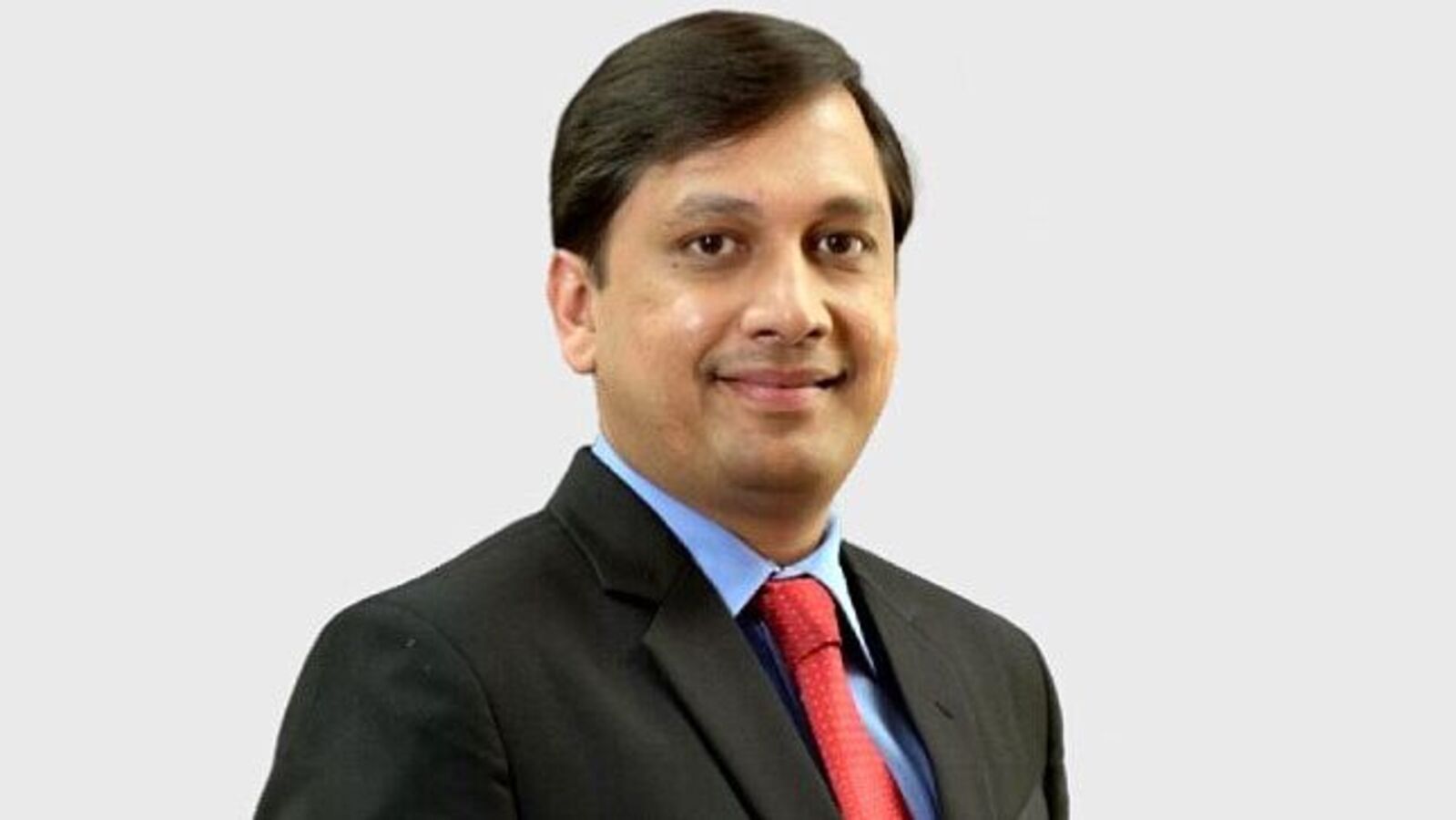
Singhania spent around 15 years at Reliance Mutual Fund, which was later acquired by Nippon Life Insurance Company and rechristened Nippon India Mutual Fund. In 2018, he founded Abakkus to launch and manage Alternative Investment Funds (AIFs) and Portfolio Management Services (PMS). In 2025, it received the Sebi (Securities and Exchange Board of India) licence to launch a mutual fund. Singhania is also keen to enter the Specialised Investment Fund (SIF) space. Excerpts from his conversation with Kayezad E. Adajania:
Your investing journey spans multiple market cycles. Which market beliefs have remained unchanged for you, and which have evolved over time?
Markets evolve—and so do investors. Every investor has certain traits that work for them and that they understand, and they should stick to those. For me, fundamentals—the numbers—are paramount. That is why,at Abakkus, we invest in profit-making companies with a reasonable return on capital employed (ROCE).
As India’s economy expanded to $1 trillion, growth was driven by sectors that were then struggling—steel, metals, jute, textiles, parts of banking and utilities. The next phase, from $1 trillion to $4 trillion, saw a different set of drivers emerge: private-sector banks, Information Technology (IT) services, pharmaceuticals and consumption. These sectors were largely absent in the earlier phase but became central as the economy scaled up.
Now, when we go from $4 trillion to $6 trillion, or to $7-8 trillion, newer sectors will come in, like digital platforms, that will drive growth. Whether we like the stock or not, we can’t live without a Zomato or a Paytm, and so many other platforms like these. Or even the stock market exchanges, wealth management firms.
As investors, we have to constantly introspect and evolve. The basics are the same. A fundamental investor will remain so, a growth investor will stick to growth investing, and so on, irrespective of newer sectors coming in. The only remaining variable is valuation. If one’s core principle is to focus on profits and ROCE, the key decision is whether the stock deserves a 20x price-to-earnings (PE) multiple or a 40x multiple. We acknowledge that on this journey, we will come across new-age companies. There might be newer ways to look at such companies, but we are not private equity firms that invest our entire corpus in loss-making companies just because they have a bright future. Our capital should be used for growth and not burned.
RAPID FIRE
Q.Market crash or euphoric rally— which tests your discipline more?
With time, you mature, but crashes still test patience more, fear creeps in.
Q.Market wisdom from your parents that still holds true?
Climb 5 steps and come down 2. Don’t aim to climb 10 steps in one go and come down 20!
Q.Missed opportunity or bad investment —what haunts you longer?
Both are painful, but bad investments hurt more— you lose capital.
Q.AGMs: goldmine of insights or theatre for retail shareholders?
Depends from company to company.
Q.Coffee with a promoter or coffee with the CFO— who tells you more?
Both are useful. Operational management gives clarity beyond just financials.
Q.Fund manager superpower you wish you had— photographic memory or ability to predict macro?
No superpower needed. Just discipline, and not getting carried away on either side.

Sunil Singhania
Founder, Abakkus Asset Manager
What drew you back? After years of seeing fund managers leave to start their own PMSs and AIFs, we are now witnessing a reverse trend—experts launching their own mutual fund houses. After Kenneth Andrade, Samir Arora, Prashant Khemka, you are the latest to take this route.
I had stepped away from the Indian mutual fund industry because I saw a clear gap. Unlike in the West, India had very few portfolio managers catering to high-networth individuals and family offices. This client segment was growing then—and continues to grow—which led us to set up Abakkus in 2018.
Our infrastructure is in place, with a team of nearly 160-170 people. This positions us to cater not just to retail investors but also to the SIF segment going forward. Markets and regulators have evolved over the years. Now, after mutual funds, PMS and AIFs, the regulator has allowed SIFs. This can be a big category.
Also, the Indian mutual fund industry isn’t crowded as some believe. When I joined Reliance Mutual Fund—now Nippon India Mutual Fund—in 2003, there were 35 fund houses. Twenty-two years later, that number has risen to just about 50, a 43% increase. During the same period, assets under management have grown nearly 66 times, with the top 20-25 fund houses accounting for 90-95% of the market. So, there is enough room for quite a few mutual funds to come in.
Why did you launch a flexi-cap fund as your first scheme, and how will it stand out from existing offerings?
The largest flexi-cap fund in the Indian MF industry has crossed the Rs 1 trillion mark; the second-largest is just about to cross, and the third-largest is not far behind. They are quasi large-cap funds (on account of their large sizes). We will have a flexi-cap fund that will be true to label. Right now, many money managers are staying away from mid- and small-cap stocks. I think now is the time, maybe, to look at them more closely than a year ago. Our Flexicap Fund’s portfolio will be out by the end of January 2026, but my fund managers tell me the fund will have around 50-55% in large caps (and the rest in mid- and small-caps). Over the next year, we should, hopefully, launch 4-5 more schemes.
Are we currently underestimating or overestimating the potential of Indian corporate earnings over 3-5 years?
The earnings disappointment began in September 2024, when profit growth slowed to about 3% year-on-year. Since then, earnings growth has gradually improved to around 10% year-on-year—but that is still not sufficient. In a market with price-to-earnings multiple of 18, profit growth needs to be at least 14-15%. While there are pockets of improvement, there are also pockets of stress.
The tariff issue, in particular, has been a major disappointment. Our expectation was that if a resolution didn’t come through by August 2025, it would materialise by September–October 2025. But here we are in January 2026. Donald Trump has just completed his first year in office (in the current term), and there is still no clear silver lining in sight.
In fact, markets have struggled over the past week following a proposed US law that would allow tariffs of up to 500% on countries buying Russian oil and petroleum products, and 25% tariffs on countries doing business with Iran. This tariff overhang has delayed earnings growth across sectors such as jewellery, textiles and engineering, with a clear and direct impact. Indirectly, the impact comes on quite a few other sectors as well.
The earlier earnings growth of 17-18%, which India used to see, I think, will no longer be possible. Because inflation has come off significantly. So, the nominal GDP growth, which used to be 13-14%, is now 9.5-10%. And corporate earnings growth depends on nominal GDP growth. Some of the faster-growing sectors, like IT services, which used to grow at 20-20%, are now growing at 5%. So, overall, Nifty earnings growth has also come off to that extent. I think we would be very happy if large-cap earnings growth is 10-12% and the broader markets grow at 14-15%. If the tariff issue is resolved, India is poised for that kind of earnings growth.
We always go wrong with gold. It is an asset class that tends to perform well for a year and then stays dormant for four to five years. If Trump’s policy tantrums were to subside, gold prices should correct. The problem is that they haven’t. My view is that over the next year, both gold and silver prices will be lower than current levels.
For the past 10 calendar years, India’s Nifty has given positive returns, but returns have been lumpy. What should investors expect in 2026?
If the tariff issue is resolved, Nifty can give us a 10-12% return. The broader markets can give us a 14-15% return even this year.
Is this a good time for investors to enter into mid- and small-caps? You said that your flexi-cap fund would have more of these stocks than many competitors.
By nature, smaller companies tend to grow faster. And if you wish to invest in some of the newer segments, you can only get smallcap stocks in such sectors. Having said that, I think in 2020-24 we saw a period when small caps delivered returns, maybe 10% more than large caps. The mid-cap segment did 6-8% more than the large caps on a compounded annual basis.
The valuation gap has not yet fully breached. But mid- and small-cap stocks tend to be stock-specific rather than indexlevel. And there is value emerging in a few of them.
The year has started off badly for smallcaps, the S&P BSE SmallCap index has fallen by 7% so far this year. But from here on, it makes sense to start looking at them.
Which sectors look most attractive at current valuations? Are there any you’re consciously avoiding despite their recent popularity?
Despite the lack of clarity in 2025, the pharmaceutical sector can still perform well. Financials remain a relatively safe bet, with limited earnings headwinds. Engineering stocks have corrected, making the sector interesting to watch. However, smaller engineering companies with US exposure will face near-term pressure— the 50% tariff imposed on India is a major challenge. Greater clarity on tariffs could allow some of these niche engineering players to stage a recovery. Remember the China+1 strategy that some developed nations coined? Currently, India faces higher tariffs than China. I think, at some point, the US would be much more friendly towards India than towards China; China +1 will again become mainstream at in 2026.
A lot of emphasis in the last few years has been on international diversification.
There is obviously merit in diversification. But there are reasons why we have not looked at it, and I have zero investment outside India. I believe India’s growth will be higher than that of other countries over the next 3-5 years. Secondly, we don’t have the capability of tracking foreign companies, nor the resources.
Even if we raise money to invest overseas, we’ll have to depend on someone else to guide us, and that’s where we don’t get comfort. Last but not least, it is tax inefficient. Shortterm gains are taxed up to 40%, so even if you create outperformance, tax eats it up. We want to keep things simple, which is why I’m focusing on India.