IPOs
Virtually all companies start out life in private hands, owned by founders, staff and early investors that specifically look to inject funding in small but fast-growing businesses. The problem is, however, that selling any shares you own in a private business can be extremely difficult, not only because there is no mechanism to find potential buyers but also because it is harder to value an unquoted business compared to a publicly-traded one.
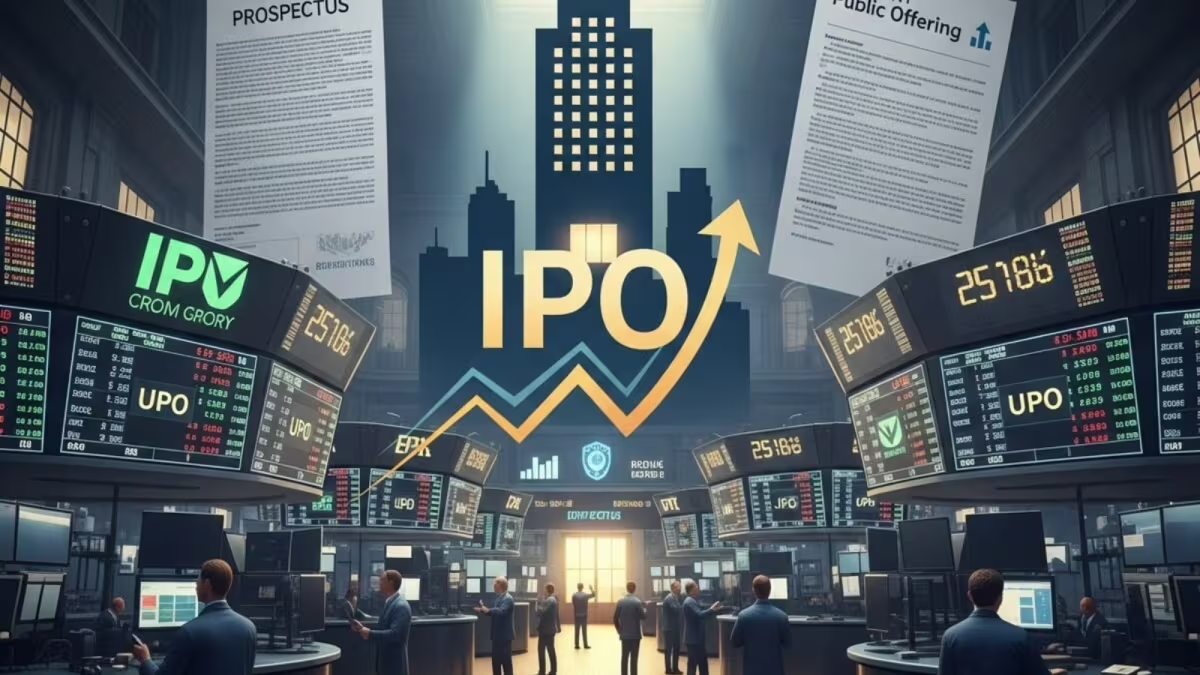
This is one reason why companies choose to launch an IPO to go public and be quoted on a public stock exchange. It allows early investors to cash-in on some or all of their stake in the business by offloading them to other investors. However, these shares only generate cash for the owners and not the business itself, which is why most of them decide to create and sell new shares in the business alongside the shares being sold on behalf of existing investors.
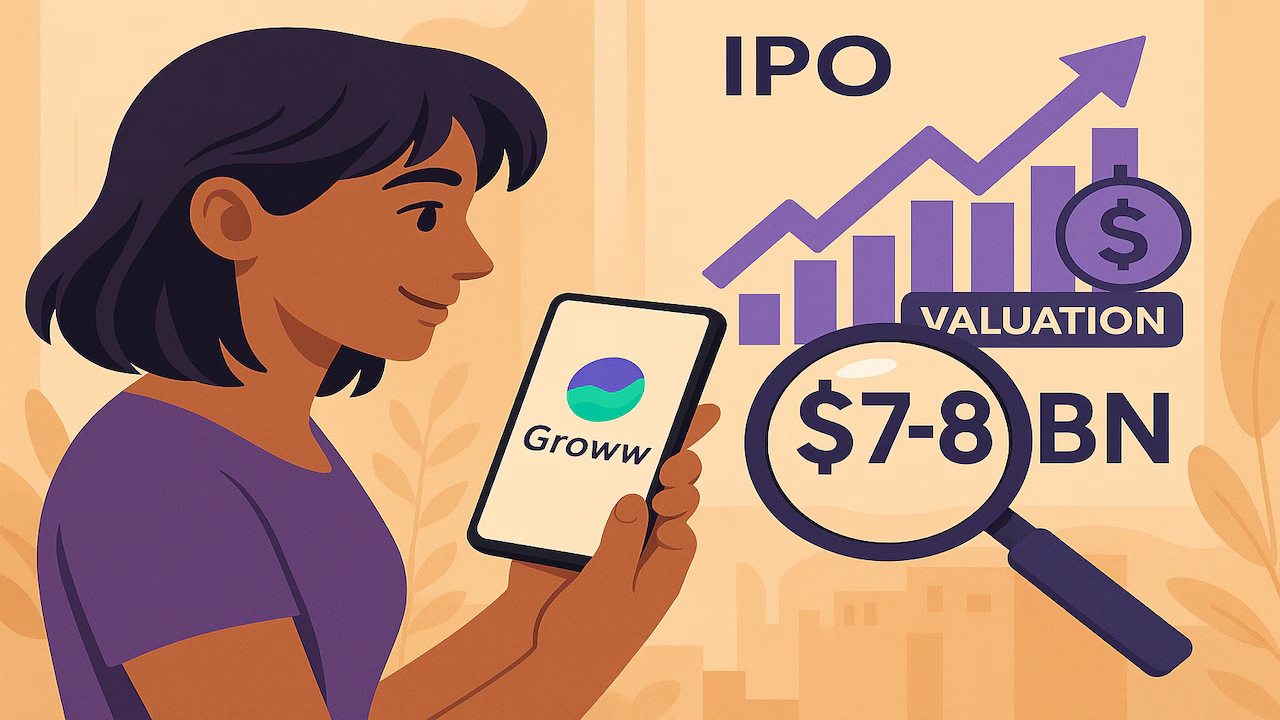
These new shares are sold to investors under the IPO to generate funds to help grow the business, and the IPO also provides a valuation (for the entire business and on a per share basis) that is otherwise hard to gauge as a private company.
There are different ways of conducting an IPO, which can be pivotal in deciding the value of the business and its shares. Getting the IPO valuation right is key for both the business and its shareholders.
For example, if it is too low then a company could sell itself short and end up selling a large chunk of the business for a below-optimal price, but investors will be pleased at being able to buy shares on the cheap and benefit from any subsequent rise in the share price once the IPO is completed.
On the other hand, if it overprices itself in the IPO then it may not be able to drum-up the same level of interest in the market and investors will be left disappointed that the value of their shares suffer a drop in value after the IPO, but early investors will be pleased as it gives them a higher value for the shares that they sell in addition to the new shares created by the business.
There are various forms of IPO. Some see the board of directors set a pre-determined price which is then fixed and offered to investors. Some decide to set a minimum price and then offer the shares by tender, whereby investors make bids for shares at whatever valuation they believe is right. The bids are then collected to form what is known as a strike price – which is the price they will be sold at. Those that make bids equal to or above the strike price will be sold shares, while those that bid below it would fail to receive any shares.
Alternatively, some companies conduct an IPO but don’t raise any new equity. This means the company does not raise any money for itself or create any new shares in the business and only sells existing shares on behalf of its investors. One example of this would be luxury carmaker Aston Martin, which chose not to raise any fresh equity in its 2018 IPO.
Most companies only get one shot at an IPO (unless they delist and relist later, or are taken private before going public again later down the line). However, most of them will need to raise more equity in the future, which is where other types of fundraising come into play.
Read more: How to trade an IPO
IPO example: Calisen
Calisen launched its IPO in February 2020, when the smart energy meter company decided to raise cash and capitalise on its growth and strong outlook, and allow early investors to monetise some of their investment in the company.
Calisen conducted a bookbuild process to determine how it would price its IPO, meaning institutional investors effectively bid for the shares to give the company an idea of what sort of value the big potential shareholders attribute to the company. This ended up at 240 pence per share and gave Calisen a market cap of £1.32 billion upon listing.
Calisen sold 125 million new shares in the business at 240p to raise £300 million in new equity, while existing investors sold an additional 12 million shares to raise just under £29 million for themselves. The shareholders also made another 20.5 million shares available to the public in an over-allotment option, which would kick-in if there was sufficient demand from investors wanting to take part in the IPO (which it did, but there was only demand for 3.6 million of the shares). Upon listing, it had an issued share capital of 548 million shares, each of which represented an equal slice of the business, with 25.7% of its shares in the hands of the public.
The IPO opened up Calisen’s stock to more investors, raised cash for the business, provided a firm valuation for the publicly-listed company, and allowed early investors to cash-in on part of their investment.