Pickering’s Series 125—which set a new benchmark for packing density with the industry’s smallest DPST reed relays—adds 1 Form A, 1 Form B, 1 Form C, and coaxial options
CLACTON-ON-SEA, England, November 21, 2025–(BUSINESS WIRE)–Leading manufacturer of high performance reed relays, Pickering Electronics has expanded its ultra-high-density Series 125—which already offers the industry’s smallest 2 Form A DPST (double-pole, single-throw) reed relay—adding 1 Form A, 1 Form B, 1 Form C, and 1 Form A coaxial options to provide additional switching options. Variants in the expanded range switch up to 1 amp, 20 watts and feature 3, 5, or 12 volt coils, while stacking on a compact 5mm x 5mm pitch. Thanks to instrumentation-grade switches, the relays excel in mixed-signal environments, offering high insulation resistance and low contact resistance.
“Series 125’s ultra-high-density form factor is designed so that engineers no longer need to compromise between performance and space—making it ideal for those who need to maximise PCB real estate in applications like ATE (automated test equipment) switching matrices or multiplexers,” said Robert King, Reed Relays Product Manager at Pickering Electronics. “Already offering the world’s smallest dual-pole reed relay footprint, our expanded Series 125 has now added 1 Form A, 1 Form B, 1 Form C, and 1 Form A coaxial options, enabling record channel density and greater routing flexibility on space-constrained cards.“
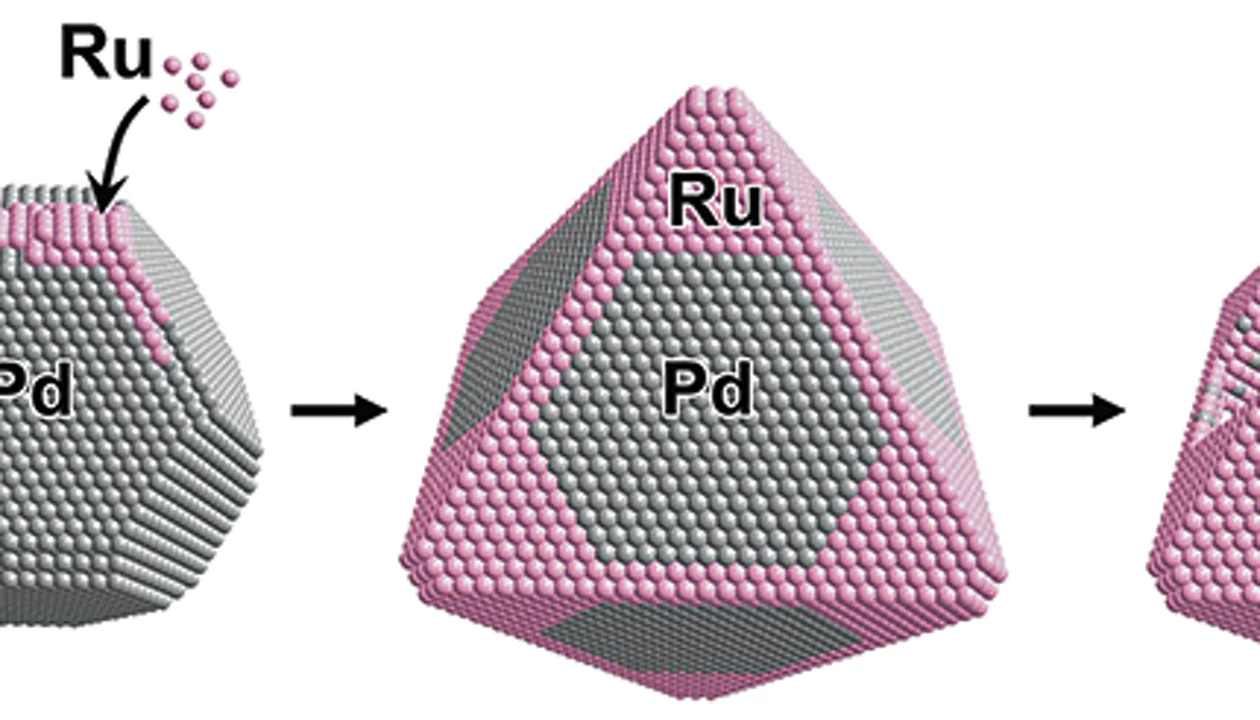
Three switch types are now available, the first two both featuring sputtered ruthenium contacts for long life and high reliability. Switch type number 1 suits general purpose applications, rated at 15 W, 1 A (3 and 5 V coils) or 20 W, 1 A (12 V coils). It features a layer of copper beneath the ruthenium to help dissipate heat from the contact area, helping improve current inrush handling ability and making it more suitable where higher power levels are involved. Switch type 2 is particularly good for switching low currents and/or voltages, rated at 10 W, 0.5 A, and should be selected for low level or cold switching applications. Switch type 3 is a rhodium changeover switch rated at 2 W, 0.1 A.
The 1 Form A coaxial types are designed for a 50 Ω characteristic impedance and are suitable for switching high-frequency RF signals over 1 GHz. King added: “Reed relays are the ideal solution for RF signal switching and high-speed digital signal switching, as they offer a smaller footprint and faster response time than electromagnetic relays (EMR), lower insertion loss and better DC load handling than solid-state relays (SSR), and superior hot-switching performance compared with MEMS switches.“
Effective magnetic shielding is provided by mu-metal, known for its high permeability and low magnetic remanence. This eliminates issues that would otherwise be caused by magnetic interaction, typically measured as the percentage increase in the voltage needed to operate a relay when two additional relays, positioned on either side, are also in operation. By comparison, an unshielded device placed next to another would typically exhibit interaction of around 40%. Therefore, without magnetic shielding, even relays of this small size would be unsuitable for applications requiring dense packing. Series 125 relays typically achieve interaction of only 1%. “Full mu-metal magnetic screening enables side-by-side packing without risk of magnetic interaction, allowing a total of 288 Series 125 relays to be placed on a PXI BRIC matrix daughter card to facilitate very high-density switching applications—saving significant cost and space,” said King.
An internal diode prevents voltage spikes caused by the inductive kickback when the relay coil is de-energized, providing a path for the current to dissipate safely, reducing electrical noise and protecting sensitive components from damage. Additional build options are available on request, including unique pin configurations, non-standard coil voltages/resistances, operate/de-operate times, pulse capability, special life testing under specific customer load conditions, and more.
Pickering’s reputation for reed relay innovation is founded on decades of manufacturing excellence. All relays use instrumentation-grade reed switches for stable, long-life operation—up to billions of cycles—along with formerless coil construction and the company’s patented SoftCenter™ technology, which improves mechanical robustness. Mu-metal screening enables high packing densities with minimal magnetic interference, and every relay is 100% tested, including dynamic contact wave-shape analysis, to ensure consistent quality. Learn about 10 key advantages Pickering’s reed relays offer over competitor relays here: pickeringrelay.com/10-key-benefits/
Learn more about Pickering’s expanded Series 125 ultra-high-density range at: pickeringrelay.com/reed-relays/ultra-high-density/series-125-5mm-dpst-20w/ – or to contact Pickering for more information and advice, please visit: pickeringrelay.com/contact/.
About Pickering Electronics
Pickering Electronics was formed over 50 years ago to design and manufacture high quality reed relays, intended principally for use in instrumentation and test equipment. Today, Pickering’s single-in-line (SIL/SIP) range is by far the most developed in the relay industry, with devices 25% the size of many competitors. These small SIL/SIP reed relays are sold in high volumes to large ATE (automated test equipment) and semiconductor companies throughout the world.
The privately-owned Pickering Group comprises three electronics manufacturers: reed relay company, Pickering Electronics; Pickering Interfaces, designers and manufacturers of modular signal switching and simulation products; and Pickering Connect, which designs and manufactures cables and connectors.
View source version on businesswire.com: https://www.businesswire.com/news/home/20251121568733/en/
Contacts
Editors, please contact:
Jack Northcott, Marketing Manager
Pickering Electronics
jack.northcott@pickeringrelay.com
Tel: +44 1255 428 141
www.pickeringrelay.com
Or PR agency:
Mark Gradwell, Senior Account Director
BWW Communications
mark.gradwell@bwwcomms.com
Tel: +44 7575 318 681
www.bwwcomms.com