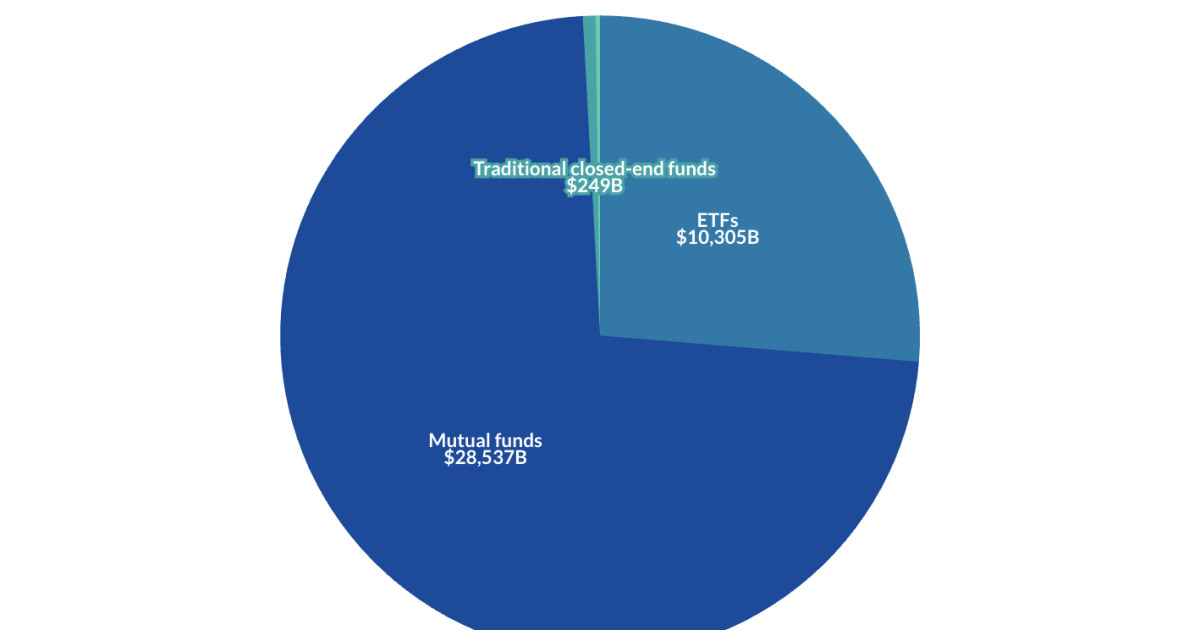
Active fund managers have been on the defensive for years. As the biannual Morningstar Active/Passive Barometer regularly demonstrates, active funds overall don’t have a strong track record against their benchmarks. That’s why investors have poured money into passive open-end and exchanged-traded funds. Passive assets under management first overtook active at the end of 2023, and passive funds remain ahead today, accounting for 54% of fund assets as of the end of October.
But active bond fund flows have bucked that trend. According to Morningstar manager research’s latest fund flows report, active taxable-bond funds held $3.7 trillion in assets under management as of October, compared with $2.8 trillion for their passive counterparts. After all, as the Active/Passive Barometer has shown over the years, active bond managers have generally maintained positive long-term rates of success against benchmarks.
That’s not to assert that active fixed-income managers always have an edge. It hasn’t been the case recently. For example, actively managed core bond funds tend to take more credit risk than indexed peers, and that worked against them in April, when credit spreads widened amid tariff announcements and increased geopolitical risk.
But despite short-term setbacks, the latest Active/Passive Barometer concludes that “the value proposition for going active in fixed income remains strong.”
The Case for Active Bond Funds
Recent white papers from Morningstar’s manager research team lay out the arguments for active fixed-income investing.
In “The Bond Market as Fertile Ground for Active Management‚” Eric Jacobson notes that while the bond market isn’t as inefficient as it used to be, there is still opportunity for skilled managers to add value. That’s because most bonds are owned by a relatively small number of large investors and trade infrequently, which leads to pricing inconsistencies. Further, the bond market is complex: Bonds from the same issuer may have differences in maturity, coupon, seniority, optionality, and covenants.
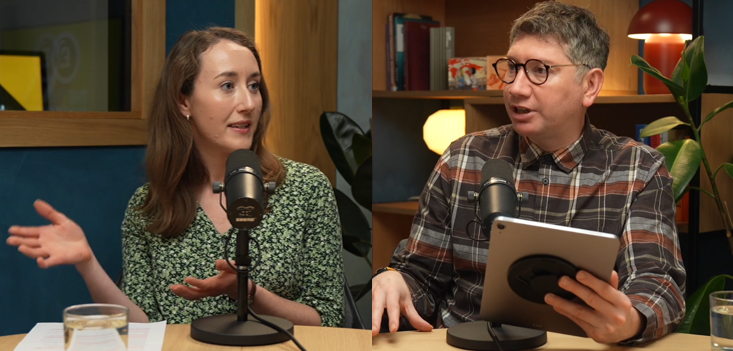
Jacobson discusses his research with Dan Lefkovitz in a recent episode of The Long View. Building on that discussion, Lefkovitz explores the implications of a Treasury-heavy bond market in his latest column.
In “Do Active-Passive Performance Comparisons Make Sense in the Bond World?” Maciej Kowara uses portfolio data to show that actively managed bond funds make use of tools, asset classes, and flexibility around interest rate and credit risk exposures to gain an advantage over passive funds and their indexes.
“It’s easier to make a case for using fairly priced, proven active bond funds than it is for stock funds,” concludes Morningstar director Alec Lucas.
Finding the Best Active Bond Funds
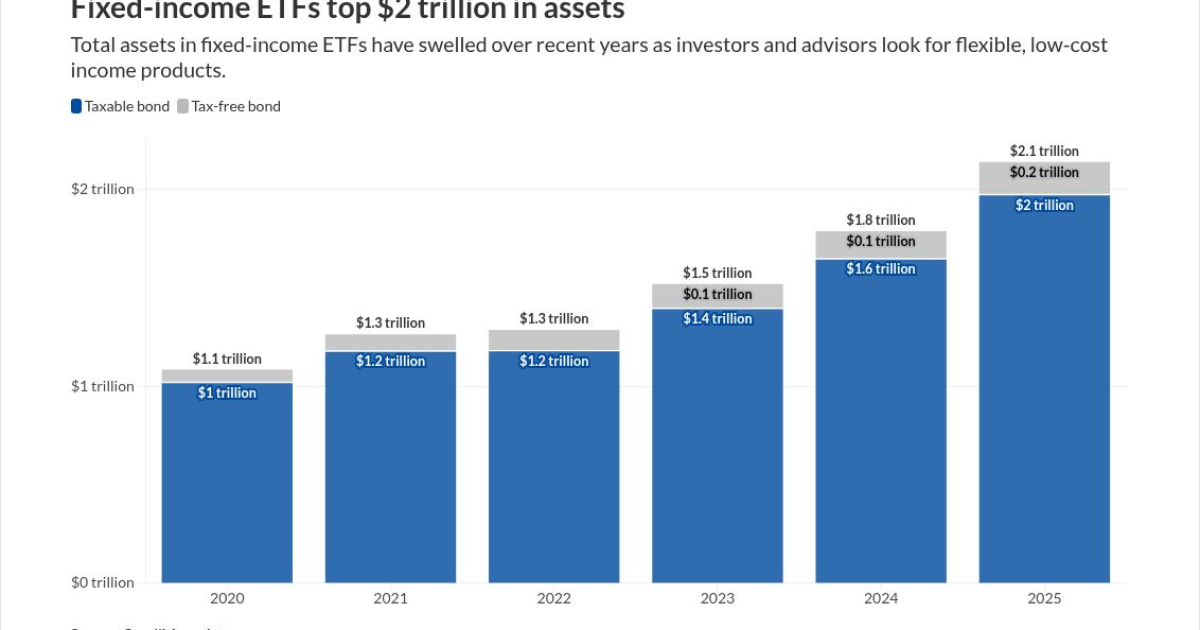
ETF investing, once equated with indexing, has become the province of active equity managers. Now, active bond ETFs are building momentum. Granted, active bond ETFs don’t have the same tax edge relative to mutual funds that active equity ETFs do. While the ETF structure allows managers to minimize capital gains distributions, most of bond funds’ returns come from income, which is always taxable as ordinary income. But active bond ETFs generally boast lower costs than mutual funds, as well as greater transparency, and they allow investors more flexibility.
Keep in mind that they do require more due diligence than passive bond ETFs. Morningstar analyst Lan Anh Tran notes that active bond ETFs tend to carry a higher premium/discount, particularly smaller active ETFs that trade less frequently. She also cautions that a manager’s success in a mutual fund wrapper might not translate into a new ETF version right away, as bond portfolios take time to build and require assets to scale. Senior analyst Daniel Sotiroff, editor of the Morningstar ETFInvestor newsletter, singles out three worth considering here.
Active bond ETFs are trending, but you shouldn’t exclude good old-fashioned mutual funds from your search. You’d miss out on strategies with Morningstar Medalist Ratings of Gold such as Baird Aggregate Bond BAGIX and Dodge & Cox Income DODIX, offerings from highly regarded asset managers that haven’t launched ETFs. This screen for active taxable-bond funds rated Gold by Morningstar’s manager research team resulted in more than 40 options across Morningstar Categories.
Beyond Core Bond Funds
Municipal-bond funds are a bastion of active investing. Muni-bond investors show an even stronger preference for active funds than taxable-bond investors: As of Morningstar’s October fund flows report, active muni-bond funds had $858 billion in assets under management, compared with only $134 billion in passive. While the sector lagged this year through the third quarter of 2025, associate director Elizabeth Foos notes that headwinds shifted in September. Investors should seek out skilled, experienced management teams who can navigate this specialized market.
And then there’s private credit, a rapidly growing market that is becoming more broadly accessible via semiliquid funds. Morningstar’s expanding coverage reveals a nascent market that is “relatively young and untested,” notes Bryan Armour, director of ETF and passive strategies research. Silver-rated Pimco Flexible Credit Income PFLEX is an exception. Manager Dan Ivascyn recently sat down with Morningstar’s Leslie Norton to discuss the opportunities and risks as assets pour into this market. Amy Arnott explains how to incorporate private credit into your portfolio with care.
Hitting Newsstands Soon
The first-quarter 2026 issue of Morningstar magazine will take a deep dive into active fixed-income investing. You can subscribe here.