Money management isn’t something most of us are taught in school or even during higher education. It is something many of us pick up from the grapevine (or social media) when we eventually start earning.
As soon as we procure our much-awaited “adult money”, we were told to save, maybe put money in an FD, or invest in the stock market. And when someone brings up mutual funds at a family dinner? You simply nod along while quietly wondering what exactly you’re nodding at.
Do you relate to this? Then this guide is for you. It will walk you through the basics of mutual funds: what they are, how they work, deciding the term of investment, and methods of investing.
Let’s get started!
What Are Mutual Funds?
Remember the concept of “Kitty Parties”? It’s a popular concept of social gatherings, where the participants put various amounts of money into a collective pool on a monthly basis—which is managed by a neutral person.
Mutual funds are something like that. Except that the money is invested by thousands of investors, and is managed by a professional fund manager.
The manager invests the collected money across a mix of assets. This can be stocks, bonds, government securities, or a combination of these. It really depends on the fund’s stated objective.
Why are mutual funds a convenient investment choice? Because you don’t have to pick individual stocks. You don’t have to track the market daily. The fund manager does that.
All you have to do is pick out the right kind of fund that aligns with you. The first step to that is to decide what type of investor you want to be. A long-term value investor or a dividend investor?
Types of Mutual Funds Investors
Before you invest in any mutual fund, you need to answer one question: “Why am I investing this money?”
If your answer is “I want to grow my wealth over the next 10 to 20 years, and I don’t need this money in the short term,” you’re a long-term value investor. Your goal is capital appreciation. This means you want the value of your investment to compound over time.
If your answer is “I want this investment to give me a regular income, maybe to supplement my salary or cover monthly expenses,” you’re a dividend investor. Your goal is cash flow, i.e., your investment should give you returns at regular intervals.
Mutual Funds for Long-Term Value Investors
Long-term value investing through mutual funds is based on this theory: the longer you stay invested, the more your money benefits from compounding. This is where your returns begin to generate their own returns.
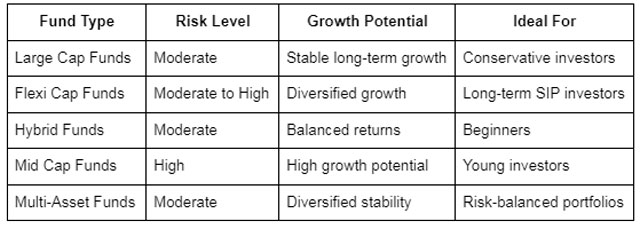
For a long-term investor, the following are the most relevant fund categories:
- Equity mutual funds: These invest primarily in company stocks. You can invest in:
- Large-cap funds (stable, established companies)
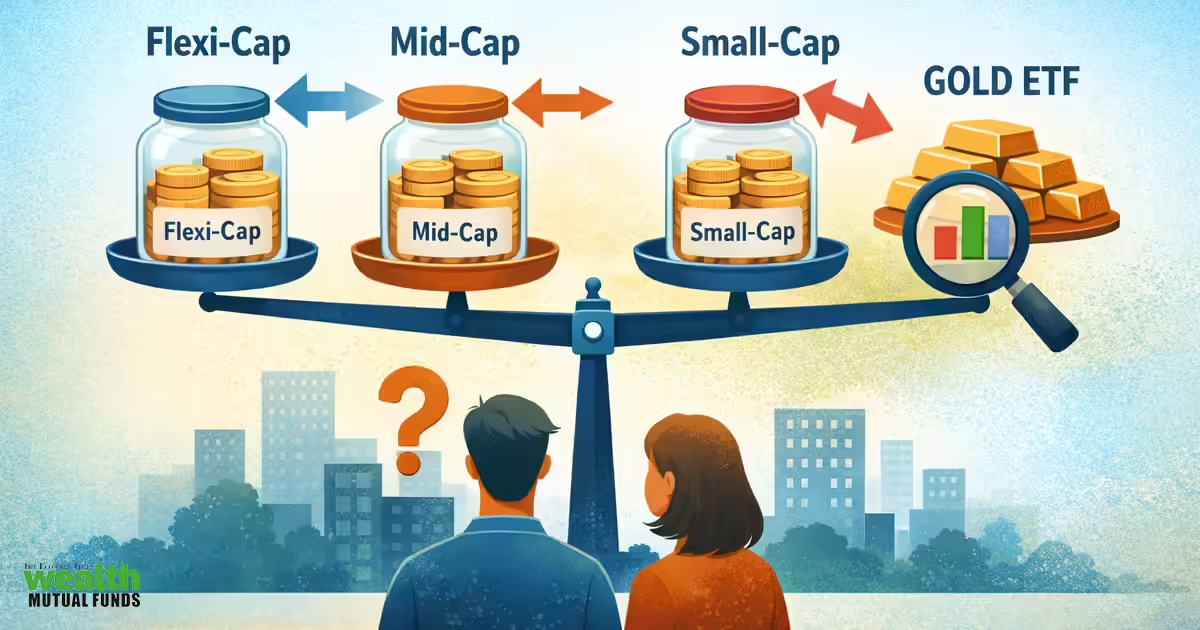
- Mid-cap and small-cap funds (higher growth potential, higher risk)
- Flexi-cap or multi-cap funds (move across sizes based on market conditions)
- ELSS (Equity Linked Savings Scheme): These are equity funds with a 3-year lock-in period. But since ELSS offers tax benefits under Section 80C of the Income Tax Act, it makes them a good starting point for investors with taxable income.
- Index funds: These passively track a market index like the Nifty 50 or Sensex. They don’t try to beat the market. Instead, they mirror it. This means lower costs, less fund manager dependency, and a solid choice for patient, long-term investors.
Mutual Funds for Dividend Investors
The term “dividend” in the context of mutual funds has changed in India. Since 2021, SEBI has renamed the Dividend Option to the IDCW option — Income Distribution cum Capital Withdrawal.
The name change was intentional. It was meant to clarify that the payouts you receive aren’t extra earnings generated on top of your investment. They are distributions from the fund’s accumulated gains.
That said, the IDCW option is a good income source for investors who want a portion of their portfolio to generate regular cash flow. That too, without having to manually redeem units every few months.
Fund categories that are commonly used for dividend or income-oriented investing include:
- Debt mutual funds: These invest in fixed-income instruments like government bonds, corporate bonds, and treasury bills. They are a more stable option compared to equity funds. However, this also means that the returns are generally more modest as well.
- Hybrid or balanced funds: These hold a mix of equity and debt. Aggressive hybrid funds lean more towards equity. Conservative hybrid funds lean towards debt. Are you a dividend investor who wants some growth exposure? A hybrid fund with an IDCW option is recommended.
- Conservative Hybrid Funds: These were historically popular for providing investors with regular payouts. While these do not guarantee a monthly income, conservative hybrid funds are still a common choice among regular-income-seeking investors.
SIP vs. Lump Sum: How You Invest Matters Too
A Systematic Investment Plan (SIP) lets you invest a fixed amount every month. The investment amount can go as low as ₹500 in many funds. With SIPs, you invest consistently. This is regardless of whether the market is up or down. Over time, this averaging effect (Rupee Cost Averaging) lets you naturally buy more units when prices are low and fewer when they’re high.
On the other hand, a lump sum investment means putting in a larger amount at once. This works well when valuations are reasonable, and you have surplus capital to deploy.
What’s the risk here? If the market dips shortly after, you feel it immediately. For most salaried investors, SIP is the more practical and emotionally sustainable route.
The Bottom Line
Mutual funds are one of the most accessible, regulated, and professionally managed ways for everyday investors to participate in the market. Whether you’re building a corpus for retirement twenty years from now or looking for a steady income stream today, there’s a mutual fund you can invest in.
The key is knowing which one to invest in and why.
Start by figuring out what type of investor you want to be and then find a mutual fund to match it. The charts, the ratios, the fund comparisons become a lot easier once you know what you’re actually investing in.