- November 22, 2025
- Noah
- 0
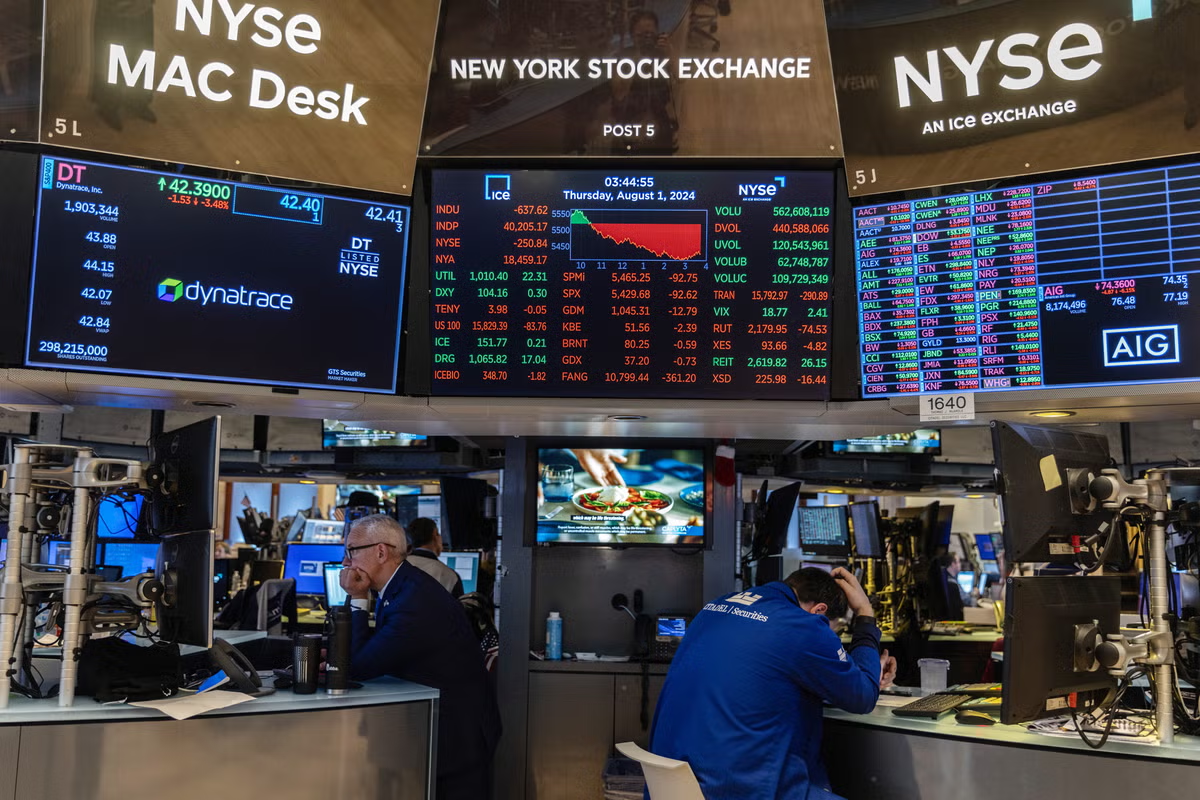
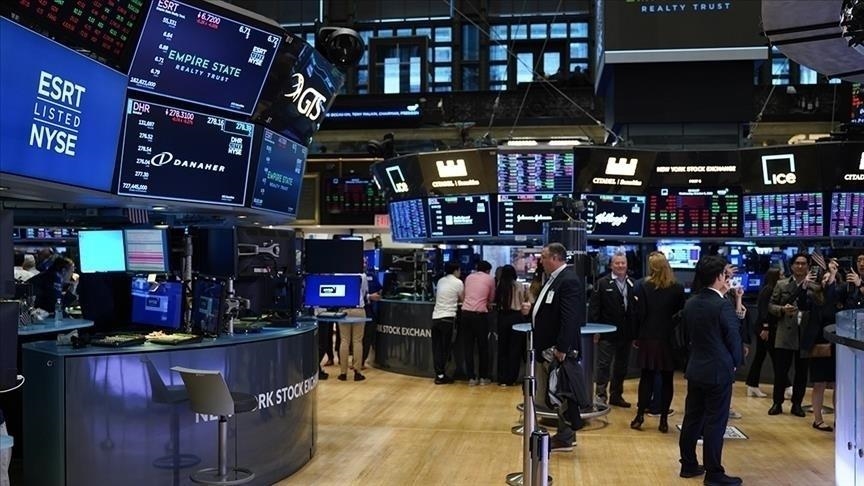
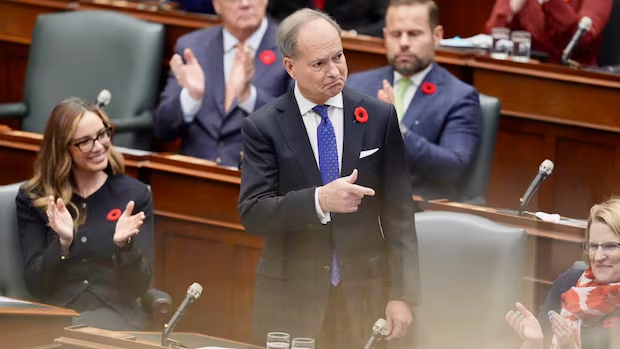
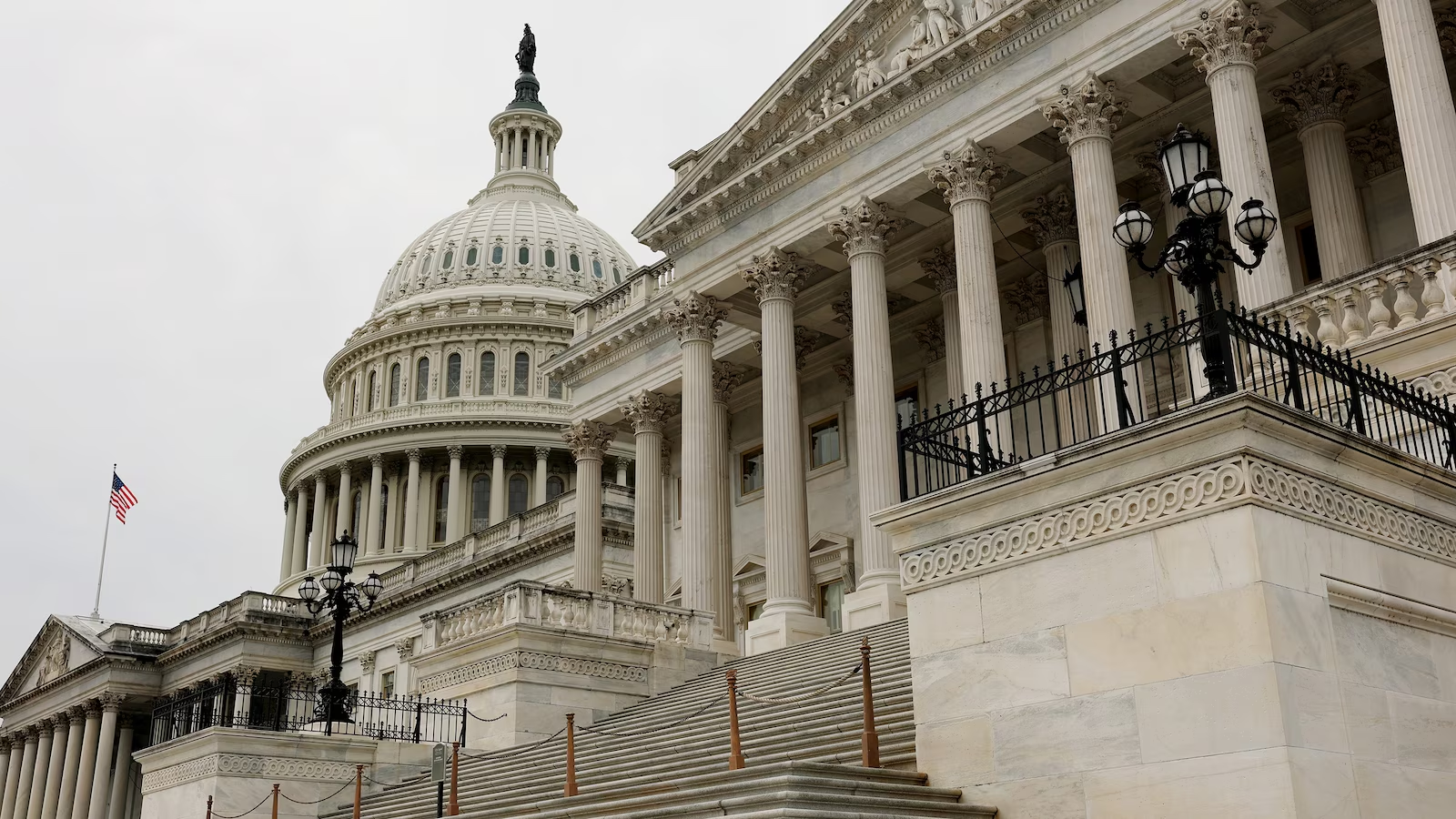
Wall Street was mixed on Friday, as uneasiness remained in the New York stock market despite a Federal Reserve official hinting at a rate cut.
New York Fed president John Williams said the US central bank could lower interest rates soon.
“I view monetary policy as being modestly restrictive, although somewhat less so than before our recent actions,” he said.
“Therefore, I still see room for a further adjustment in the near term to the target range for the federal funds rate to move the stance of policy closer to the range of neutral, thereby maintaining the balance between the achievement of our two goals.”
The comments led rate-cut bets for the central bank’s next meeting to spike, with traders pricing in 75% odds of a December cut, up from around 40% on Thursday. Williams’ remarks come amid evidence of a deeply divided US Fed heading into its final meeting of 2025.
The FTSE 100 (^FTSE) was flat and European stocks were lower by the end of the session as UK government borrowing came in higher than expected, and as retail sales fell across Britain last month, down for the first time since May.
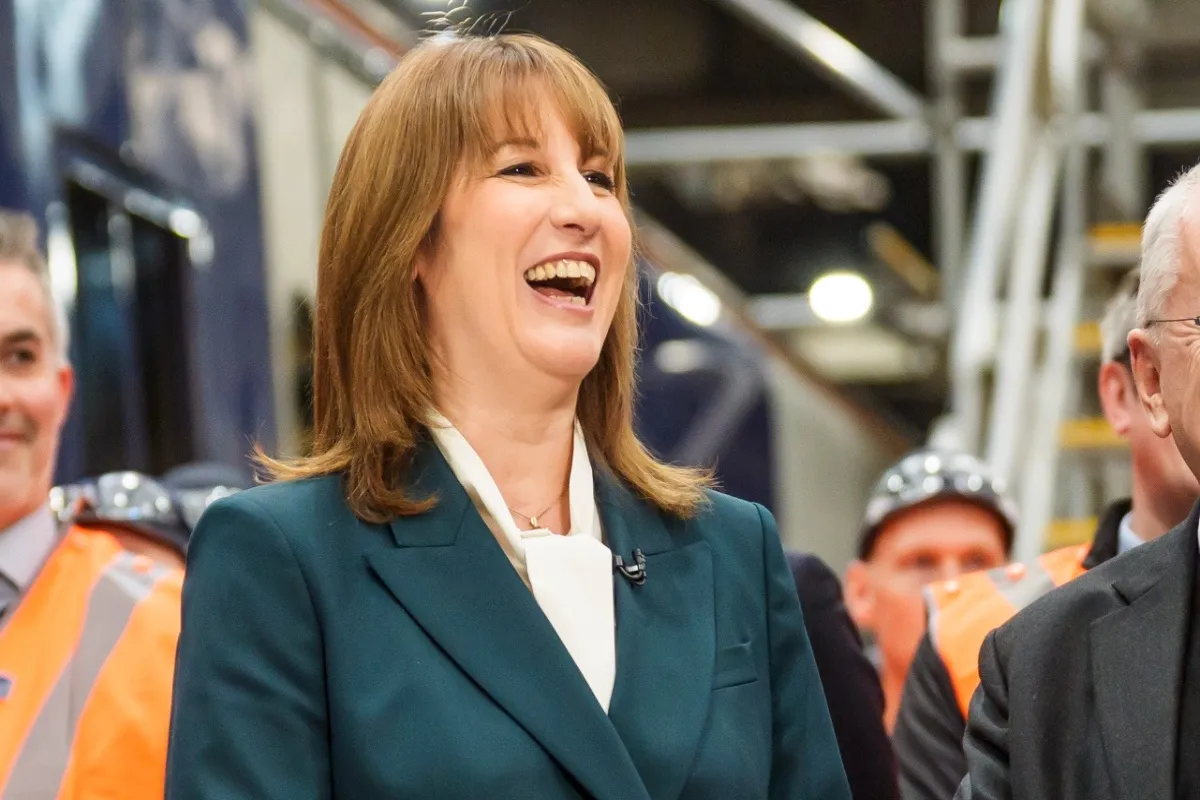
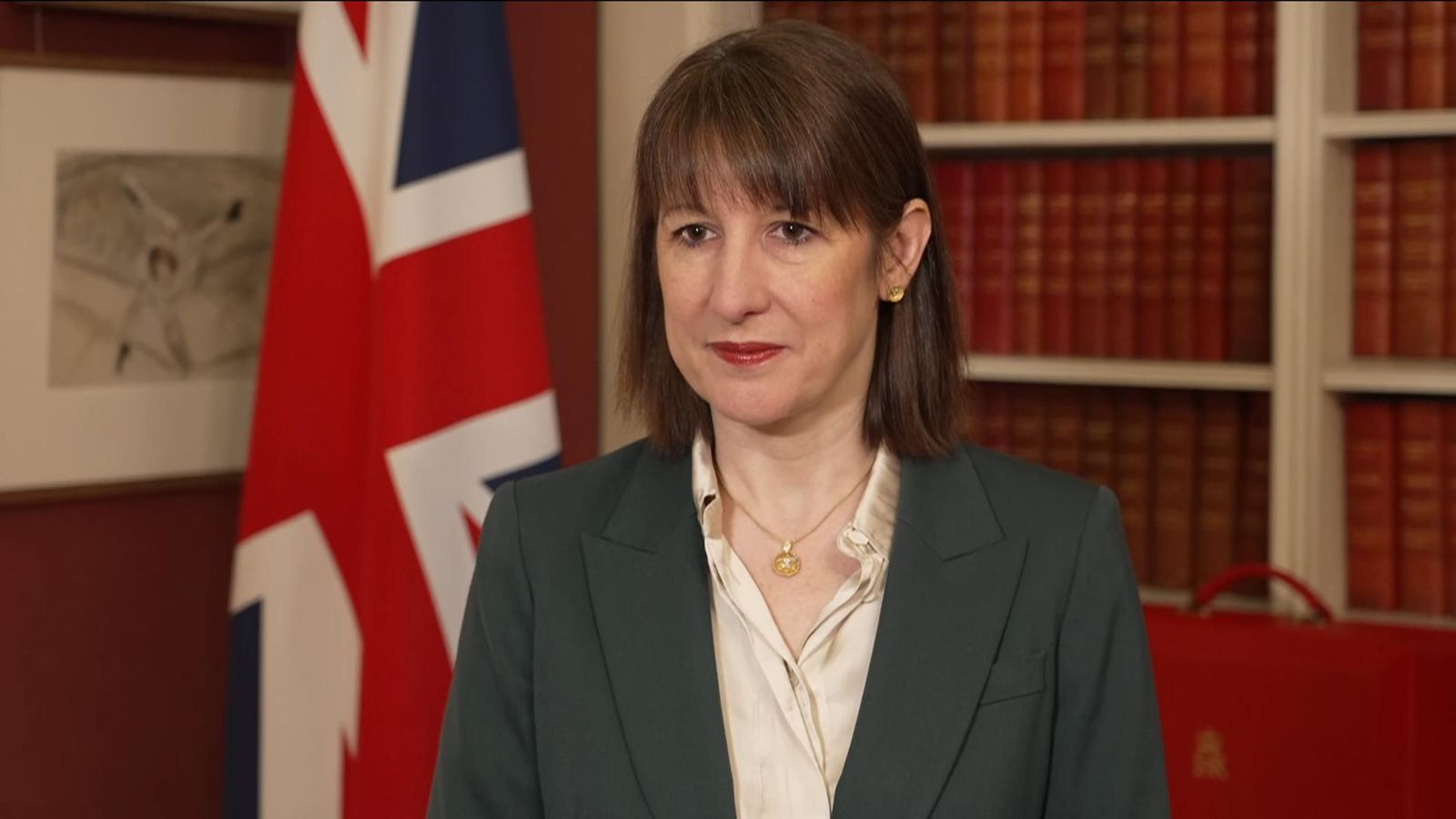
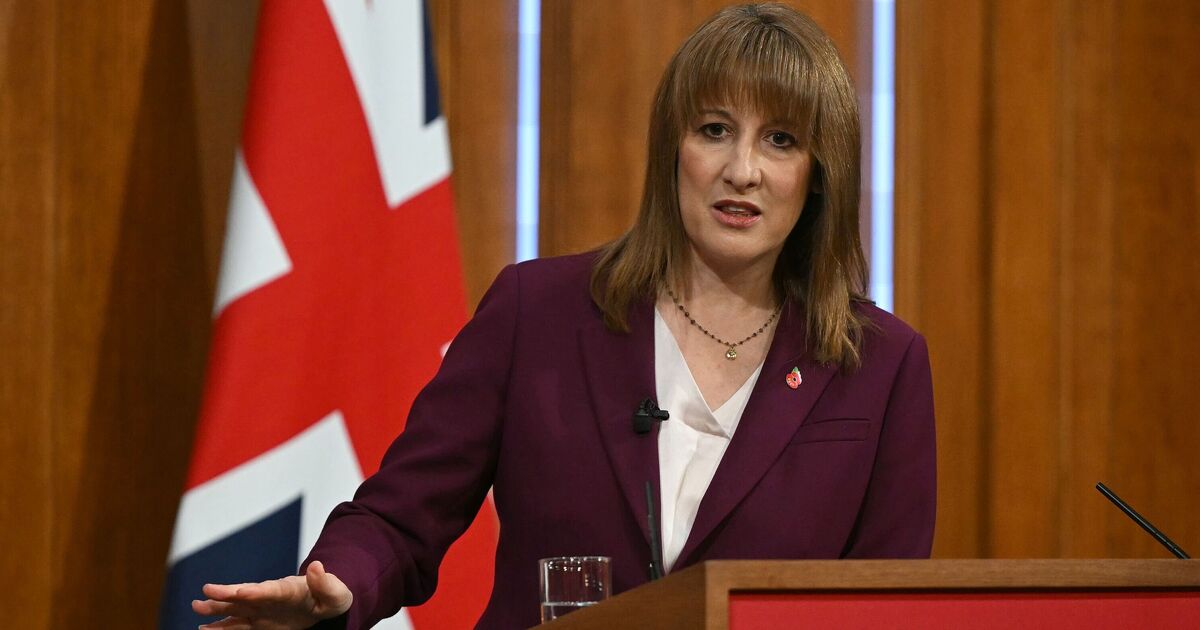
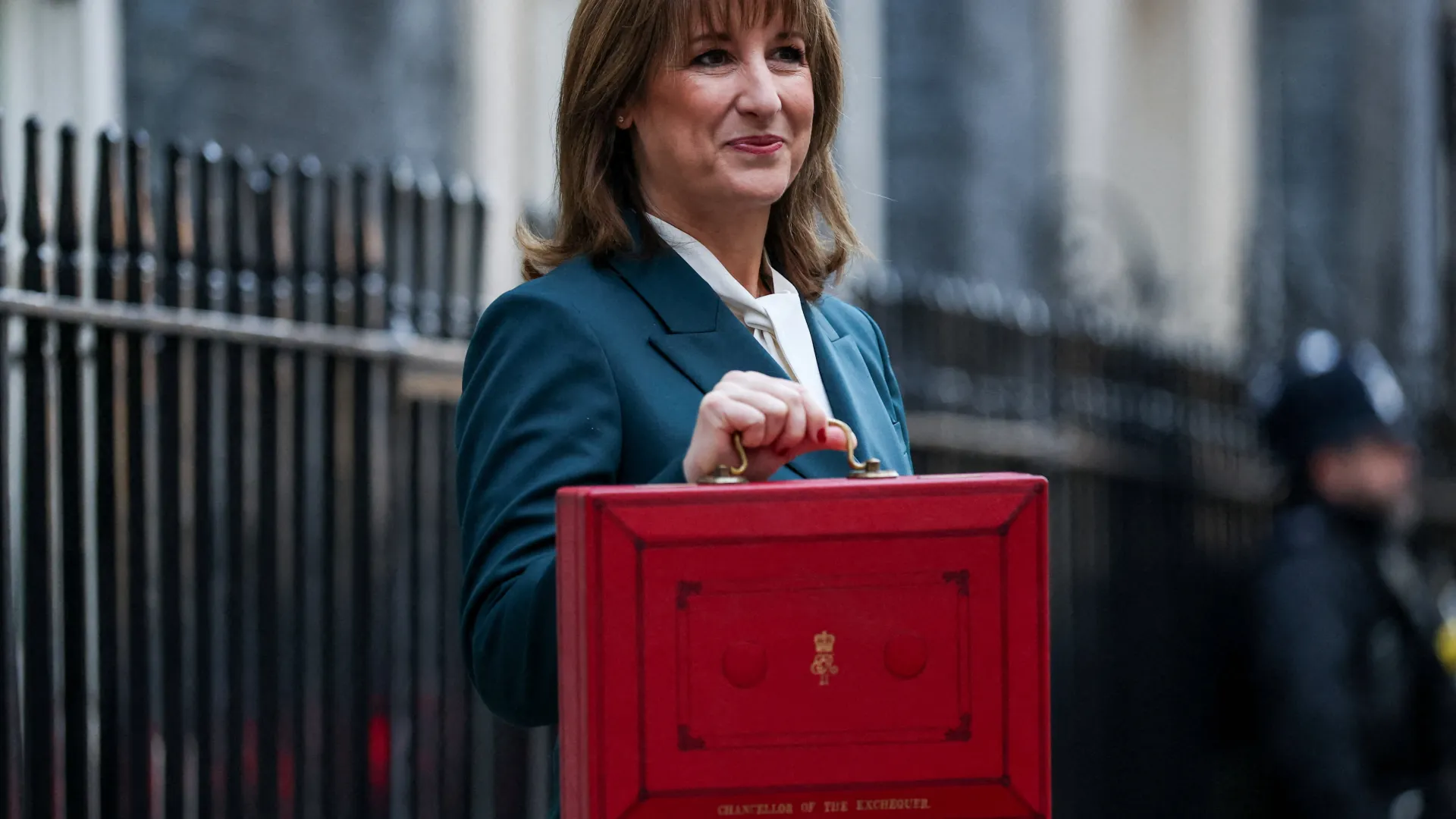
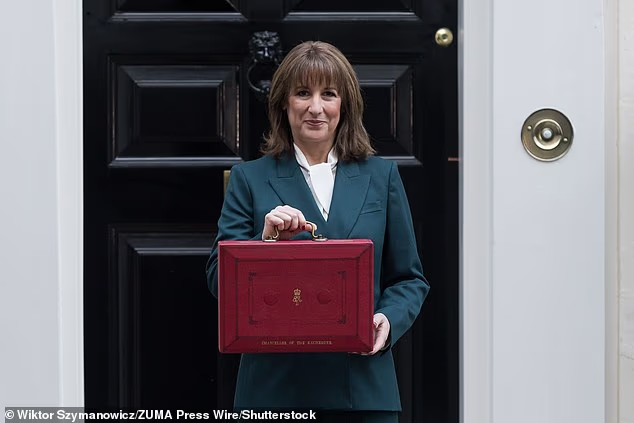
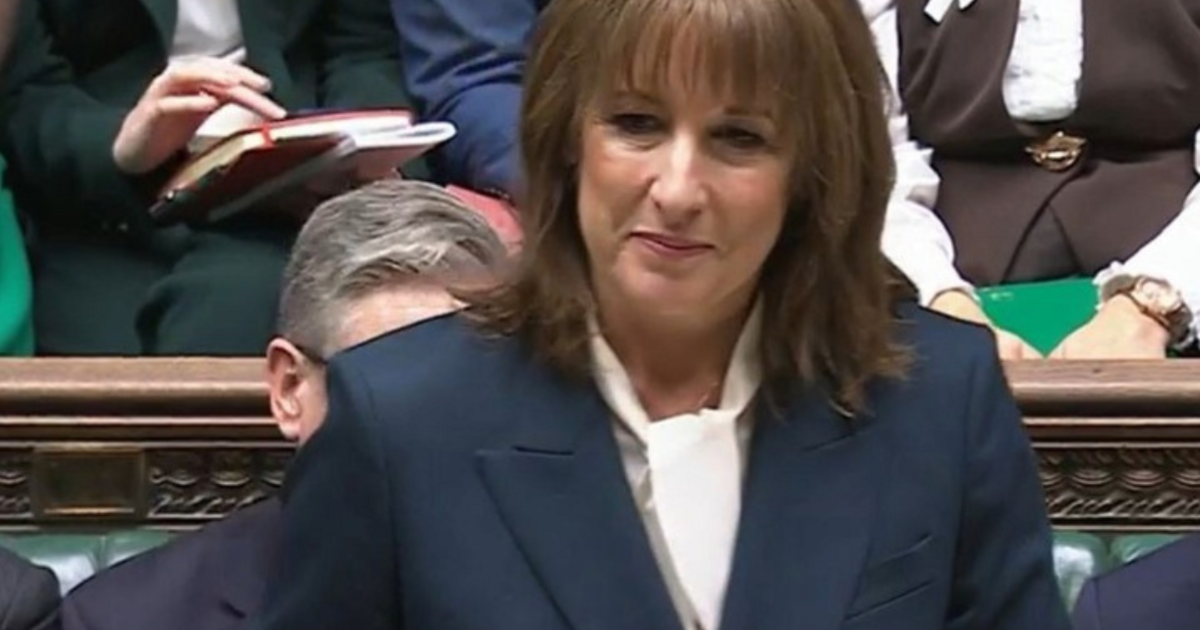
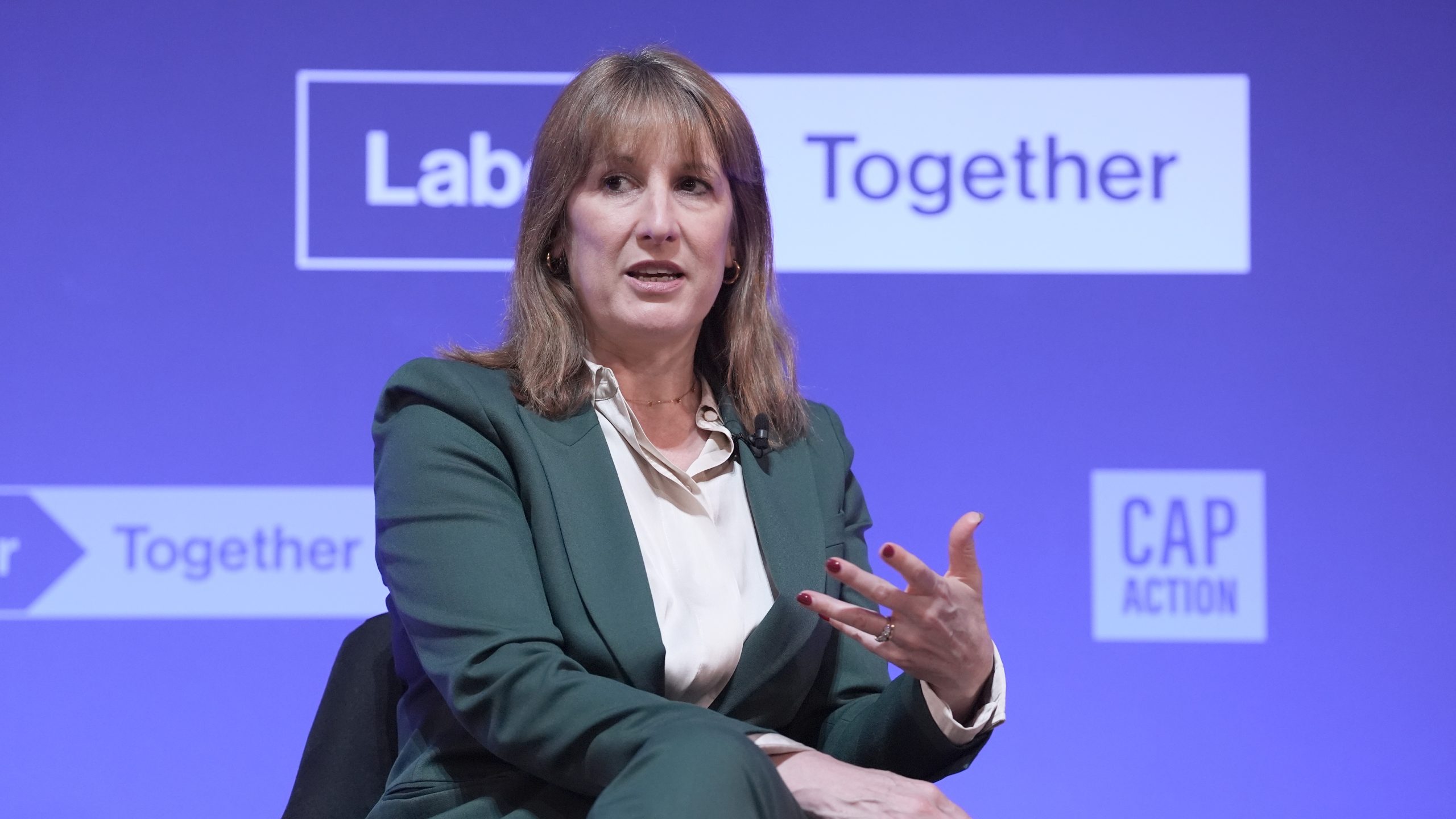
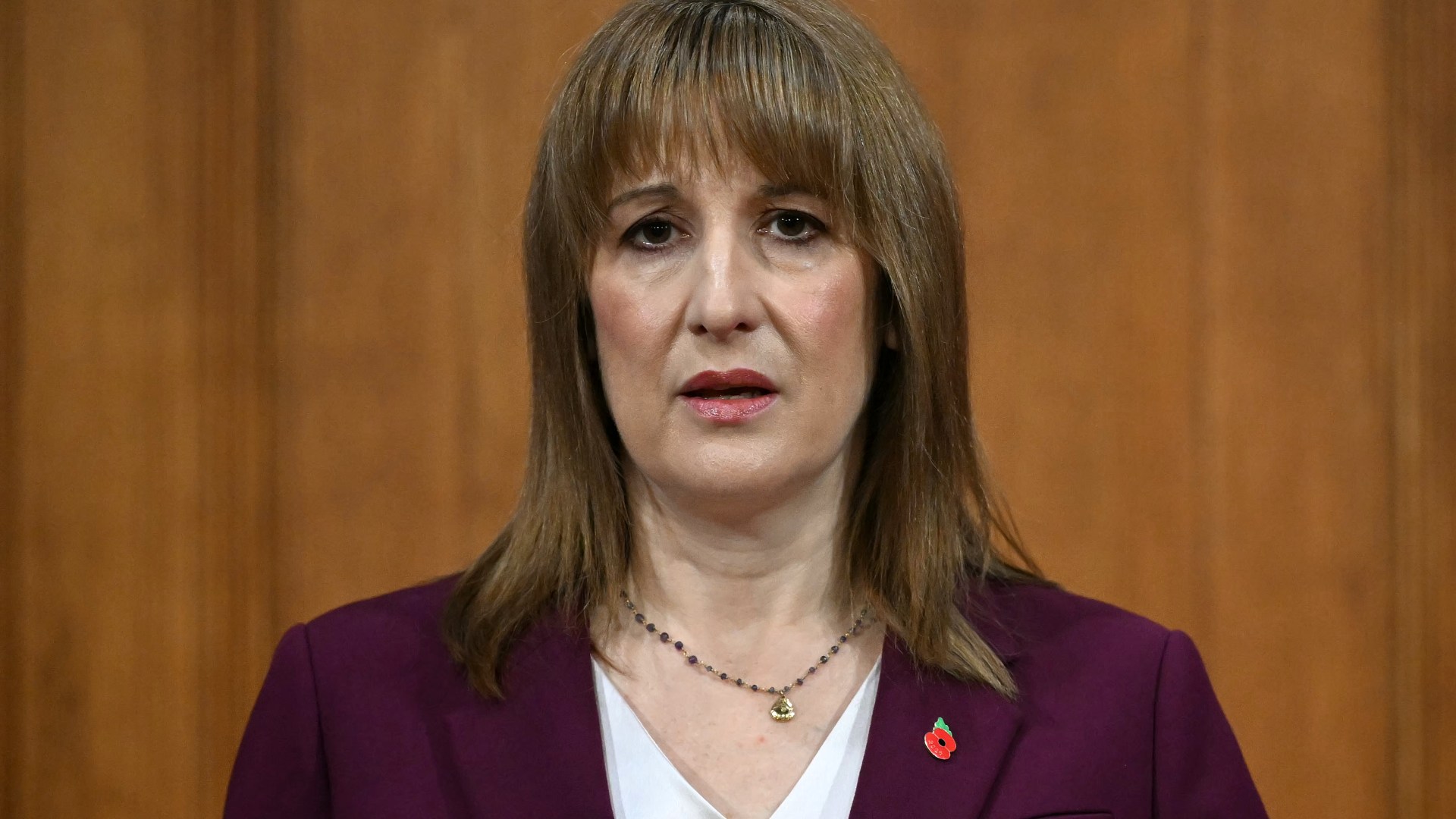
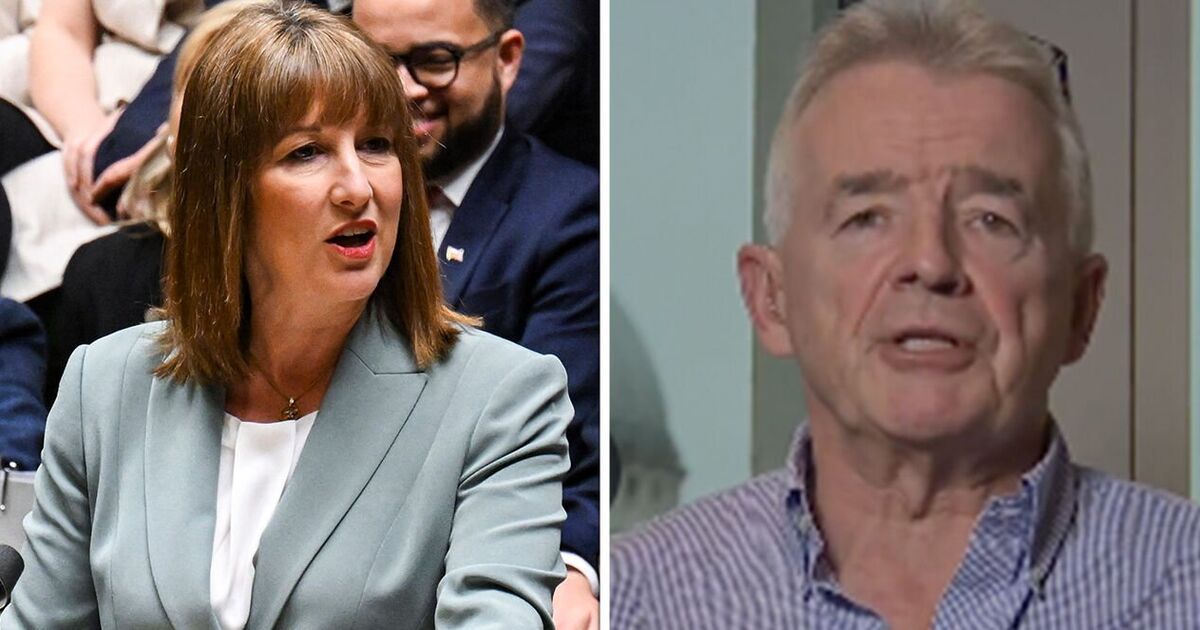
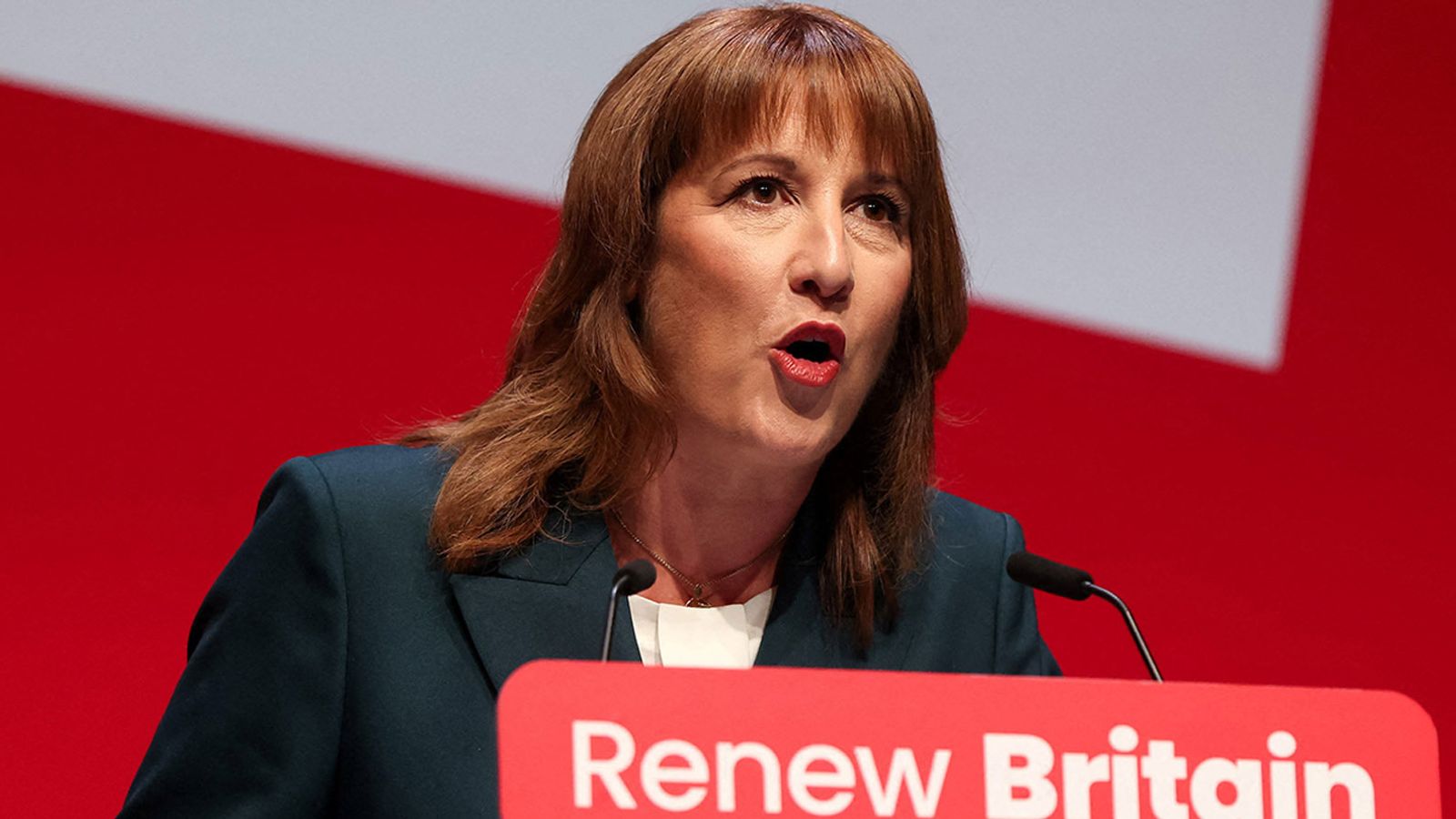
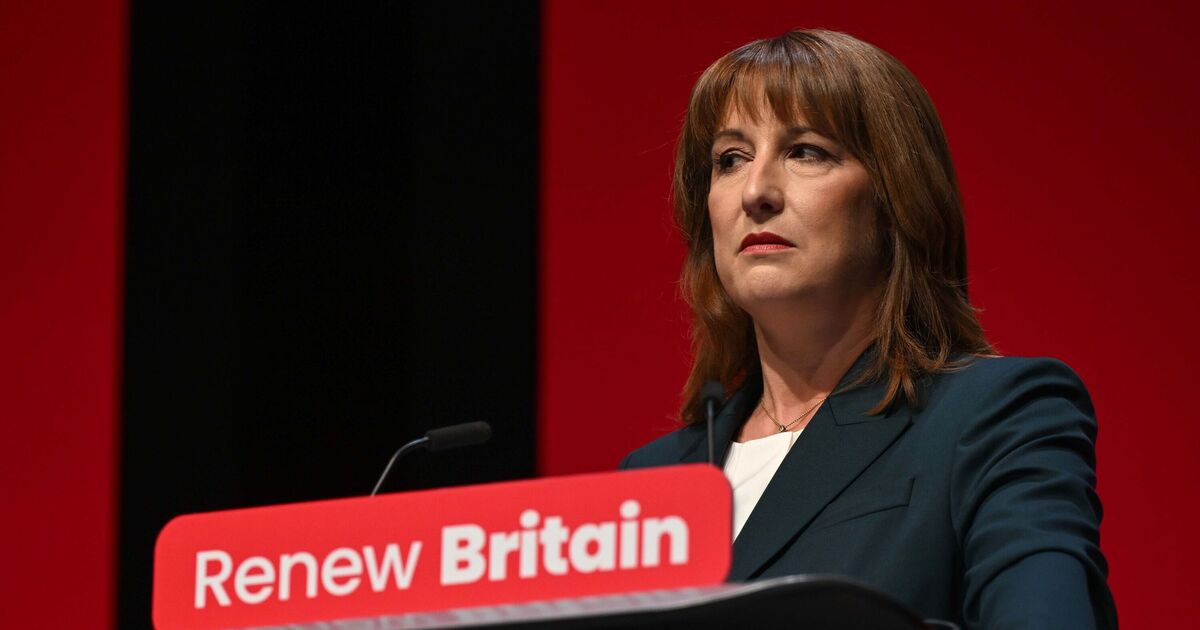
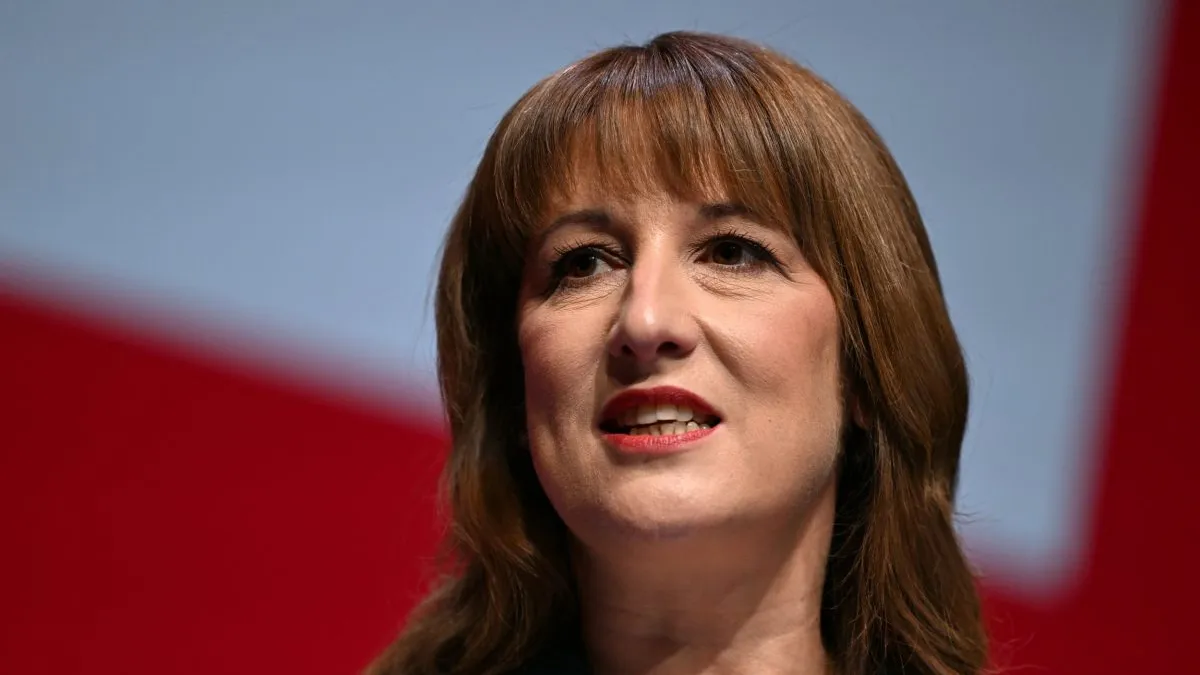
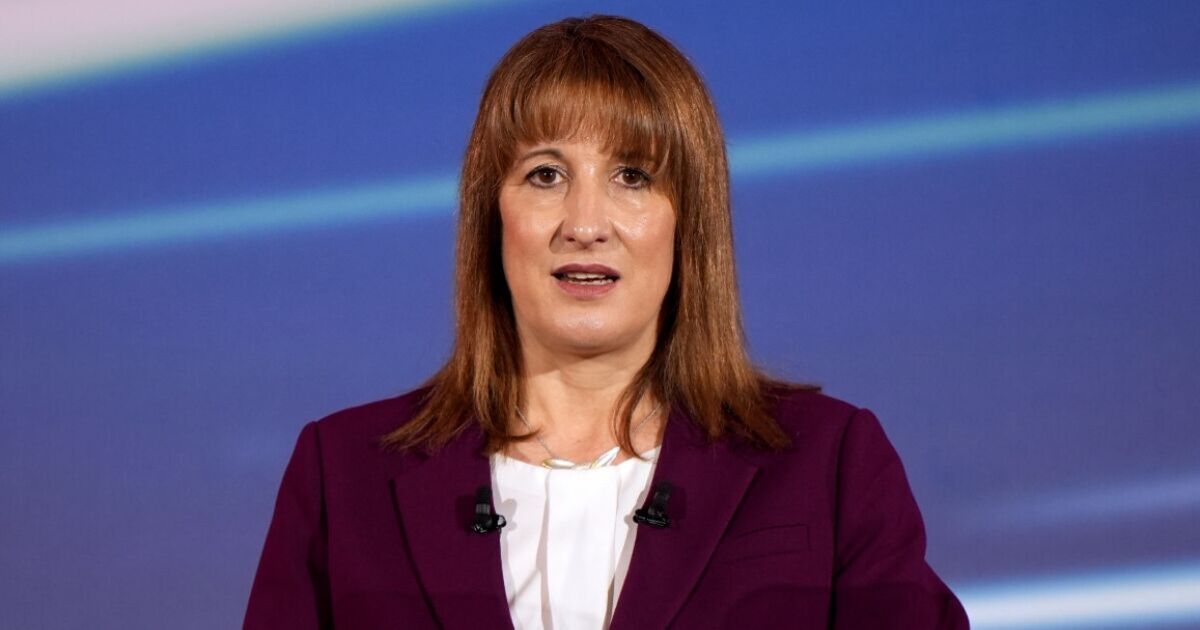
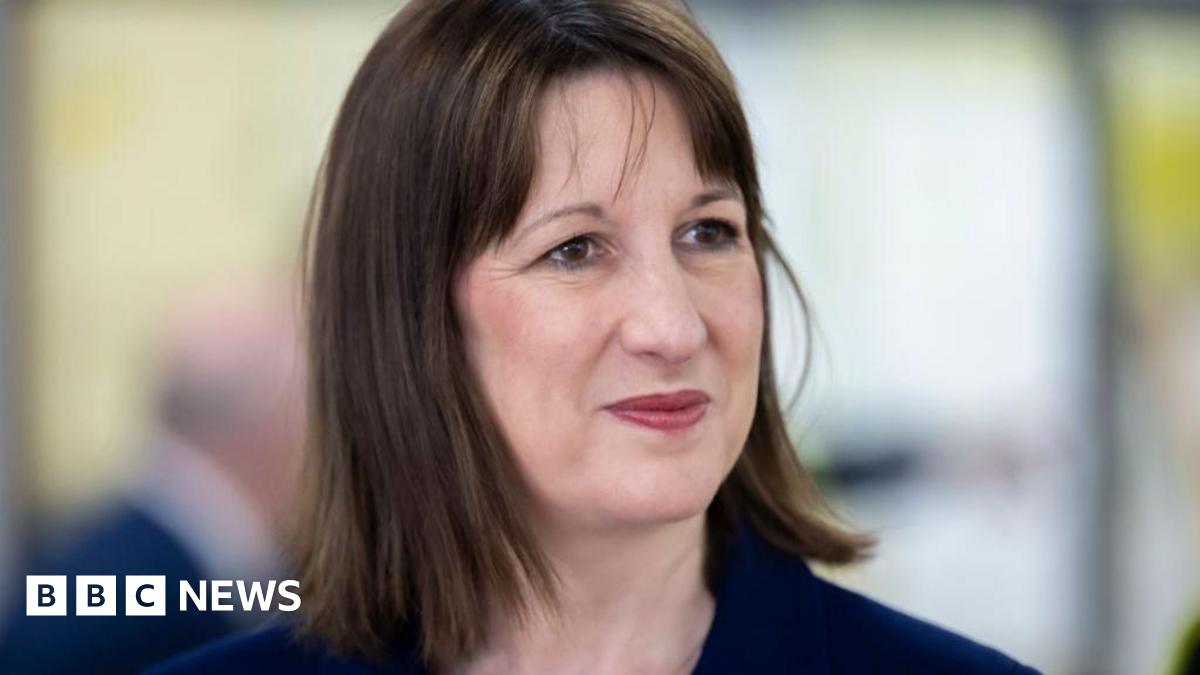
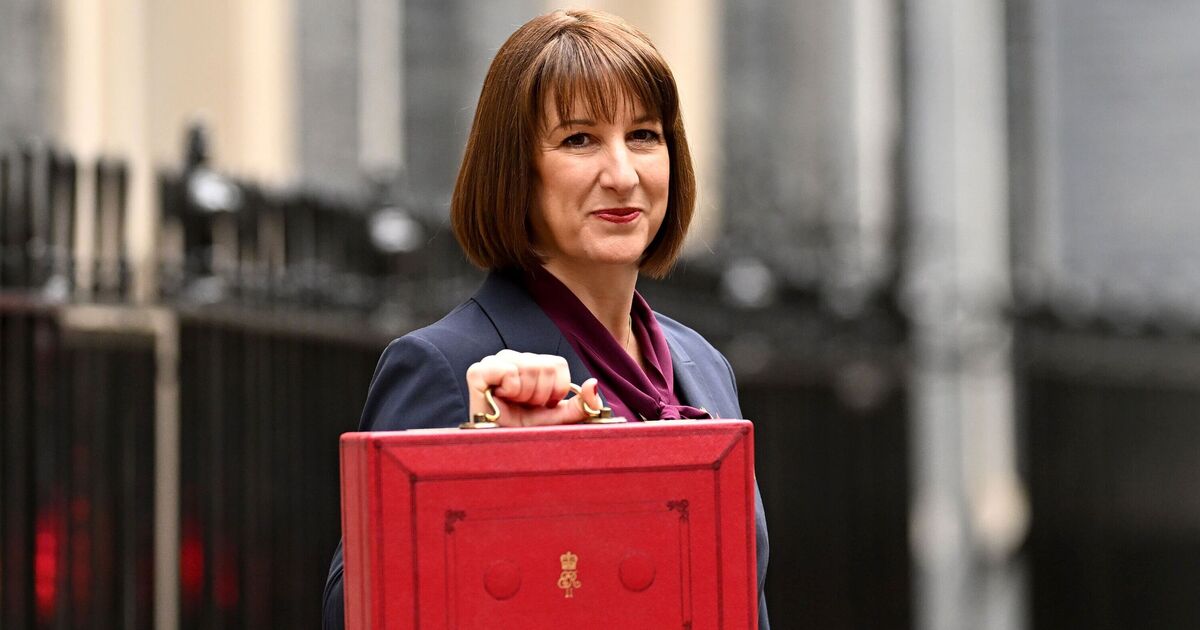
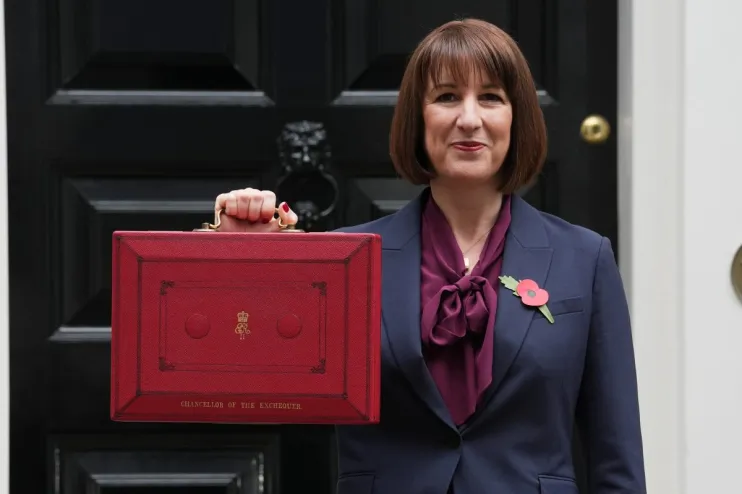
The UK government borrowed a higher-than-forecast £17.4bn in October, piling further pressure on chancellor Rachel Reeves ahead of next week’s autumn budget.
City economists had expected borrowing to drop to £15bn, down from the £20bn borrowed in September. This was £3bn more than the £14.4bn forecast in March by the Office for Budget Responsibility (OBR).
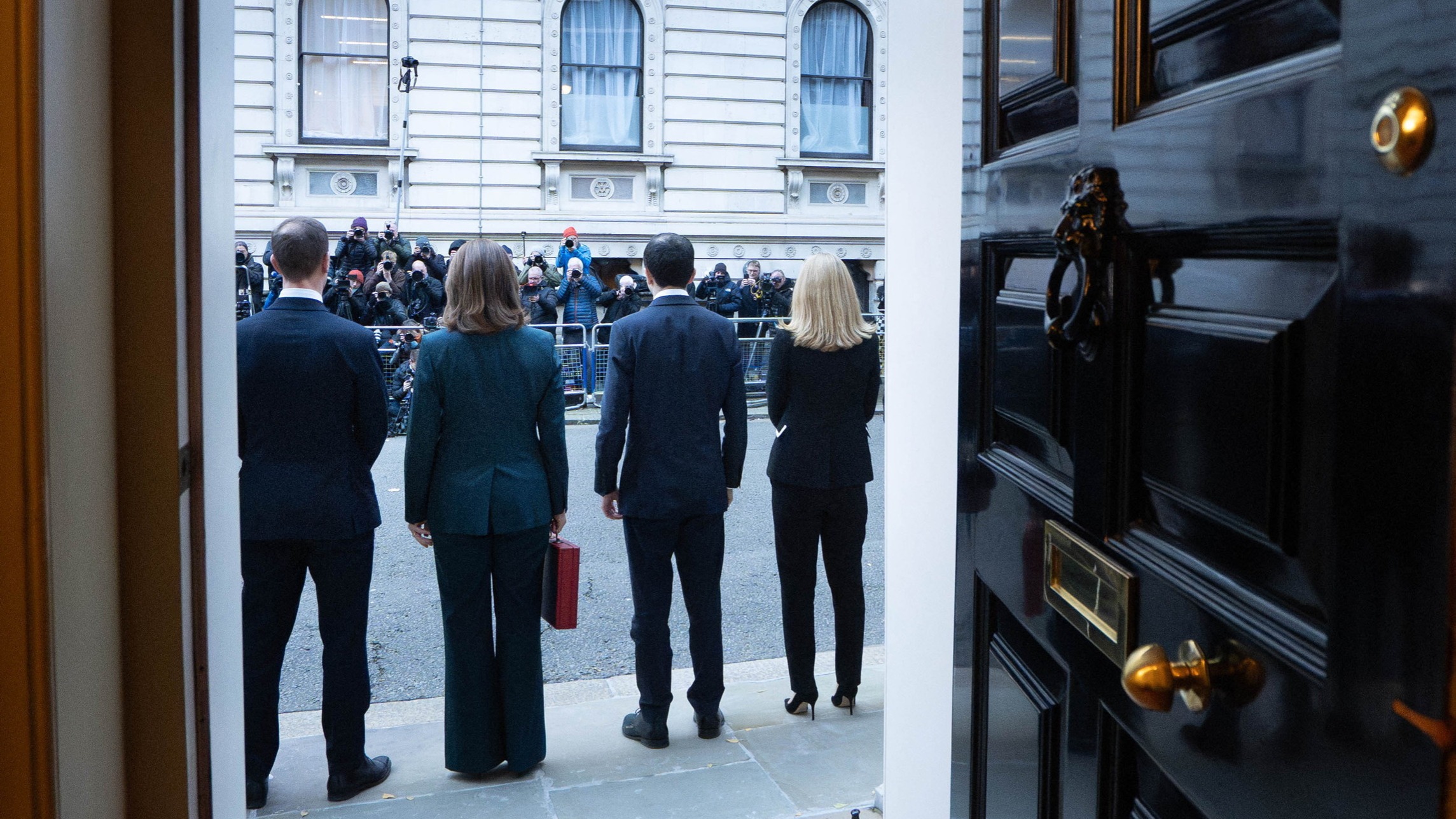
The latest figures come less than a week before Reeves is due to deliver the budget on 26 November, with the chancellor expected to announce tax increases to help repair the UK’s public finances.
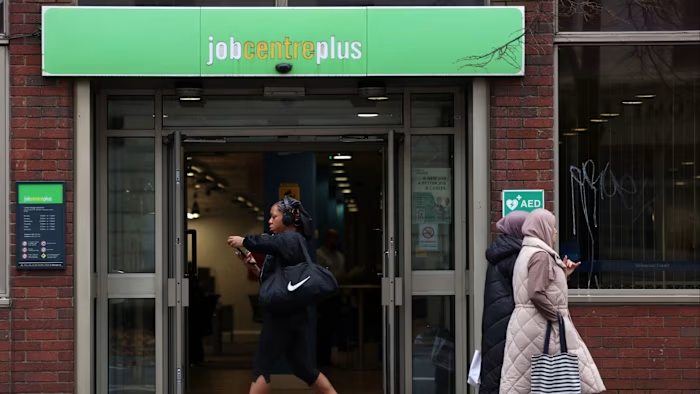
Meanwhile, UK retail sales fell last month for first time since May. The Office for National Statistics (ONS) reported that sales volumes are estimated to have fallen by 1.1% in October.
The ONS said: “Supermarkets, clothing, and mail order retailers fell in October 2025, which some retailers attributed to consumers delaying their spending in the lead up to Black Friday.”
This follows a 0.7% rise in September (revised up from a 0.5% rise) and a 0.5% increase in August (revised down from a 0.6% rise).
Read more: UK announces billions more investment in AI ahead of budget
Elsewhere, the UK energy price cap is set to rise by 0.2% in January, affecting those on variable tariffs in England, Wales and Scotland.
Regulator Ofgem announced on Friday that from 1 January to 31 March 2026 there will be a monthly increase of 28p on the price of energy for a typical household which uses electricity and gas, and pays by direct debit.
This means the average dual-fuel energy bill will increase to £1,758 per year in January to March, up from £1755 in the current quarter, an increase of 0.2%.
Tim Jarvis, from energy regulator Ofgem, said: “While wholesale energy costs are stabilising, they still make up the largest portion of our bills which leaves us open to volatile prices.”
-
London’s benchmark index (^FTSE) was hovering around the flatline by the close
-
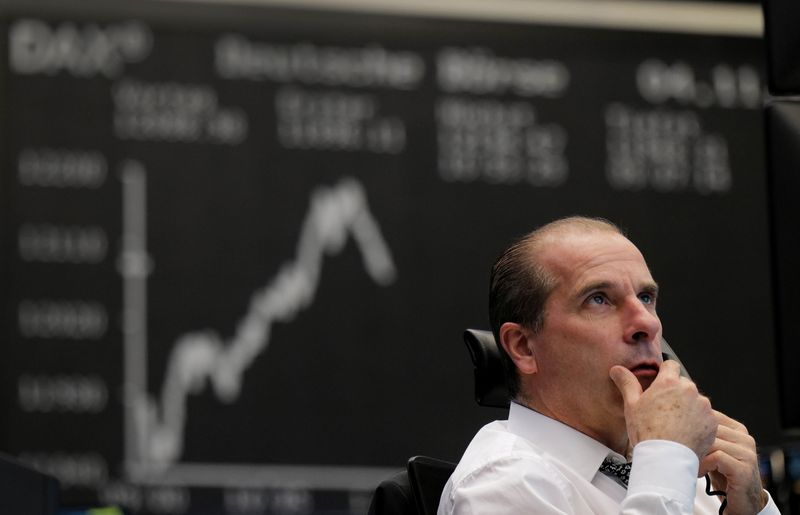
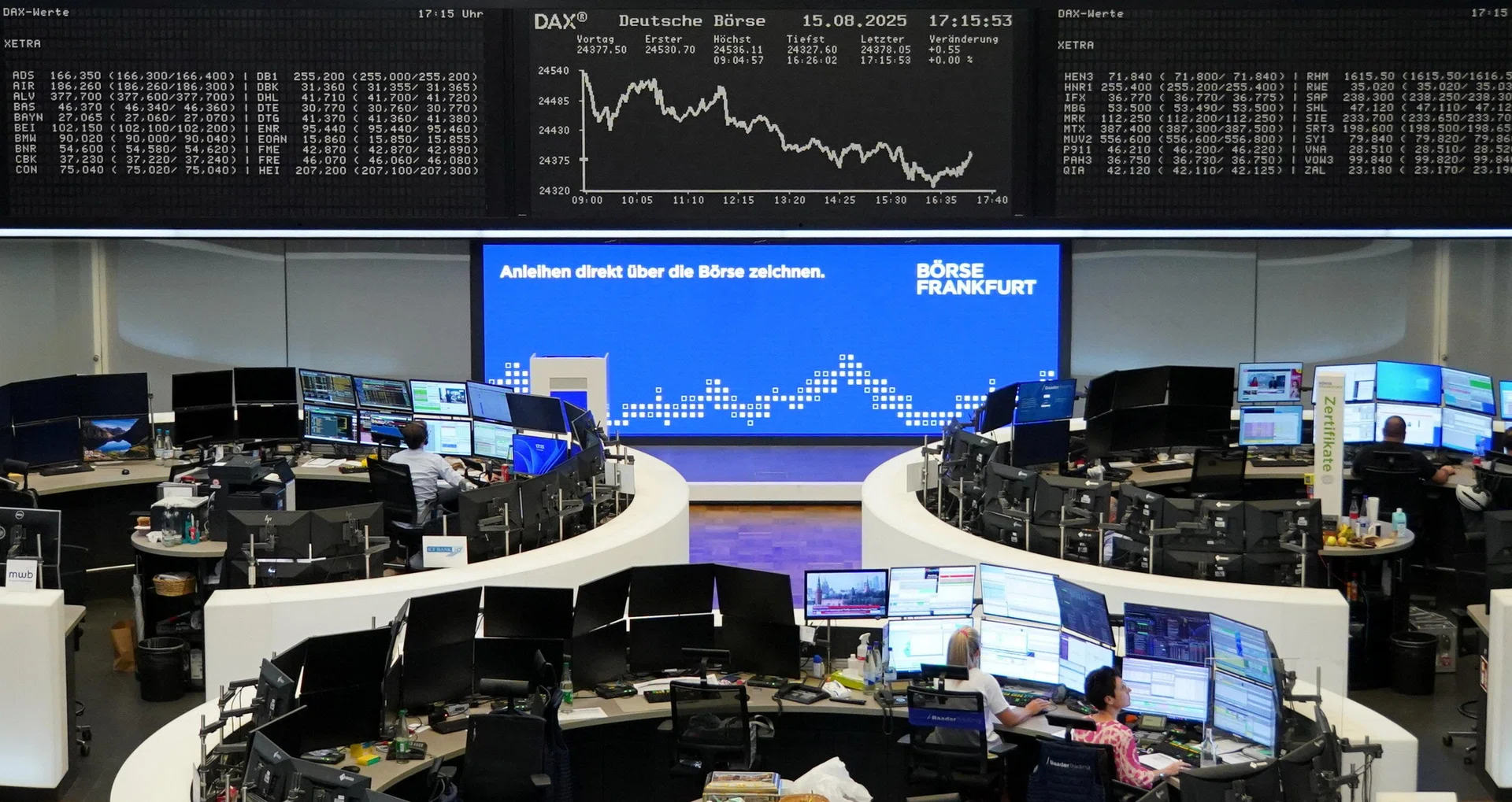
Germany’s DAX (^GDAXI) dipped 0.8% and the CAC (^FCHI) in Paris headed 0.1% into the red
-
The pan-European STOXX 600 (^STOXX) was down 0.4%
-
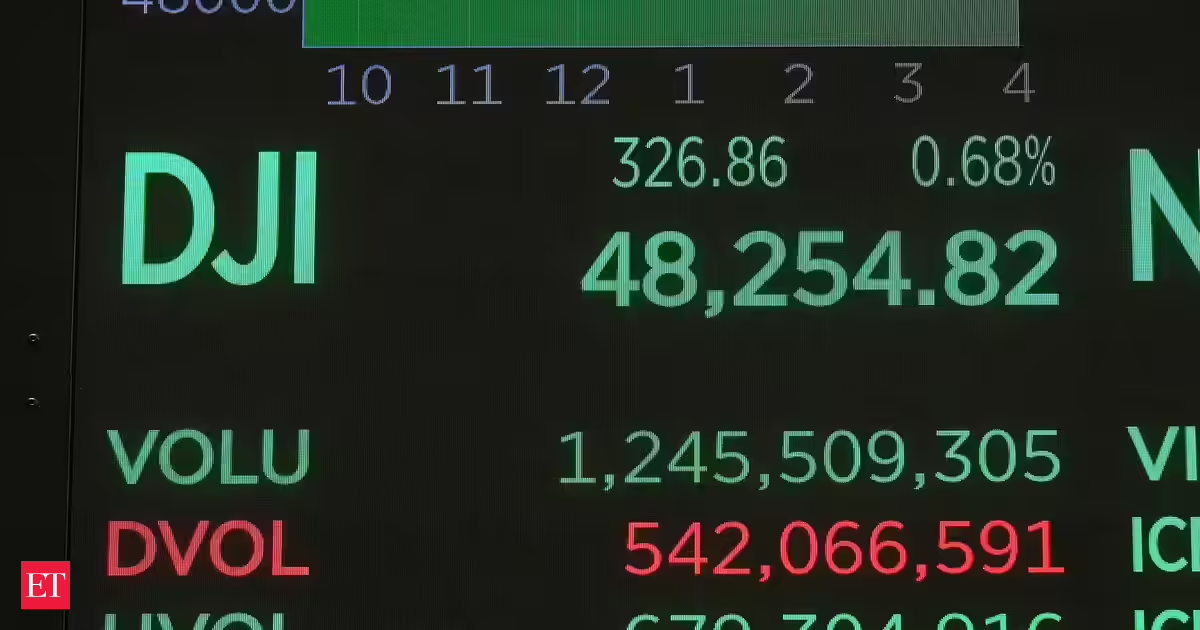
The tech-heavy Nasdaq Composite (^IXIC) fell 0.7%, while the S&P 500 (^GSPC) dropped 0.2%, reversing gains for the two gauges earlier in the session. The Dow Jones Industrial Average (^DJI) gained nearly 0.3%. Stocks had closed sharply lower on Thursday in a remarkable turnabout..
-
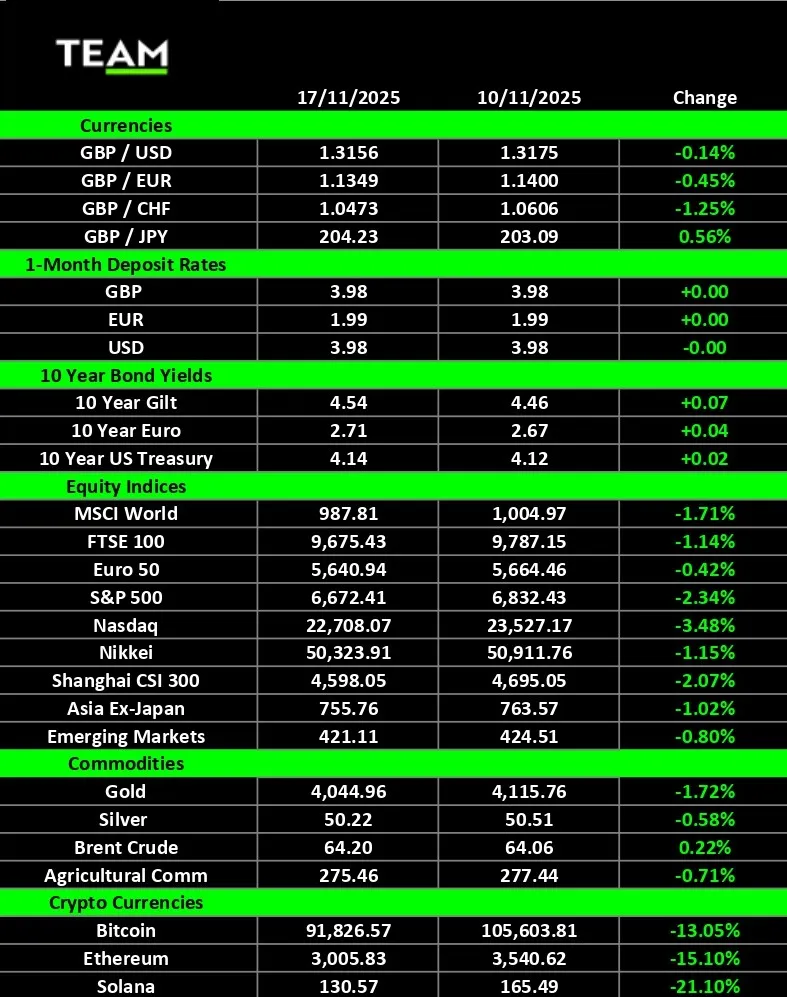
The pound was 0.1% up against the US dollar (GBPUSD=X) at 1.3088
Follow along for live updates throughout the day:
LIVE COVERAGE IS OVER 19 updates
-
Blog close
Well that’s all from us for today, thanks for following along as always. Be sure to join us again on Monday when we’ll be back for more of the latest markets news and updates of what’s happening across the global economy.
Until then, have a good weekend folks!
-
What to watch next week
As our markets live blog draws to a close, let’s take a look at what’s on the agenda for next week…
The UK autumn budget will be in the spotlight in the coming week, along with earnings releases from a number major global companies.
Markets are bracing for billions in tax hikes when chancellor Rachel Reeves delivers her autumn budget on Wednesday, as she seeks to repair the country’s public finances.
In terms of earnings, Chinese tech giant Alibaba (9988.HK, BABA) is due to report, with investors eyeing the company’s level of AI spending and the returns it is generating from these investments.
Meanwhile, in the US tech sector, Dell (DELL) is to release third-quarter earnings, though the company offered a mixed outlook for Q3 in its previous set of results.
In Europe, Rémy Cointreau (RCO.PA) is slated to report, with recent sales figures having already given investors a taste of what to expect from the French spirit maker’s half-year results.
On the London market, investors will be keeping an eye on EasyJet’s (EZJ.L) results, after the airline flagged its annual profit would be impacted by higher fuel costs and a strike by French air traffic control in the summer.
-
Europe increasingly ‘vulnerable’ to shocks: ECB chief
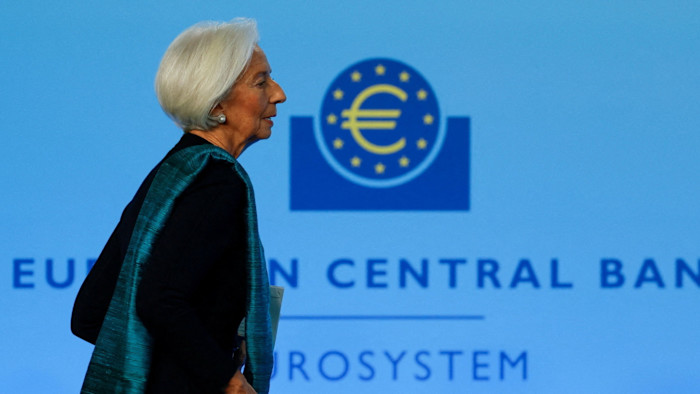
European Central Bank (ECB) chief Christine Lagarde warned on Friday that the region was increasingly “vulnerable” to shocks like US tariffs and is lagging behind in areas that will drive growth such as AI.
The continent must urgently speed up its integration and overhaul a model of export-led growth that has faltered amid mounting geopolitical turmoil, she said in a speech to a banking conference.
“Europe has become more vulnerable,” the head of the central bank for the 20-nation eurozone said in Frankfurt, pointing to the region’s “dependency on third countries for our security and the supply of critical raw materials”.
“Global shocks have intensified, with rising US tariffs, Russia’s invasion of Ukraine and stiffening competition from China,” she added.
Europe’s domestic market meanwhile had “stood still,” particularly in areas set to underpin future growth like the digital sector and artificial intelligence, Lagarde said.
The continent had long relied on exports of goods ranging from cars to factory equipment and pharmaceuticals to support its economies.
But this model was no longer working, said Lagarde, saying the European Union needed to strengthen its domestic economy as “a source of resilience in an uncertain world”.
-
Netflix, Comcast, Paramount formally submit bids to acquire Warner Bros. Discovery
Netflix (NFLX), Comcast (CMCSA), and Paramount (PSKY) have formally submitted takeover bids for Warner Bros. Discovery (WBD), multiple outlets reported Thursday evening.
Paramount’s offer was the only one aiming to acquire Warner Bros. Discovery in its entirety, according to people familiar with the matter, while Comcast and Netflix are interested in acquiring the company’s studio and streaming business, which houses franchises such as Batman.
As Warner Bros. Discovery considers the first round of what it previously said were “unsolicited” offers, it remains on track to split into two companies — one with its global television network and another with its studio and streaming unit — by mid-2026.
Shares of Warner Bros. Discovery, which gained 0.6% in premarket trading, are pacing for gains of 25% over the past month. Year to date, the stock has risen a staggering 116%.
-
Mexico’s economy shrinks in third quarter
Mexico’s economy is on the brink of recession after new data on Friday revealed that activity shrank in the third quarter.
Gross domestic product (GDP) in the country shrank 0.3% in the three months to September, the country’s statistics body reported, and comes at a time when trade war uncertainty was hitting growth.
If Mexico’s economy were to suffer a contraction in the fourth-quarter, it would fall into a technical recession (two consecutive quarters of contraction).
-
Inheritance tax receipts raise £5.2bn in seven months
Inheritance tax (IHT) receipts hit £5.2bn in the first seven months of the 2025-26 tax year, according to data released by HM Revenue and Customs (HMRC) on Friday.
This is £0.2bn higher than same period of the previous tax year and continues an upward trend over the last two decades.
Nicholas Hyett, Investment Manager at Wealth Club said:
-
Christmas delivery chaos as UPS workers ballot for strikes
UK consumers are facing major delays to Christmas and January sales parcel deliveries nationwide as Unite members working for UPS ballot for strike action.
Over 2,000 Unite members at the firm, which is headquartered in Feltham, West London, are being balloted over industrial action in a dispute about pay and conditions.
Workers including delivery drivers have rejected the company’s latest pay offer of a 2.8% increase and 3.2% increase for 2025 and 2026 respectively. The pay offer is less than the inflation rate (RPI) of 4.5% and a real terms pay cut.
Unite general secretary Sharon Graham said:
A previous offer from UPS had a lump sum of £100 to those on minimum wage, but this has now been retracted by the firm to fund the pay offer for 2026.
UPS is the world’s biggest parcel courier. While it has not released specific figures for the UK, it delivers more than 15 million parcels each day worldwide. It is highly profitable, reporting $1.31 billion in net profits and $21.4 billion in revenue just in the third quarter of this year. Meanwhile, around a quarter of its UK workforce are on minimum wage and have been struggling to afford essentials amid rising costs.
The dispute also relates to conditions. Staff that have left UPS have not been replaced, resulting in workers at the company having to do forced overtime and being given unreasonable workloads. Meanwhile, there are fears around job security due to the use of outsourcing.
Workers have also seen their sick pay withheld and not paid by the company, going against what has been agreed between UPS, Unite and its sister unions.
The ballot opened this week and closes on 3 December. UPS has already attempted to interfere in the democratic process by putting up posters in its workplaces advising workers not to vote in the ballot.
Action could begin in mid-December, hitting last-minute Christmas gift deliveries as well as purchases made during the popular Boxing Day and January sales. In particular, Apple customers could see delays as this is a retailer that usually uses UPS as its courier, while other firms that use it include Amazon, Dell and Louis Vuitton.
Unite national officer Matt Draper said:
-
UK consumer confidence ‘bleak’ ahead of budget
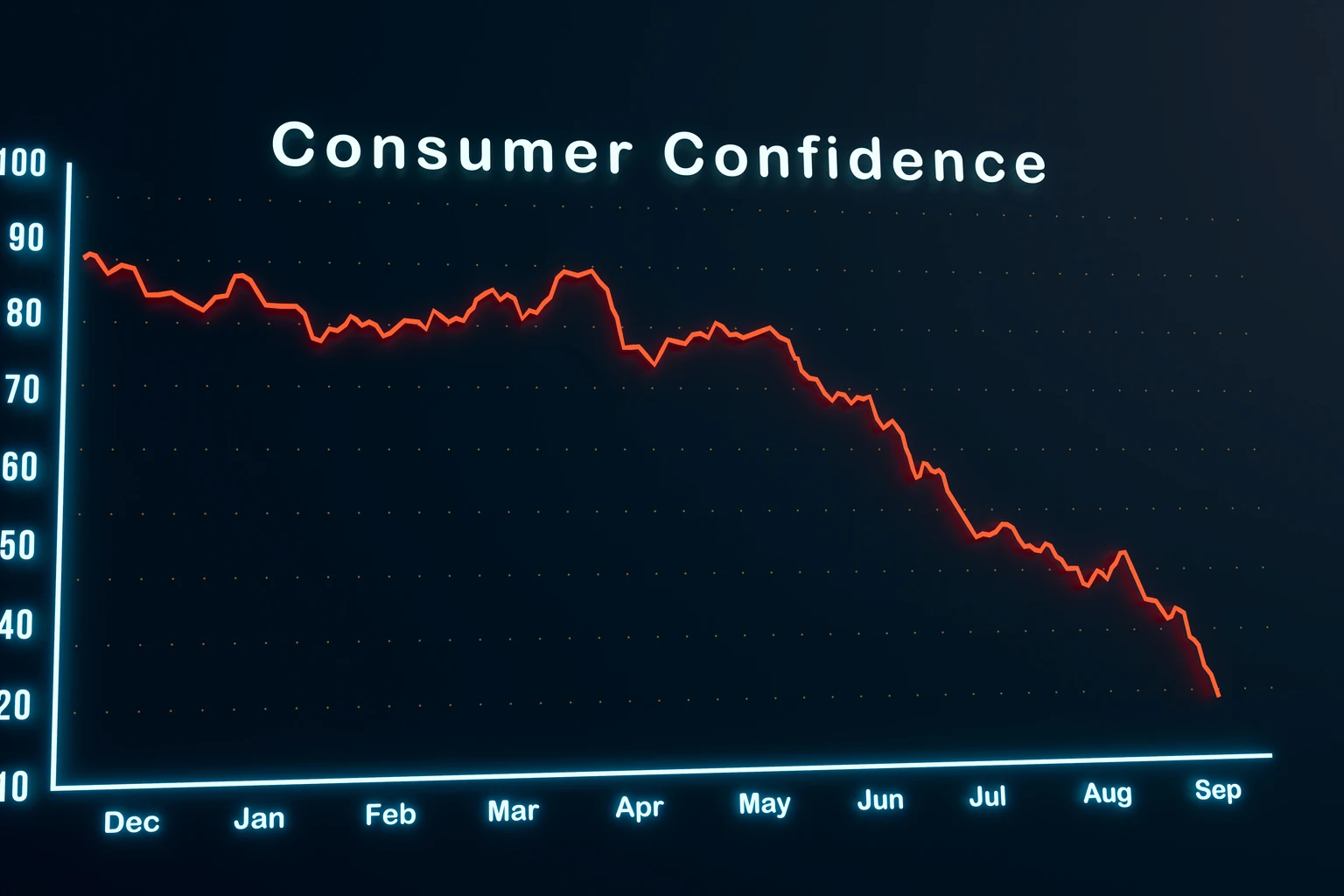
UK consumer confidence has fallen across all measures as the public braces for difficult news in next week’s Budget, figures show.
GfK’s long-running consumer confidence Index fell by two points to minus 19 in November, with all five measures from confidence in the general economy to spending expectations tumbling.
Neil Bellamy, consumer insights director at GfK, said:
Forward-looking measures for confidence in both personal finances and the general economy both fell by two points – although the personal finances measure is an improvement of two points compared to this time last year.
However, at minus 32, expectations for the general economic situation over the next 12 months is now six points worse than last November.
Gfk said a three-point drop in the major purchase index – an indicator of confidence in buying big ticket items – to minus 15 is also “troubling at this time of year, suggesting households are tightening their grip just as retailers move into a crucial trading period”.
Bellamy said: “In such conditions, the Budget offers a timely chance to provide the clarity and reassurance that consumers are struggling to find on their own.”
-
UK announces billions more investment in AI ahead of budget
The UK government has announced that billions of additional private investment has been committed to help build the country’s AI capabilities to drive growth, which it said would create thousands of new jobs.
The announcement on Thursday by the Department for Science, Innovation and Technology comes less than a week before chancellor Rachel Reeves is due to deliver the budget on Wednesday, 26 November.
The government said that £24.25bn in private investment had been committed in the last month alone, as part of its package of new reforms around AI. So far more than £78bn has been invested in the UK’s AI sector, according to government data.
Companies such as Vantage Data Centers and Microsoft (MSFT) are teaming up with the government to deliver another AI Growth Zone. These zones were announced in January as part of the government’s AI Opportunities Action Plan, to speed up building AI data centres.
The government said that £10bn of investment in its latest AI Growth Zone in South Wales will create 5,000 jobs, including in industrial areas such as the former Ford Bridgend Engine Plant.
Each growth zone will receive up to £5m in initial government funding, which is aimed at boosting business adoption and invest in the skills of local workers.
As part of the plans announced on Thursday, the government said that it would act as a “first customer” for UK start-ups that it considers to be building high-quality AI hardware products but are struggling to get off the ground without investment. It said that this “advance market commitment” is backed by up to £100m of government support.
In addition, James Wise, partner at venture capital firm Balderton Capital will chair a the Sovereign AI Unit, which will be backed by £500m of investment to help build out Britain’s AI capabilities.
AI ambassadors that help maximise the benefits for Britain are also part of the new plans. These include Nobel prize-winning economist Simon Johnson and Monzo co-founder and Y Combinator general partner Tom Blomfield.
The government said it will also offer more free computers to British researchers and startups so they can train new AI models and deliver scientific breakthroughs. Some £137m in government funding will also back a strategy to ensure AI “supercharges” scientific discovery.
-
Bitcoin heading for worst month since crypto collapse of 2022
Bitcoin (BTC-USD) is on track for its worst monthly performance since a string of corporate collapses rocked the wider crypto sector in 2022.
The largest cryptocurrency slid as much as 6.4% to $81,629 on Friday before paring losses, according to data compiled by Bloomberg. It was trading at $84,166 on Friday morning. Ether fell as much as 7.6% to below $2,700.
Bitcoin has now shed about 23% of its value in November, the most in a single month since June 2022, according to data compiled by Bloomberg. The implosion of Do Kwon’s TerraUSD stablecoin project in May of that year sparked a daisy chain of corporate failures that culminated in the downfall of Sam Bankman-Fried’s FTX exchange.
Dan Coatsworth, head of markets at AJ Bell, said:
-
Markets ‘did not appreciate’ Nvidia’s earnings, says Huang
Nvidia boss Jensen Huang said in a company meeting on Thursday that “the market did not appreciate” its “incredible” quarter.
Business Insider has the details…
Nvidia delivered record-shattering earnings on Wednesday as Huang rebuffed swelling narratives around an AI bubble. Its stock popped on Wednesday and then fell again on Thursday as confidence in the AI trade wavered.
Huang said the expectations for Nvidia were so sky-high that the company was in somewhat of a no-win situation. He nodded to online chatter about the company’s massive economic sway.
Huang also cited posts saying that Nvidia’s work was helping the US to avoid a recession.
While he said he was “delighted” by the company’s results and proud of employees, Huang said that Nvidia’s massive influence has made expectations harder to meet — something that has also played out in its market value.
He joked about the “good old days” when the company had a $5 trillion market cap.
“Nobody in history has ever lost $500 billion in a few weeks,” Huang said. “You’ve gotta be worth a lot to lose $500 billion in a few weeks.”
-
Tullow Oil nosedives to record low on production warning
Tullow Oil (TLW.L) nosedived 32% in London on Friday, hitting a record low, after it warned that 2025 production will be at the lower end of its forecast.
Despite recent asset sales and progress in Ghana, natural production decline and delayed government payments are pressuring cash flow.
The group now expects output this year to come in at the lower of its 40,000-45,000 barrels of oil equivalent per day range, while next year’s output could fall to 34,000-42,000 as it grapples with natural declines in its wells in Ghana.
“Our near-term priority remains to put Tullow on a long-term sustainable financial footing,” CEO Ian Perks in a statement.
“To achieve this, we are focused on maximising operational efficiency in Ghana, cost optimisation, and refinancing the Group’s capital structure.”
It came as oil prices tumbled on Friday as renewed hopes of a peace deal between Russia and Ukraine raised expectations that this could lead to increased supply on the market.
Brent crude (BZ=F) futures fell 1.5% to $62.45 per barrel at the time of writing, while West Texas Intermediate futures (CL=F) rose 1.7% to $58.01 a barrel.
Meanwhile, US sanctions on Russia’s two largest oil companies, Rosneft and Lukoil, are due to come into effect on Friday.
-
Stocks on track for worst week since April
Global stocks are now on track to register their worst week since president Donald Trump’s tariff plan ripped through markets back in April.
Kathleen Brooks, research director at XTB, said:
-
Energy price cap rise is a ‘tedious disappointment’
Richard Neudegg, director of regulation at Uswitch.com, said:
-
UK energy cap to rise by 0.2% in January
The UK energy price cap is set to rise by 0.2% in January, affecting those on variable tariffs in England, Wales and Scotland.
Regulator Ofgem announced on Friday that from 1 January to 31 March 2026 there will be a monthly increase of 28p on the price of energy for a typical household who use electricity and gas and pay by direct debit.
This means the average dual fuel energy bill will increase to £1,758 per year in January to March, up from £1755 in the current quarter, an increase of 0.2%.
Tim Jarvis, from energy regulator Ofgem, said:
Meanwhile, Dame Clare Moriarty from Citizens Advice said:
-
UK retail sales fall for first time since May
UK retail sales unexpectedly fell last month for first time since May.
The Office for National Statistics (ONS) reported that sales volumes are estimated to have declined 1.1% in October. Economists had been expecting sales growth to be flat on the previous month.
It comes as shoppers awaited Black Friday deals, and hold back amid uncertainty over the upcoming budget.
The ONS said: “Supermarkets, clothing, and mail order retailers fell in October 2025, which some retailers attributed to consumers delaying their spending in the lead up to Black Friday.”
Clothing, footwear and textile stores posted a 3.3% month-on-month drop in sales, the largest fall, after strong summer when shoppers were motivated to buy clothes during warm weather and sporting events improved consumers’ mood.
Supermarkets recorded a sales decrease of 1.1% in October, the second consecutive monthly fall.
Online retail sales fell 1.7% month on month, while fuel sales dropped 2.4% in October compared with September.
-
UK government borrows more than expected in pre-budget blow for Reeves
UK government borrowing fell in October to £17.4bn but was higher than expected, piling further pressure on chancellor Rachel Reeves ahead of next week’s autumn budget.
This figure was £1.8bn less than in October 2024, according to data released by the Office for National Statistics (ONS) on Friday. However, this was higher than consensus expectations of £15.1bn and the Office for Budget Responsibility’s (OBR) forecast of £14.4bn.
October’s public sector net borrowing figure was lower than the £20.2bn recorded for September, but the ONS said it was still the third highest borrowing figure for October since monthly records began in 1993.
Borrowing for the financial year to October totalled £116.8m, which was £9bn more than the same seven-month period last year. It was also the second highest April-to-October borrowing on record after 2020.
These latest figures come less than a week before Reeves is due to deliver the budget on 26 November, with the chancellor expected to announce tax increases to help repair the UK’s public finances.
James Murray, chief secretary to the Treasury, said:
The current budget deficit – borrowing to fund day-to-day public sector activities – was £12.6bn for October, which was £2.4bn less than the same month last year. The total current budget deficit for the financial year to October was £83.9bn, which was £7.4bn more than the same period last year.
Public sector net debt excluding public sector banks was provisionally estimated to be 94.5% of the UK’s gross domestic product (GDP) at the end of October.
Central government receipts came in at £86.4bn for October, which was £5.8bn more than the same month last year.
Grant Fitzner, chief economist for the ONS, said:
-
Asia and US overnight
Stocks in Asia were extended the global rout overnight, with the Nikkei (^N225) falling 2.4% on the day in Japan, while the Hang Seng (^HSI) also tumbled 2.4% in Hong Kong. The Shanghai Composite (000001.SS) was 2.5% down by the end of the session.
In South Korea, the Kospi (^KS11) lost 3.8% on the day.
Across the pond on Wall Street jitters over inflated tech stock prices continued, while a highly anticipated US jobs report failed to provide clarity on whether the Federal Reserve will cut interest rates.
The S&P 500 (^GSPC) dipped 1.6%, and the tech-heavy Nasdaq (^IXIC) was 2.2% lower by the end of the session, it what was its widest one-day swing since April 9 when the Trump administration’s tariffs spooked markets. The Dow Jones (^DJI) also lost 0.8%.
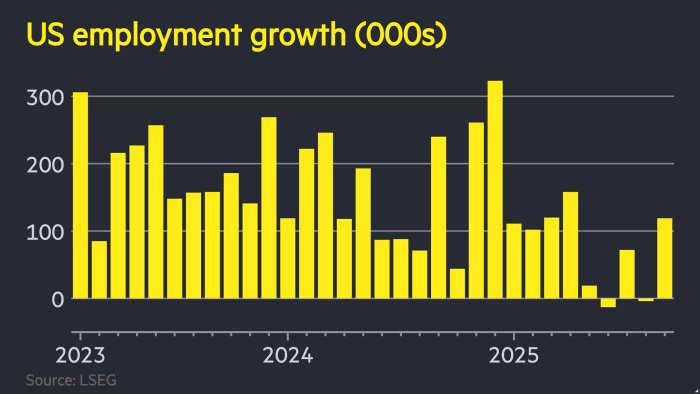
It came as data showed the US economy added far more jobs than expected in September, but a rise in the unemployment rate to 4.4%m and downward revisions to prior months painted a murky picture for the Fed as it considers its interest rates next month.
Treasury yields fell as futures moved to imply a 40% probability of a US rate cut in December, up from 30% a day earlier.
However, with the next jobs report only available after the Fed meeting, investors were unconvinced that easing would come next month.
-
Coming up
Good morning, and welcome back to our markets live blog. As usual we will be taking a deep dive into what’s moving markets, and what’s happening across our global economy.
To the day ahead, we’ll get the global flash November PMIs, US November Kansas City Fed services activity, UK November GfK consumer confidence, October retail sales, public finances, France November manufacturing confidence, October retail sales, and Canada retail sales.
Central bank speakers include the Fed’s Williams and Logan, the ECB’s Lagarde, de Guindos, Kocher, Muller and Nagel, and the BoE’s Pill.
Here’s a snapshot of what’s on the agenda for today:
-
7am: Trading updates: Asos, Babcock International, Tullow Oil
-
7am: UK public finances for October
-
7am: UK retail sales for October
-
7am: UK energy price cap for January-March 2026 to be set
-
8am: Eurozone flash PMI economic data
-
9:30am: UK flash PMI economic data
-
3.40pm: Bank of England chief economist Huw Pill panellist in Zurich on ‘the future of the world’s leading currencies’
-
Download the Yahoo Finance app, available for Apple and Android.