
The Paychex headquarters in Rochester, New York
© 2024 Bloomberg Finance LP
Paychex is one of the country’s most influential small business platforms, best known for payroll yet built around a broader stack of HR, benefits, insurance and advisory services. The company generates more than $5.5 billion in annual revenue and supports a client base whose employees represent roughly one in eleven U.S. workers. That reach gives Paychex unusual visibility into the small and midsize business economy.
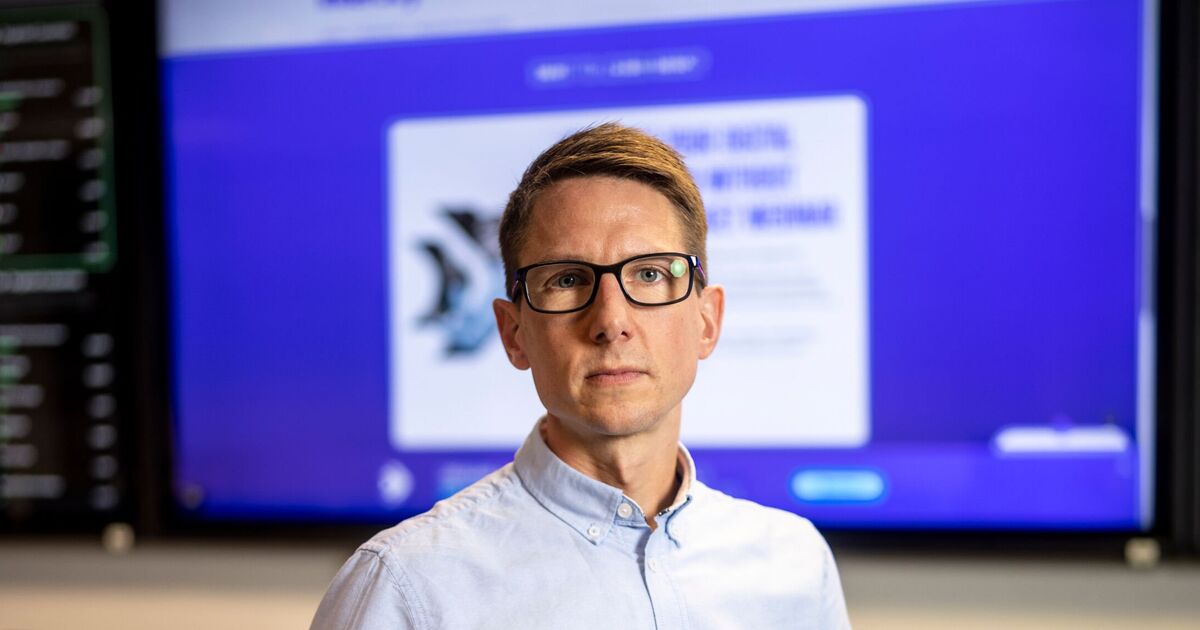
As Senior Vice President of Data and Artificial Intelligence, Beaumont Vance operates at the intersection of product, platform and policy. His remit spans data monetization, data science and AI, data engineering and reporting and analytics. The aim is straightforward: convert trusted data into better decisions, sharper automation and customer value that compounds.
The Paychex Platform and the SMB Engine
Vance frames Paychex through the lens of the owner operator. As he put it, “Most small business owners discover that 90 percent of their time goes into things that have nothing to do with the business they got into.” Paychex exists to take that load, from payroll to benefits to property and casualty coverage to a national PEO and HR advisory services. For employees, even pet insurance is on the menu.
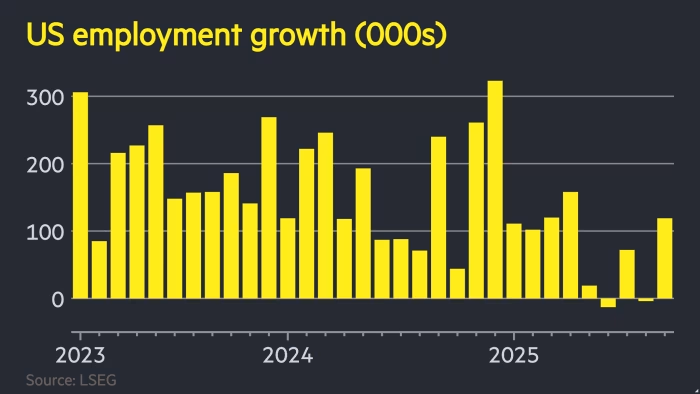
The backdrop is the scale of small business in the United States. Nearly all firms have fewer than 500 employees and employ the vast majority of working adults. “This isn’t the small business economy,” Vance noted. “This is the U.S. economy.” By his calculation, Paychex clients represent one in every eleven American workers, giving the company “rock solid, dollar based insight into what’s actually happening in the labor market.”
A Four Pillar AI and Data Mandate
Vance leads four tightly linked functions. Data monetization turns insight into products such as the Small Business Index and bespoke economic signals. Data science and AI handle model building and algorithmic work. Data engineering constructs the pipelines and platforms that feed models and reporting. Reporting and analytics put clean intelligence in the hands of leaders across the company.
He is quick to note that lines blur by design. “You can’t do anything with AI without having the data, and the data can’t just be there,” he said. “It has to be organized, machine readable, tagged, governed. The reality is one team with different points of emphasis.”
Data Monetization with Dollar Tight Ground Truth
Paychex’s data differs from typical surveys or samples. Every payroll transaction is tied to dollars, reconciled to the penny and immediately validated by clients if anything is off. Vance likens it to market infrastructure. “It’s very much like stock market data,” he explained. “If we were off by ten cents, someone would call us within an hour.” That creates signals on employment, wages and hours that can illuminate national trends or local shocks.
Beyond payroll, Paychex processes about 39 million client contacts per year. “We have pinpoint precision on the voice of the customer,” he noted with pride. AI systems synthesize that stream to map pain points and emerging needs with accuracy that improves daily.
Laying the Data Foundation
Great AI begins with great hygiene. When Paychex set up Vance’s function, it established a dedicated data group to inventory, structure and centralize information for reporting and AI. A major push focused on conversational data, where years of recorded client interactions had lived as unstructured audio and text.
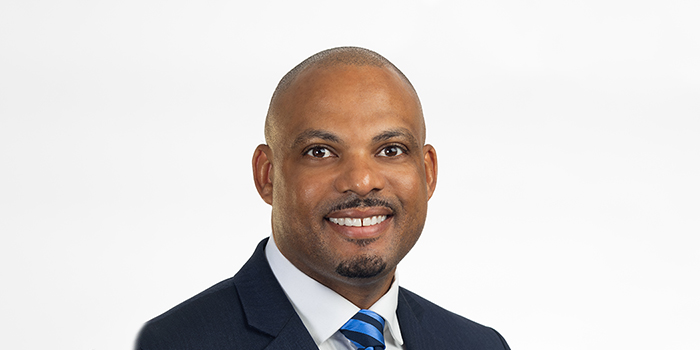
Beaumont Vance of Paychex
Paychex
“In the past, if you wanted to know what customers needed, you literally had to listen to the calls,” he said. With nearly 300 years’ worth of recorded conversations produced annually, that was impossible. Conversational AI transformed that archive into searchable knowledge tied to policies, legal guidance and best practices. Usable data volume grew more than tenfold, unlocking faster answers and better automation.
An Investor’s Eye for Moats
Vance arrived from growth private equity, where he advised portfolio companies and evaluated AI businesses. That shaped a simple test he now applies everywhere. “The first question we learned to ask was, ‘what is your data moat?,’” he offered. “If you don’t have durable data, whatever tech you built is going to get wiped out in six months.”
That lens made Paychex compelling. Decades of employment data, plus daily client conversations, create a foundation that is hard to copy. “When they showed me the data, I understood immediately,” he revealed. “This was the moat every investor is chasing.”
From Answers to Actions: The Rise of Agents
Early gains from large language models centered on knowledge retrieval. Ask a question, get an answer. Useful, yet incomplete. “There’s a huge difference between telling someone which form they need,” Vance noted. “And saying, ‘would you like me to fill it out and send it for you?’” He sees the next unlock in AI agents that take action on behalf of users with consent and audit trails.
Simple cases are already live, such as address changes or routine filings. The trajectory points toward compound workflows where an agent gathers context, completes documents, files them and confirms status. “That’s when AI goes from insight to outcome,” he said.
Retaining Know How with AI First Knowledge Management
Traditional knowledge management asked experts to write, tag and maintain documents. Paychex flipped the model by capturing expertise as it happens. HR advisors support millions of conversations each year. AI organizes that stream into a living knowledge base that a new hire can query on day one.
Internally, Vance says the aim is empowerment. “We want to give employees an Iron Man suit,” he analogized. “It’s still the person doing the work, but with all the cumulative knowledge right there.”
A Modular, Outcome First Approach to AI Development
The team starts with outcomes, not tools. For each problem, they scan options to build, buy or partner, then pilot quickly with strict governance. An internal GPT style system, LibreChat, gives most employees secure access to generative capabilities. The platform remains agnostic to models and vendors.
“We can’t get locked into any one pathway,” he emphasized. “Optionality is everything. We swap components as tech improves.” Experiments start small, are measured tightly and scale only when value and controls are clear.
Working Across Product and Platform
Paychex minimizes turf debates. Vance and his colleagues focus on shared outcomes. “A Venn diagram of product, platform and AI is almost all overlap,” he underscored. The recruiting copilot is one example. In weeks, cross functional teams combined proprietary data, retrieval over curated knowledge and agentic workflows to fast-track qualified candidates, directly addressing clients’ top pain point.
What’s Next: Agents at Scale and Ambient Interfaces
Vance expects agents to define the next chapter, with automation moving from answers to end to end resolution. He is also bullish on augmented reality interfaces that free people from the phone screen. He describes early smart glasses that surface calendars, translate speech and anchor real time teleprompting. “I’m waiting for this to mature,” he emphasized. “Once agents and AR meet, assistance becomes ambient.”
For small businesses that juggle ten jobs at once, that future is more than a novelty. It is a new operating system where expert help is present in the flow of work, invisible until needed and immediate when called.
Beaumont Vance measures progress in time returned and friction removed. With a data moat that reflects the real economy and an AI stack built for action, Paychex is moving beyond knowledge to execution. In the process, it is giving owners and HR leaders something rare in business: the ability to serve people better while doing less of what pulls them away from the work they love.
Peter High is President of Metis Strategy, a business and IT advisory firm. He has written three bestselling books, including his latest Getting to Nimble. He also moderates the Technovation podcast series and speaks at conferences around the world. Follow him on Twitter @PeterAHigh.