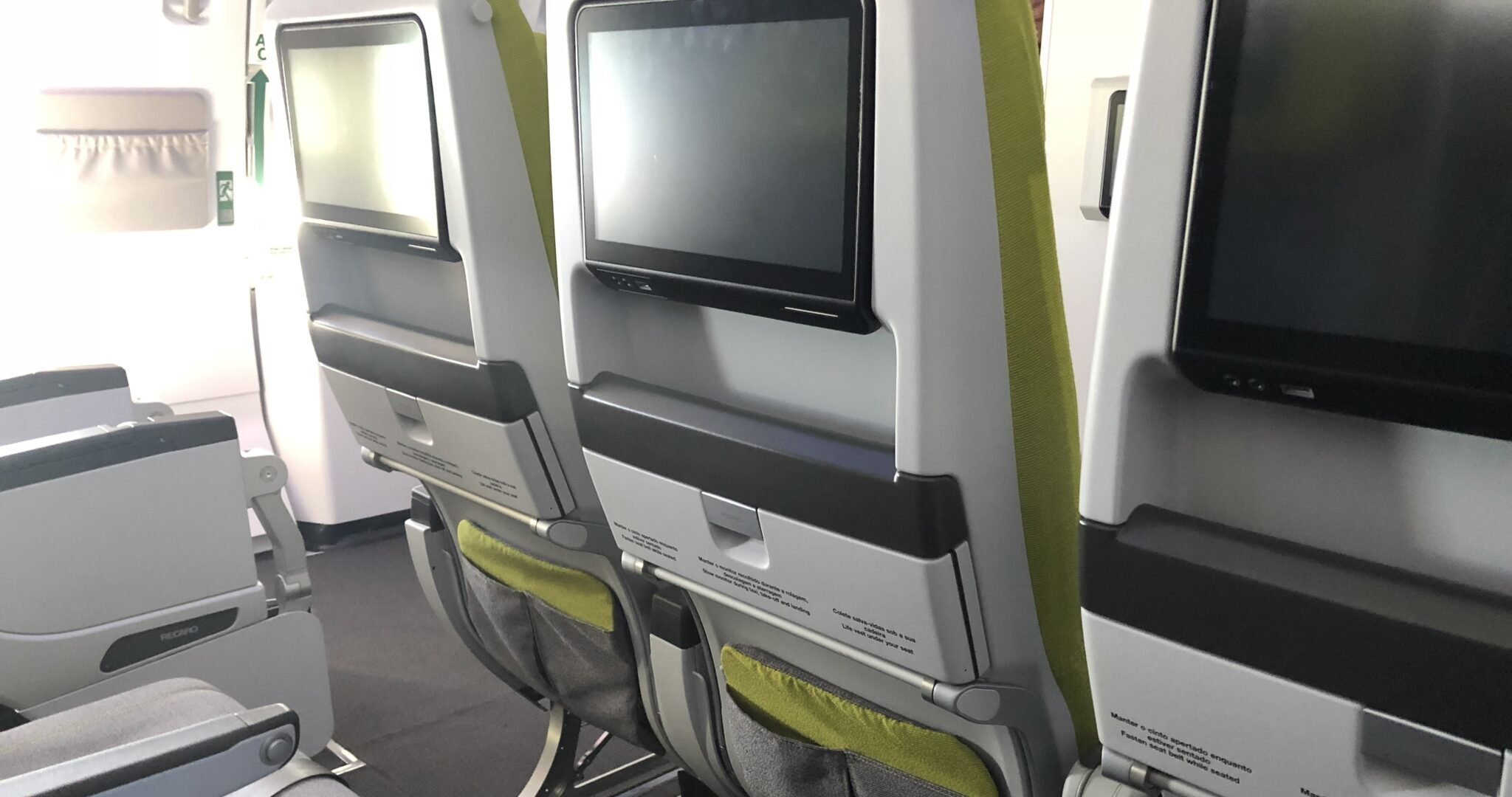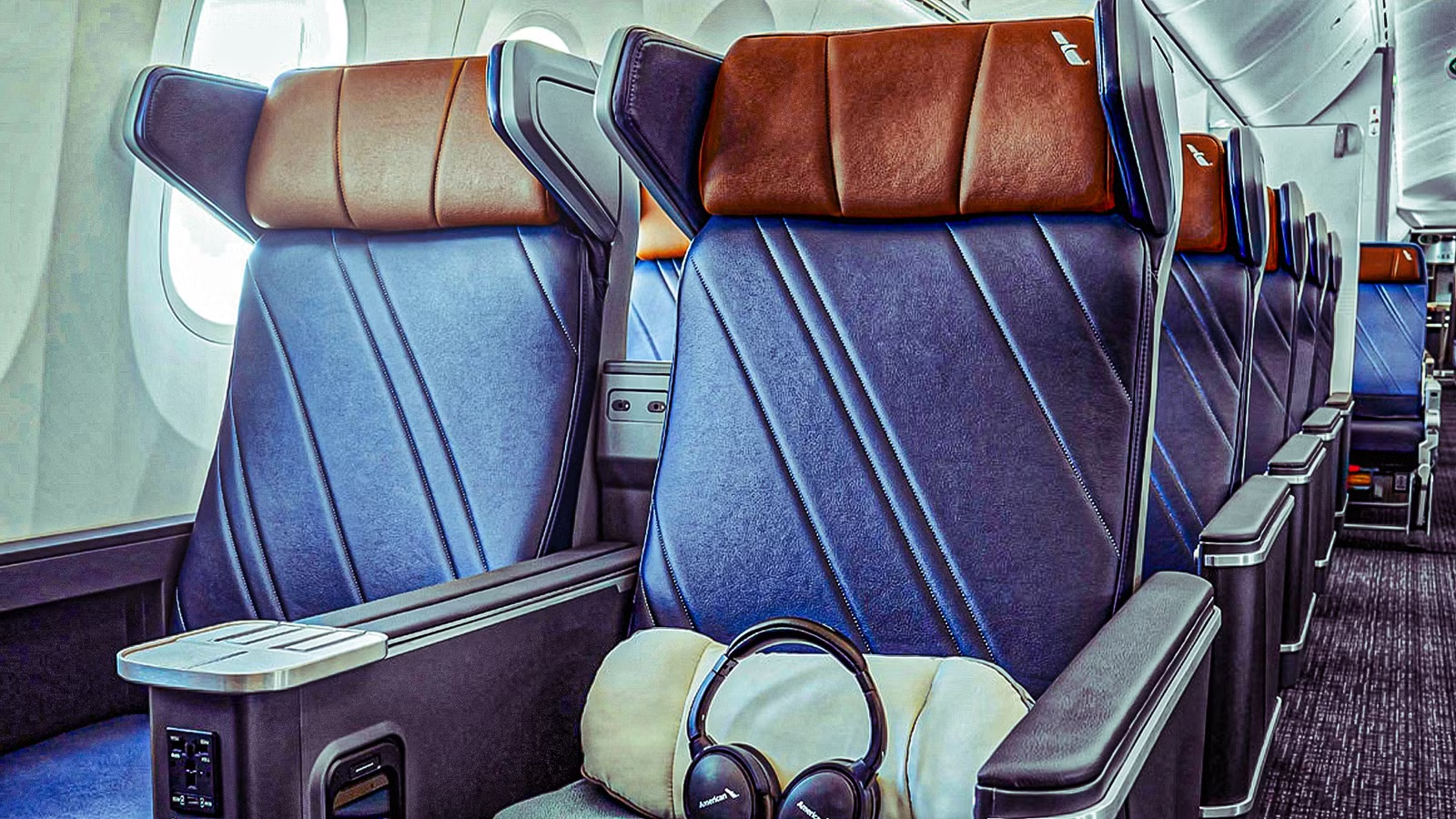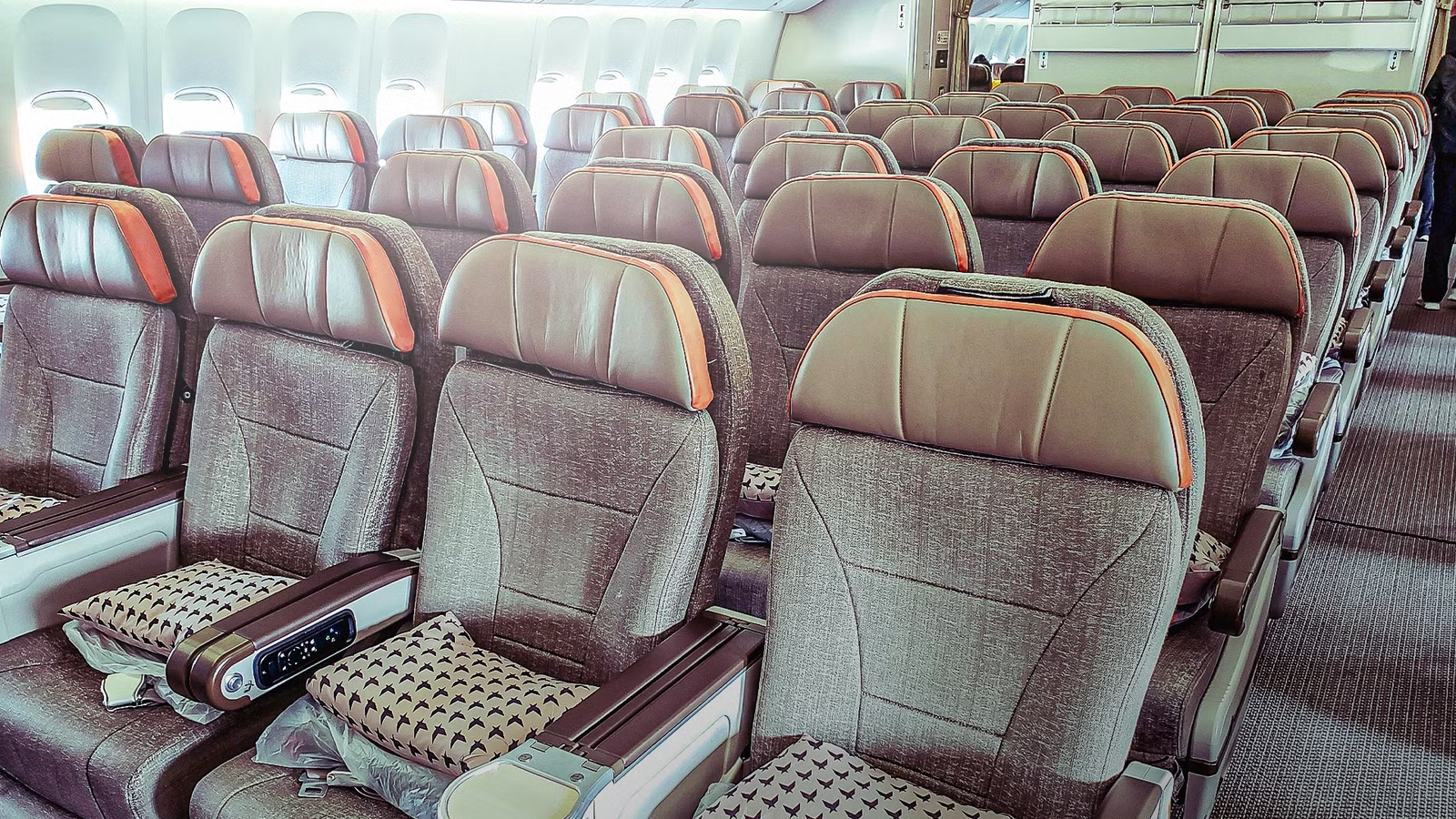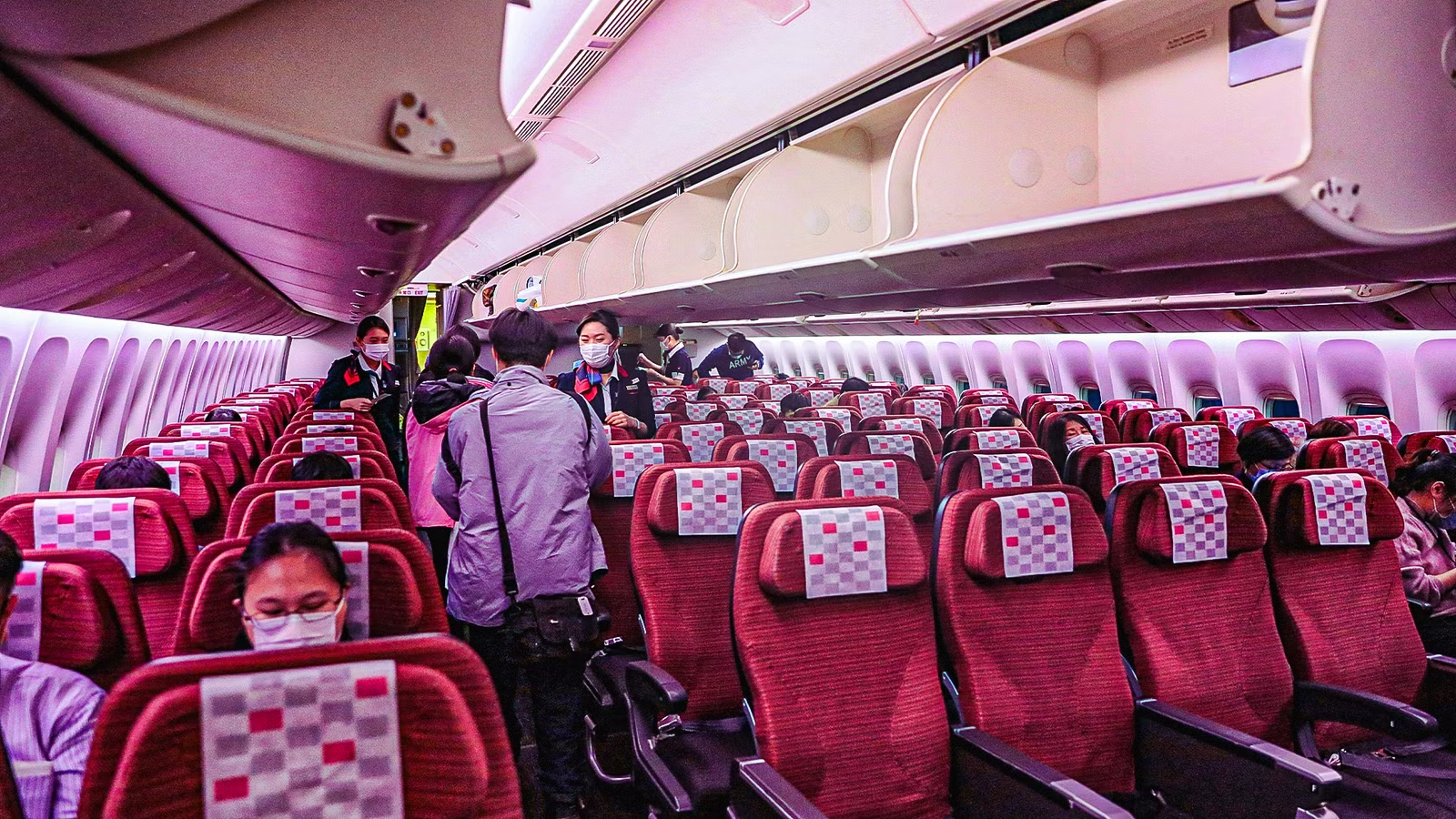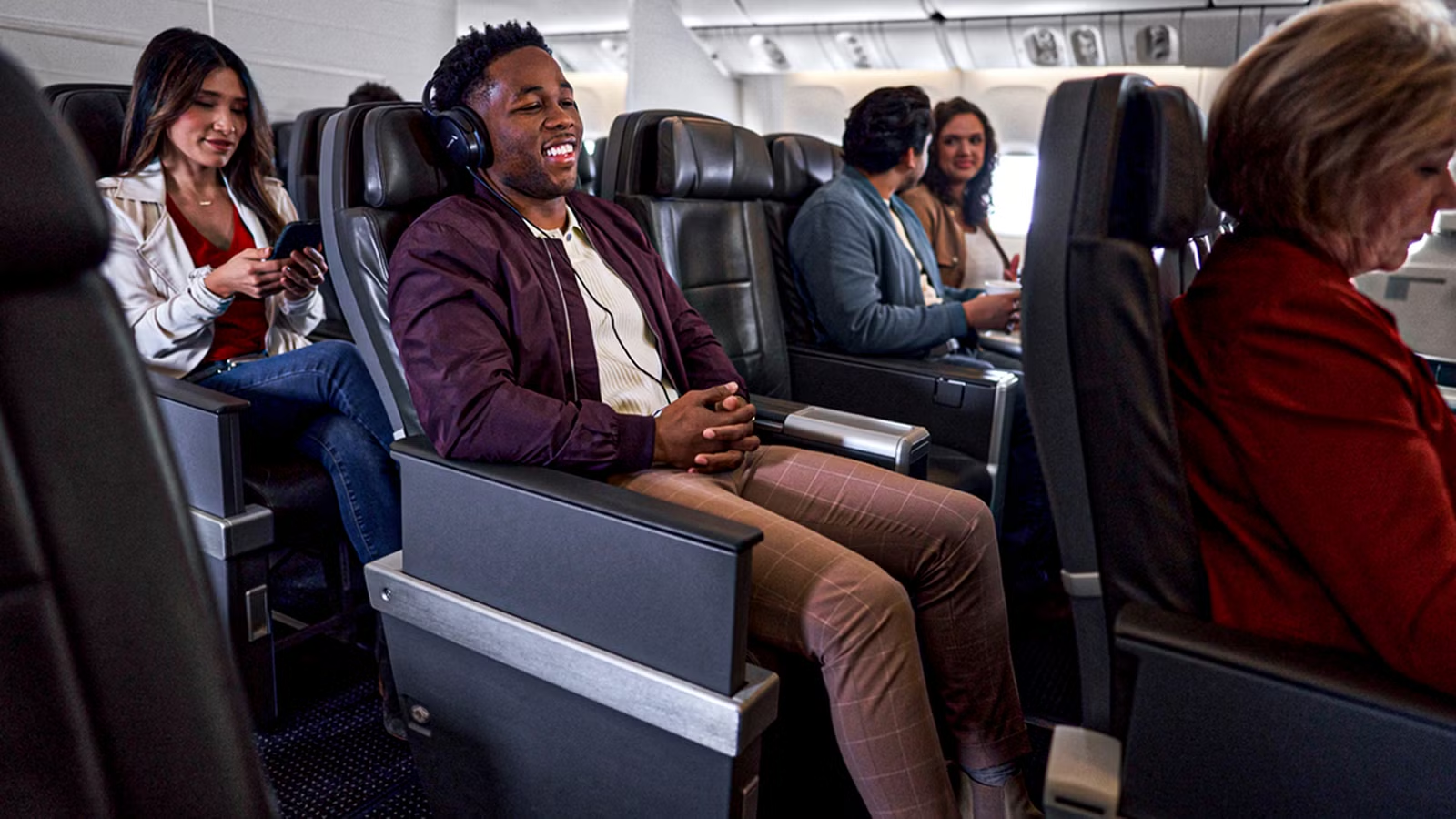
Premium economy is almost always marketed with bigger screens, improved meals, and more legroom. However, for many travelers, the real comfort upgrade is the improved width of the cabin. A seat that is even an inch wider can change how your shoulders sit, how much you fight for the armrest, and whether you can work or sleep without constantly bumping your neighbor. This is why we aim to focus on the particular question of how much wider is premium economy than standard economy.
In practice, what role does this play for today’s long-haul fleets and intercontinental travelers? The answer, however, is often not just a single number. The answer here is not just a single number, as carriers will configure their widebody aircraft with different cabin layouts. For starters, some will opt for a 2-4-2 setup in premium economy, which significantly enhances comfort compared to the standard 3-3-3 or 3-4-3 setup in standard economy.
The same aircraft can also be fitted with more densely packed seats by one carrier than another. Even overall seat width can be reported differently, as it is measured between armrests, at cushion level, or influenced by how thick those armrests and seat shells may actually be. Nonetheless, there are some broad patterns that may emerge. Let’s break down what drives those differences, where they are the largest, and how to compare specifications without getting misled.
How Has Premium Economy Grown Over The Past Decade?

Over the past ten years, premium economy has moved from a relatively niche extra-legroom add-on product to a core cabin that many airlines treat as a permanent profit-generating lever. The category expanded because it solves two problems at one time, and it gives price-sensitive passengers a step up from tight long-haul economy products. At the same time, it gives airlines a way to sell a meaningful comfort upgrade at a lower price point than business class.
Data points illustrate this overall shift. The number of carriers offering premium economy cabins has risen drastically, with only 42 offering the product in 2017 and almost 90 offering it in 2024. Premium economy installations have more than doubled across the global widebody fleet over the past decade, reaching about 45% of aircraft. This has offered significant business for the cabin renovation market.
Post-pandemic, with corporate travel recovering unevenly and not fully returning to 2019 levels, airlines have leaned harder into selling passengers up to premium cabins. These new cabins are primarily aimed at leisure and small-business customers, rebalancing aircraft toward overall higher-yield seating.
In the United States,  American Airlines has said that it increased premium seats much faster than economy class seats since 2019, and peers have followed a similar path. Newer premium economy products now look and feel closer to some old business class cabins, as they offer wider seats, larger screens, better recline, and service. This makes the upsell both easier and more repeatable.
Which US Carriers Operate Premium Economy Cabins?

In the United States market, true premium economy seats in a distinct cabin with a different seat and an elevated level of service are only really offered by the nation’s three primary legacy carriers. American Airlines, United Airlines, and Delta Air Lines are all interested in trying to upsell passengers in order to get them to spend more on tickets. This significantly improves overall operating margins. It is also mainly found on long-haul widebody aircraft.
The first of the carriers that we will discuss here is American Airlines. The oneworld carrier lists premium economy as being available on select flights operated by the  Boeing 777-200, the 777-300ER, and the Boeing 787-8. The cabin is also available on the airline’s Boeing 787-9 jets, which often feature some of the most premium configurations seen in North American skies.
Delta Air Lines brands its premium economy product as Delta Premium Select, and it features on widebody twinjets including the Airbus A350-900, A330-900neo, A330-200, and the Boeing 767-300ER. The cabin also appears on some retrofitted 767-400ER jets.
United Airlines calls the cabin United Premium Plus, and it is offered on the airline’s widebody types, including the Boeing 777-300, 777-300ER, 787, and 767-300ER/400ER variants. Availability of the type, however, can significantly vary by route and specific aircraft configuration.

The Striking Differences Between Premium Economy & Economy Class In 2026
What secrets lie between these two cabin classes in 2026? The differences may surprise you…
Which US Airlines Offer The Widest Premium Economy Seats?

Across the three major US legacy carriers, premium economy’s key width advantage over standard economy is usually meaningful but somewhat modest. Passengers can anticipate two or so more inches to spread out (around 4.5-5 cm), with the biggest jumps appearing on some very specific widebody layouts. American Airlines often highlights that its premium economy seats sit at the high end of the range, where premium economy commonly lands around 18.5-19.5 in (47-49.5 cm).
Meanwhile, many economy seats on the same aircraft sit closer to about 16.5-18 in (41.8-45.7 cm), depending on the specific configuration and where passengers will be seated. Delta Air Lines’ Premium Select product tends to be a steadier, narrower source of spending. On aircraft like the Airbus A350, premium economy is typically around 18.5 inches (17 cm) wide, while standard economy seats are in the rough 17.0-17.5 inch (43.2-44.5 cm) range, per Condé Nast Traveler.
United Airlines’ Premium Plus also targets the wider end for the cabin, with seats around 19 inches (48.3 cm), while its long-haul economy product commonly clusters around roughly 17.0-17.5 inches (43.2-44.5 cm). In practice, the aircraft swap risk matters, with the same route able to rotate between configurations that may change the width of the seat in a marginal manner.
One practical caveat is that premium economy seats often have thicker armrests, fixed shells, and larger consoles, so that the measured width can be higher even if the usable personal space feels closer. Still, the shoulder and elbow relief is usually noticeable on long flights.
What Non-US Carriers Offer The Best Premium Economy Cabins?

Outside the United States, the strongest overall premium economy products tend to come from long-haul global network carriers that treat the cabin as a true mini-premium experience rather than just an extra-legroom offering. In recent industry award rankings, Virgin Atlantic frequently leads for overall product consistency, with Japan Airlines and Emirates also scoring at the very top.
Emirates, in particular, has built premium economy around a widebody-first rollout with a distinct seat and a branded experience that aims to feel closer to business class than extra-legroom economy. The airline has also been recognized for its premium economy seating in major awards. Singapore Airlines, Cathay Pacific, and Air New Zealand are all often cited as global benchmarks as well, combining strong hard product on many aircraft with elevated meal service and a calmer atmosphere.
In the Asia-Pacific region, other widely praised options include Qantas and ANA, which have used premium economy to capture travelers who want more personal space and fewer compromises on long routes without paying business class fares. The common thread among the leaders is coherence, with wider seats, better recline and leg support, upgraded amenities, and ground-service perks that make the upgrade feel end-to-end, not just that the product is slightly better in the seat itself.

American Vs. Delta Vs. United: Which Carrier Has The Best Premium Economy?
These three airlines offer the most prominent premium economy offerings in the domestic aviation market.
Do Width Trends Differ Significantly From Those In The US?

Compared with the three major US legacy carriers, the global premium economy width trends are not radically different on average. However, the top non-US products are more likely to be outliers. In the United States, as we have mentioned, premium economy commonly clusters around 18.5-19.0 in (47.0-48.3 cm), versus economy in the mid-17s (around 43-45 cm).
As such, the width upgrade is often 1-2 in (2.5-5 cm). Globally, many carriers still sit in that same band, roughly 18.5-19.5 in (47.0-49.5 cm), but a few leaders push even wider. Virgin Atlantic has promoted premium economy seats that are as wide as 21 in (53.5 cm), and Emirates has also introduced similarly wide seats on its Airbus A350 models.
Japan Airlines’ premium economy seats are often cited as being around 48 cm (18.9 in), closer to the US norm. Therefore, the big difference is not that massive, but there are a few carriers that have gone out of their way to introduce ultra-wide seats, which they can sell for an impressive premium.
The Bottom Line

At the end of the day, legacy carriers have business models that are designed around upselling customers into more premium cabin products. This allows them to target recurrent, high-frequency travelers who are willing to pay a premium for their comfort and convenient services.
Historically, business travelers have been the only ones interested in paying these sky-high premiums, meaning that it only really made sense for the airlines to offer a business class cabin. Now, leisure travelers are increasingly interested in offering premium cabin upgrades for those willing to pay.
Premium economy has emerged as an interesting middle ground between the two kinds of carriers. The cabin is perfect for passengers who want somewhat of a more comfortable cabin experience, but do not want to shell out as excessively as is needed for them to get a lie-flat seat.