COLORADO SPRINGS — Sandy’s Restaurant is already bustling for the lunch hour and it’s not even noon yet. Customers fill the tables in the snug dining room, digging into greasy spoon favorites like the cowboy burger, Tony’s burrito and the special of the day — Fruity Pebbles cheesecake conchas.
Among General Manager Sam Avina’s regulars are members of the 1,400-person U.S. Space Command, who work just a few hundred yards away inside the secure perimeter of Peterson Space Force Base. Over the next few years, their visits to his diner will dwindle as President Donald Trump’s decision to move the command from Colorado Springs to Huntsville, Alabama, takes shape.
But the loss of those customers won’t threaten the long-term viability of Sandy’s, which has been in operation on Space Village Way since the 1970s, Avina said.
“It’s an institution,” he said of his restaurant, as a small line formed at the cash register behind him during a recent lunch rush, “and the area is growing.”
Sandy’s story serves as a microcosm of how the broader Colorado Springs economy is expected to fare as the beginning of the end for U.S. Space Command in Colorado comes into view — the result of a fierce yearslong political battle between two presidential administrations over where the combatant command responsible for all U.S. military operations in space should permanently land.
While few in this city of half a million were happy with the president’s decision to relocate Space Command, there’s little sense among industry types and civic boosters that the move will be an economic deathblow to a city with five military installations, including the U.S. Air Force Academy, in a region served by more than 200 aerospace, cybersecurity and defense companies employing more than 100,000 people.
According to the Office of Local Defense Community Cooperation, El Paso County far outpaces every other Colorado county when it comes to defense contractor spending and defense personnel spending — at $2.9 billion and $3.3 billion in fiscal year 2023, respectively.
“It’s a huge sector of our economy in the state of Colorado and will continue to be,” said Johnna Reeder Kleymeyer, president and CEO of the Colorado Springs Chamber and Economic Development Corporation. “We’re disappointed (in the president’s decision) but now we have some certainty.”
Mark Stafford, owner and CEO of Delta Solutions & Strategies LLC, said Colorado Springs is resilient enough to weather the move economically but wonders what impact losing a marquee facility like U.S. Space Command, which delivers space capabilities to all branches of the military, could have on the city’s standing.
Delta has several contracts with Space Command providing defense and government support services.
“Prestige and perception will take a hit,” Stafford said.
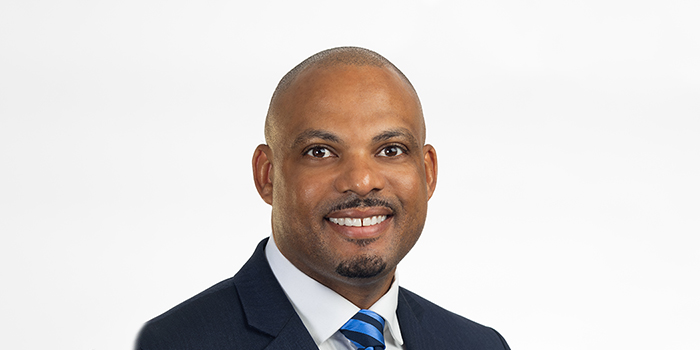
Which is why Colorado Springs Mayor Yemi Mobolade, along with economic development officials and county commissioners, are headed to Washington, D.C., this week to meet with members of the Pentagon and Congress to ensure the city continues to play a major role in what promises to be a burgeoning part of American military readiness, as China’s and Russia’s militaries also take to the heavens.
Mobolade wants his city’s aerospace sector to have a major hand in developing Golden Dome, an air defense system touted by the Trump administration that would repel foreign missile and rocket attacks — similar to, but much larger than, Israel’s Iron Dome.
Just a day before Mobolade sat down with The Denver Post in his sixth-floor office in downtown Colorado Springs earlier this month, space and missile defense company Mobius announced it would be opening a new office in the city, and with it, 75 new high-paying jobs.
“We were a strong aerospace, defense, cyber security community before the Air Force established Space Command — it’s 40% of our economy,” the mayor said. “We were strong before. We’re going to be strong afterwards.”

Long-lasting political tussle
The fight over U.S. Space Command’s permanent location stretches back the better part of a decade. In 2019, Trump, in his first term, resurrected the combatant command at Peterson Space Force Base as a standalone entity after a 17-year dormancy.
But in the waning days of Trump’s first administration, the president decided to make Space Command’s permanent home at the Army’s Redstone Arsenal in Huntsville — pending an environmental review.

That review was completed approximately nine months into President Biden’s term in 2021 and found no significant impact from Alabama being the command site. But the new administration did not act on the finding. Instead, in mid-2023, the Biden White House said the headquarters would remain at Peterson, citing a potential disruption in readiness and the time that would be lost relocating staff across the country.
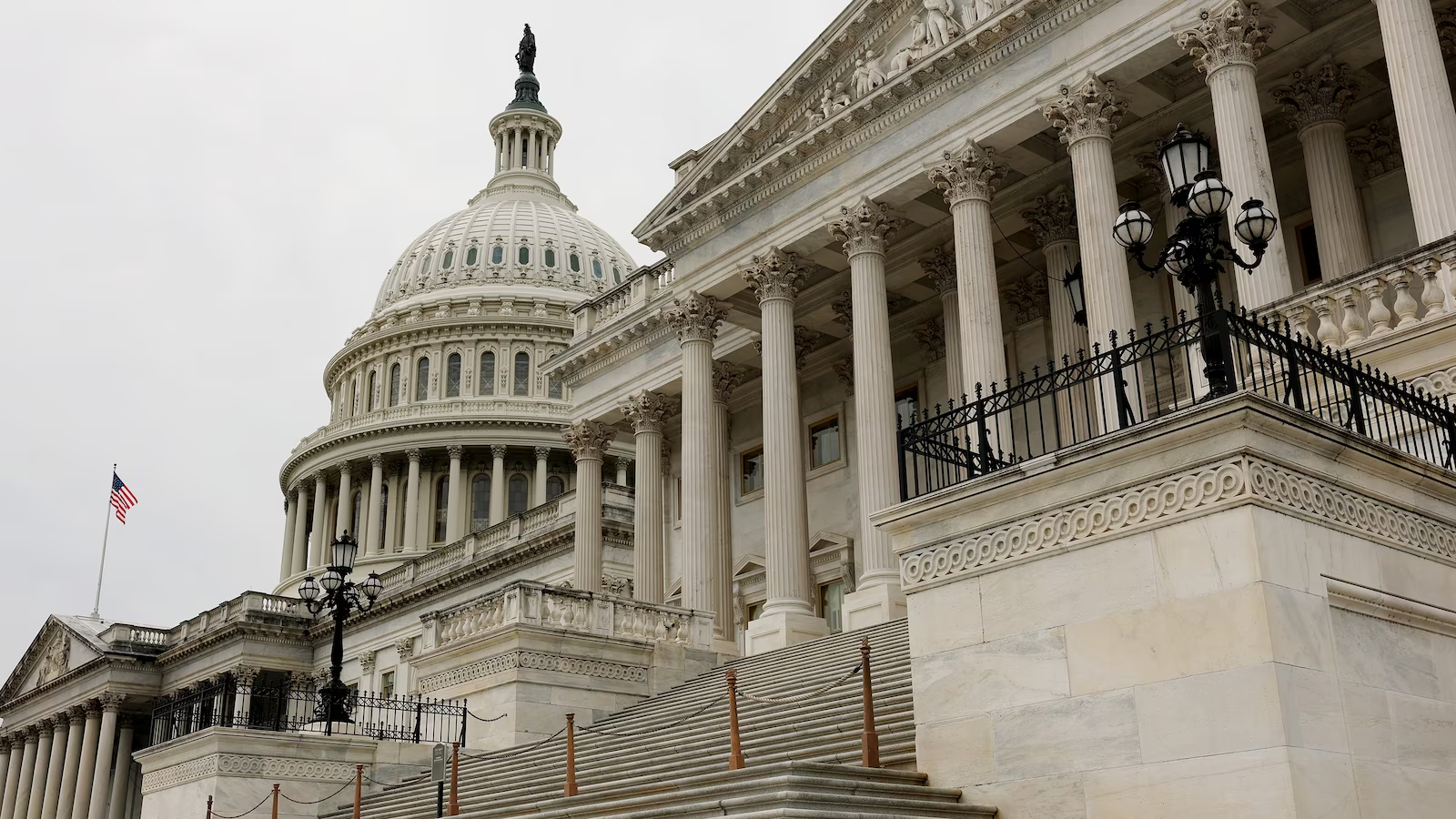
Cost and mission readiness has been a common refrain against the Space Command move from Colorado politicians on both sides of the aisle ever since — right up to the day Trump announced his decision on Sept. 2. In a rare joint statement of the state’s congressional delegation, made up of eight members of Congress and a pair of U.S. senators, the assessment was blunt: “Bottom line — moving Space Command headquarters weakens our national security at the worst possible time.”
In a statement sent to the Post last week, U.S. Rep. Jason Crow said the relocation of U.S. Space Command “eliminates Colorado jobs, wastes millions of taxpayer dollars and makes America less safe.”
An attempt to reach the office of Republican U.S. Rep. Jeff Crank, who represents Colorado Springs, went unanswered.
“Colorado has a highly-skilled workforce, and America cannot afford to sideline this talent and lose the new space race — yet this decision hands the advantage to America’s adversaries,” said Crow, a Democrat and a former Army officer.
But Trump’s victory last fall gave Alabama officials renewed hope that Huntsville, known as Rocket City for its long history in the rocket and space industries and as home of NASA’s Marshall Space Flight Center and the U.S. Army Aviation and Missile Command, could claim U.S. Space Command as its own.

Just a couple of weeks after Trump’s November win, Colorado’s elected leaders began the mad scramble to persuade the president to keep the command at Peterson with a letter. That was followed by another entreaty in April, this time by just the Republican half of the state’s congressional delegation.
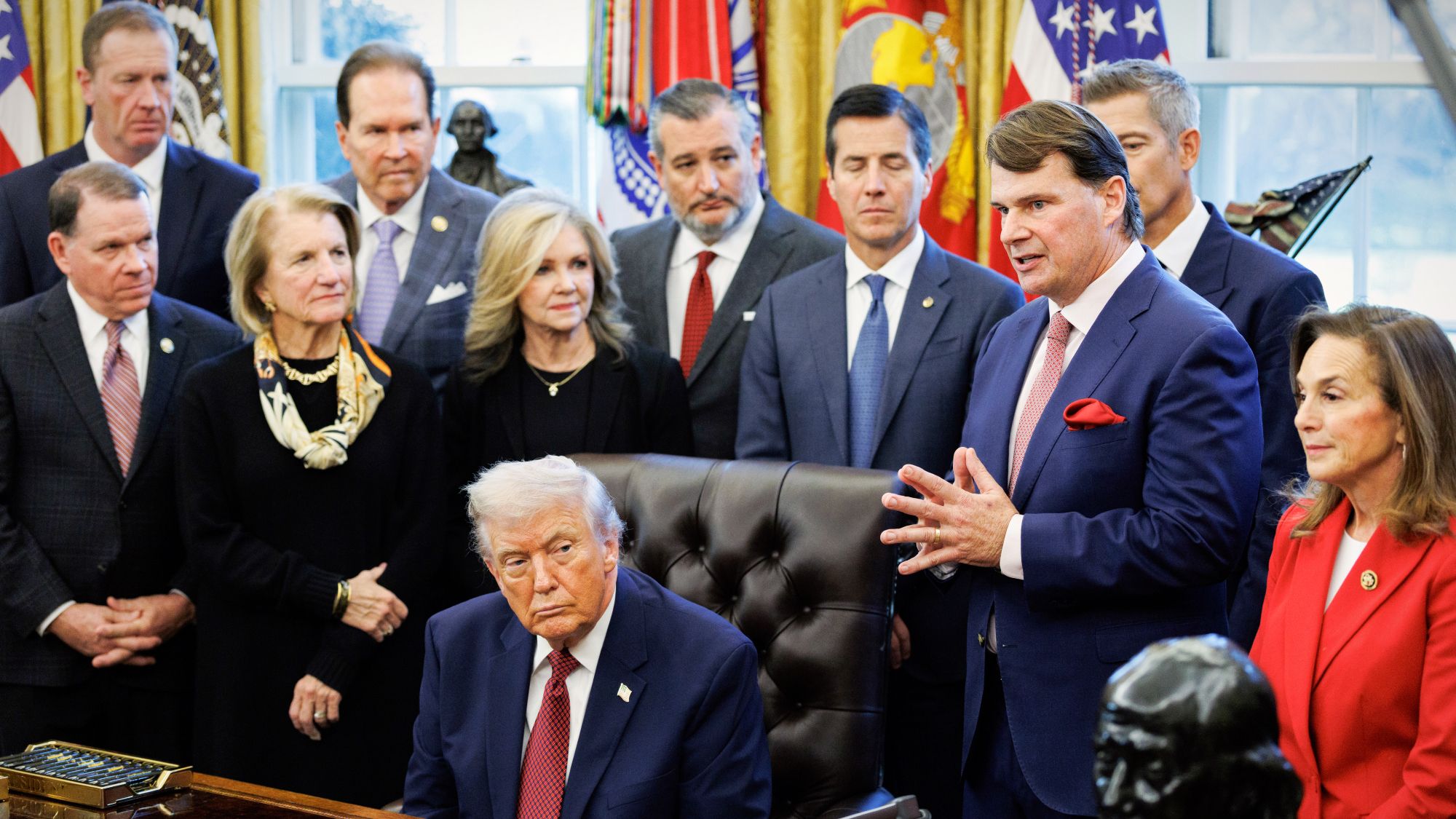
But the smart money at that point said it was just a matter of time before the president would act on his original commitment to make Alabama the permanent command headquarters. That moment arrived the day after Labor Day with an announcement from the Oval Office.
Citing Colorado’s system of mail-in voting as “a big factor” in his decision, Trump congratulated the Alabama delegation and playfully asked them “to leave me alone now” — an indication of just how hard the behind-the-scenes lobbying efforts had been on both sides.
But the decision was no laughing matter to Colorado officials. Attorney General Phil Weiser immediately threatened to sue the Trump administration to keep the command in Colorado, prompting Alabama Attorney General Steve Marshall to fire back that his office is “very confident in our ability to defend whatever allegations are made.”

And Crow, in his statement to the Post, made clear that he doesn’t believe the fight is over.
“I will continue fighting to keep Space Command in Colorado,” he said.
‘So many other space jobs’
For now, experts and others are trying to determine just what the economic and reputational damage might be to Colorado Springs from the move, and whether it could impact U.S. Space Command’s mission readiness.
Kari Bingen, senior fellow in the Defense and Security Department at the Center for Strategic and International Studies, said the issue is more complicated than the way some in Colorado are portraying it. The relocation, while it may appear to be a whimsical act on the part of the president, has been studied thoroughly with multiple evaluations done by the Department of Defense’s inspector general and the U.S. Government Accountability Office.
“There was a process and objective criteria, and that’s what the GAO was asked to look at twice,” she said.
One of those GAO reports, dated May 2025, concluded that Huntsville was the preferred site largely due to lower costs. While U.S. Space Command at Peterson was deemed “fully operational,” the report noted that “the current command posture is not sustainable long-term…”
The command currently operates out of four buildings, two on “military installations” and two in leased facilities “located in commercial and residential areas” of Colorado Springs. The report describes “aging infrastructure that cannot fully support the dynamic information technology requirements of the Command.”
The “ad hoc” facilities in Colorado Springs are “inefficient and cumbersome, adversely affecting both mission and command and control,” the GAO states.
“U.S Space Command proposed a construction project for a new multi-story, permanent headquarters facility to replace its current temporary and leased facilities,” the report said.

Those challenges, and the $1.5 billion price tag the GAO cited to rectify them, likely contributed to the military choosing Redstone Arsenal in Alabama as the permanent home of U.S Space Command, Bingen said. Colorado Springs’ best bet at this point, she said, is to position itself optimally for other aerospace and defense initiatives.
“Let’s execute on the decision so we can focus on the mission operational challenges and capabilities ahead,” Bingen said. “I’m not worried for Colorado Springs. It’s clearly an epicenter of national security and space activities.”
There’s also a question of whether all of Colorado’s U.S. Space Command positions would have to move east. The command already has personnel in two other states — at Vandenberg Space Force Base in California and at Offutt Air Force Base in Nebraska.
“Do all the elements of a combatant command need to be located in the same city?” Bingen said. “No.”
Air Force Maj. Chris Bowyer-Meeder, a public affairs officer with U.S. Space Command at Peterson Space Force Base, said it was too early to talk about the “logistical impacts” of the move.
“U.S. Space Command will expeditiously carry out the direction of the President following last week’s announcement of Huntsville, Alabama, as the command’s permanent headquarters location, while continuing to execute our vital national security missions,” he said in a statement to the Post.
Even absent Space Command, Colorado Springs will have plenty of personnel from the U.S. military’s Space Force branch, which has more than 14,000 military and civilian members, called Guardians, across the nation. Peterson and Schriever Space Force Base, both in Colorado Springs, and Buckley Space Force Base in Aurora together make up half the bases with major Space Force operations.
Then there’s the private sector. L3Harris, Lockheed Martin, Northrop Grumman and Raytheon Technologies are among the more than 200 companies in that sector with a presence in Colorado Springs. Delta Solutions, based in the city, works with 150 subcontractors in its support of military and space projects.
“There are so many other space jobs in Colorado Springs,” said Stafford, Delta’s CEO.
He’s looking to expand on the 25,000 square feet Delta already occupies in the city.
Raymond Gonzales, who serves as president of the Denver Metro Economic Development Corporation and as head of the Colorado Space Coalition, said private aerospace employment has leapt 35% along the Front Range in the last decade — to 57,000 workers across 2,500 companies.
Another dozen “active prospects” in the industry are in the pipeline to commence business in Colorado’s urban corridor in the coming years, he said.
“Colorado’s aerospace economy is not dependent on where U.S. Space Command is,” Gonzales said.

Space’s ‘sizzle factor’
Perhaps more elusive than sizing up the economic impact of Space Command’s migration is what such a move could do to Colorado Springs’ image as a leader in space. John Boyd, principal of The Boyd Co., a corporate site selection firm, said there’s no doubt about the prestige U.S. Space Command lends a city.
“There’s no industry that has the sizzle factor like space,” he said. “It’s a tremendous economic development recruiting tool.”
That was evident the day after Trump made his decision known. In front of a screen that bore the words “Huntsville Welcomes U.S. Space Command — You’ve Landed in a Smart Place,” a gathering of Alabama officials giddily addressed reporters.
“Huntsville, and Team Redstone, are mission-ready to support Space Command with our highly skilled workforce, strong military community and a city that embraces innovation,” Huntsville Mayor Tommy Battle said, making sure to emphasize some of the road and infrastructure improvements the area was undertaking.
On the positive side, Boyd said, is that the hit to Colorado Springs’ prestige of a Space Command migration would be far greater if the city wasn’t already well regarded for its aerospace prowess.
“The reputation and stature of Colorado Springs is well known,” he said. “It will be able to weather this storm.”
That’s how Steve Kanatzar, who founded The Airplane Restaurant nearly 25 years ago on the west boundary of Peterson Space Force Base, sees it.
Kanatzar’s restaurant, which features an eye-catching Boeing KC-97 Air Force plane inside of which diners can eat, has hosted high-level foreign military officials attending the Space Symposium at the Broadmoor Hotel, among other aviation and space enthusiasts.
“You hate to see anyone leave the state,” he said.
But 80% of his customers are locals and tourists, he said. The departure of U.S. Space Command won’t collapse his business.
The last time he worried about the future of his eatery had nothing to do with the military installation next door. It came five years ago during the pandemic, when government orders closed his restaurant for weeks.
“If you put COVID into the picture, nothing will compare with that,” he said.
Get more Colorado news by signing up for our daily Your Morning Dozen email newsletter.
Originally Published: