Buyers are finally scoring deals — but at what cost?
New data shows that 11 of the nation’s 50 largest metro areas have tipped into what’s called buyer’s market territory. Just a few months earlier, only seven had.
The rapid shift has economists worried that the housing market is losing its footing.
Denver, Nashville, Raleigh, and Houston have joined the list of metros where buyers are firmly in control — a growing sign that the once red-hot housing market is starting to cool.
While that might sound like good news for anyone house-hunting, a strong buyer’s market can quickly turn dangerous for the wider economy.
A buyer’s market happens when there are more homes for sale than people willing to buy them. That gives buyers all the power: they can haggle down prices, demand repairs or incentives, and take their time before making an offer.
The opposite is a seller’s market — when demand outpaces supply, homes sell in days, and bidding wars push prices higher.
Whether an area is a buyer’s market or a seller’s is measured by months of supply — how long it would take to sell all homes currently listed if no new ones hit the market. Two to three months of supply signals strong demand and favors sellers. Six months or more means homes are sitting unsold, tipping the balance to buyers.

The latest data has shown that Denver (pictured), Nashville, Raleigh, and Houston have joined the list of metros in buyer’s market territory

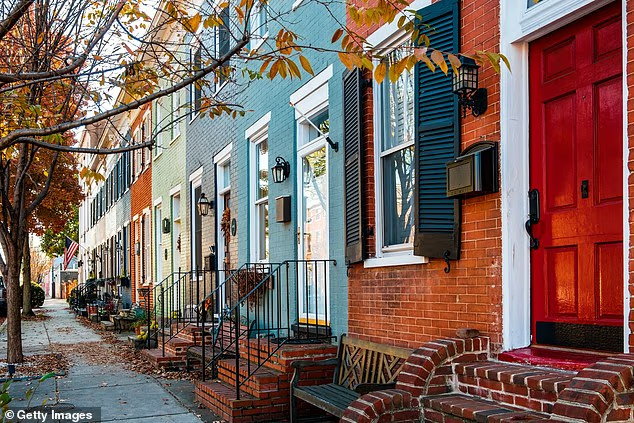
Denver shifted from a balanced market in early summer to a buyer’s market by fall (pictured: a residential neighborhood in Denver)
When there are far more homes for sale than buyers, sellers start slashing prices to stay competitive. Those cuts ripple through the market fast. Once a few homes sell for less, nearby sellers are forced to lower their prices too, dragging down neighborhood values.
As prices fall, homeowners see their equity shrink — and some end up owing more on their mortgages than their homes are worth. That leaves them stuck, unable to sell or move without taking a loss.
Falling home values also make people feel poorer, so they spend less on other things — from cars and holidays to home renovations. That slowdown hits construction firms, realtors, banks, and local shops, spreading the pain across the economy.
In extreme cases, like the 2008 housing crash, a prolonged buyer’s market can trigger a downward spiral: falling prices cause buyers to hold off even longer, which pushes prices down further.
The latest data shows how quickly that dynamic is spreading. Nashville, the strongest of the four newest buyer’s markets, now has a 6.4-month supply of homes — up from 5.8 in June.
Greater Nashville Realtors president Collyn Wainwright says ‘buyers have regained leverage’, creating a more balanced market after years of seller dominance. She blamed the shift on declining affordability, with fewer first-time buyers and overpriced homes sitting unsold.
‘We no longer have the pool of first-time homebuyers that traditionally drove our market,’ she says. ‘Our median price has reached $515,000, and that is not considered an entry-level price point.
‘We also have sellers who struggle with accepting the new market conditions and are overpricing their homes, only to find them sitting.’

Nashville (pictured), the strongest buyers’ market of the four newest additions, has a 6.4 months’ supply — up from 5.8 in June

Nashville’s shift to a buyer’s market can be attributed largely to declining affordability, with fewer first-time buyers and overpriced homes lingering on the market (pictured: a suburb of Nashville)

Jake Krimmel, senior economist at Realtor.com
Raleigh entered the rankings after its months of supply hit 6.1, up from 5.6 two months earlier. This comes after the North Carolina city recorded the third-highest annual inventory growth out of all 50 metros and the greatest growth in newly-listed homes.
As properties in the Southern city piled up, sellers pulled their listings off the market and Raleigh saw a surge in de-listings.
A similar pattern was seen in Houston, which transitioned into buyers’ market territory with a six months’ supply — up from 5.7 in June.
Texas’s most populous metro mirrored the trends seen in Raleigh and Nashville, posting the third-highest year-over-year increase in new listings, which expanded its housing inventory.
‘It’s a continuation of a trend for these cities, and it was only a matter of time before they crossed into buyer’s market territory,’ said Realtor.com senior economist Jake Krimmel.
Denver shifted from a balanced market in early summer — 4.9 months of supply — to a buyer’s market by fall, at 6.1
Denver shifted from a balanced market in early summer (4.9 months of supply) to a buyer’s market by fall (6.1 months). Denver has seen the sharpest rise in homes for sale since before the pandemic — listings are up 57 percent, Realtor.com says.
Denver realtor Heather O’Leary said buyers now have far more options and stronger negotiating power. ‘Buyers are finding ways to negotiate beyond just list price,’ O’Leary told Realtor.com. ‘For example, many are securing seller concessions to cover temporary or permanent rate buydowns, which can save hundreds on monthly payments compared to simply offering below-asking price.’
Krimmel observed that, aside from New York City, all current buyer’s markets are concentrated in the South and West.

Raleigh entered the rankings after its months of supply hit 6.1, up from 5.6 two months earlier (pictured: a quiet street in Raleigh)

Houston (pictured) transitioned into buyers’ market territory with a six months’ supply — up from 5.7 in June.
‘Between affordability issues, high interest rates, and many sellers clinging to an overly optimistic outlook, this summer’s housing market never really took off, and that’s reflected in these four markets crossing that six months of supply threshold,’ he said.
According to Krimmel, this pattern is no accident, as these regions have experienced growing inventory levels and a slower market pace over the past year — particularly during the summer.
Previously, the list consisted of Miami, Orlando, Austin, Riverside, Tampa, Jacksonville, and New York City.
Miami was at the top of the list — with a 10 months’ supply. Orlando came in second, with an 8.7 months’ supply — a steep increase from the 6.9 months’ supply in June.
Austin was third with a 7.4 months’ supply. The Texan city became a pandemic boomtown, but buyer demand has since softened.
‘The markets in Miami, Austin, and Orlando have been moving in a buyer-friendly direction for some time now,’ said Krimmel.
‘Inventory levels, time on market, and price reductions are all up significantly in those metros, as well as much of the South and West.’
Nationally, the housing market reached a balance of five months of supply this summer — the first time since Realtor.com began tracking the data nine years ago.

Miami (pictured) was at the top of the buyer’s market rankings with a 10 months’ supply of houses for sale

New York City was another major metro that has transitioned into a buyer’s market, and is the only city to do so that isn’t in the West or the South
That figure is significant because it represents roughly even ground between buyers and sellers.
While a buyer’s market is obviously great news for buyers, it can be an ominous sign for the economy as a whole.
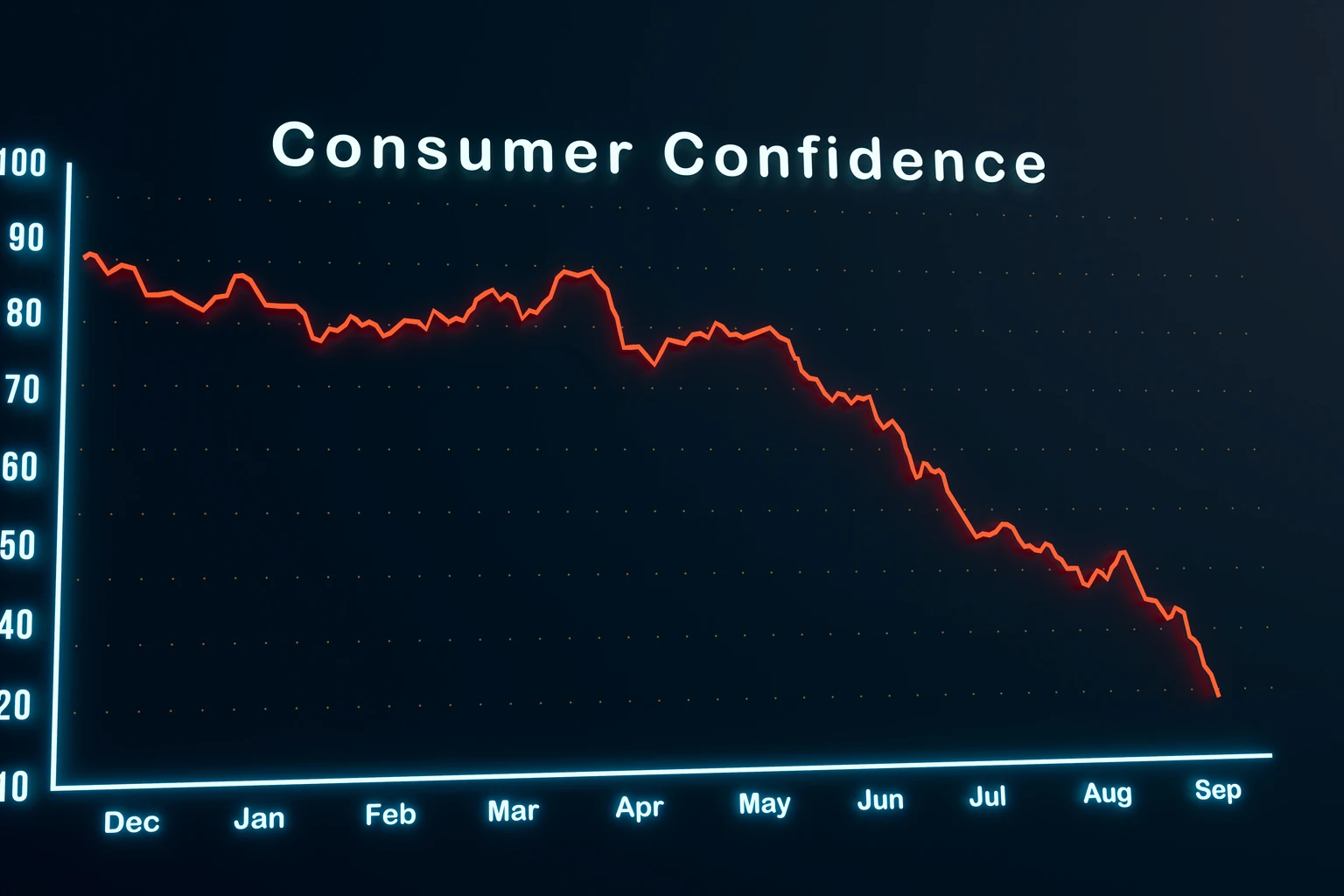
A buyer’s market can be an early warning sign of a cooling market, or even a housing market crash, because it usually indicates other economic struggles — such as affordability crises, high interest rates and weak consumer confidence.
The 2008 financial crash started with a buyer’s market, but was fueled by the subprime mortgage collapse (when lenders gave loans to borrowers with poor credit or unstable incomes), foreclosures, and job losses.