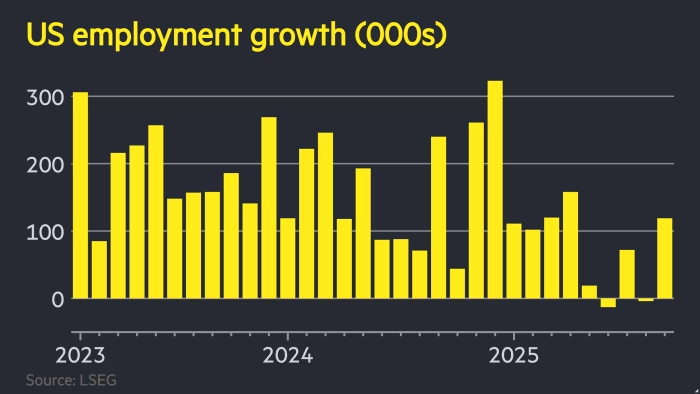

As the economy slows down, job hunting has become even more competitive with fewer openings and subsequently tougher hiring decisions. At the same time, the job market itself is shifting: New industries are emerging, technology is reshaping roles and employers are prioritizing flexibility and problem-solving over perfect résumés.
In this environment, job seekers who stay proactive, learn continuously and lean on their networks are best positioned to stand out. Below, Forbes Human Resources Council members share practical advice to help you navigate today’s challenging market and find the right next step in your career.
1. Learn Continuously And Apply Strategically
Build your skills and keep learning. Companies notice those who grow with change. Don’t just apply everywhere. Focus on roles that excite you and be clear about how you’ve made an impact. Reach out to people you know and join industry conversations. Most good opportunities come from strong relationships. Show you’re flexible and ready to help where it counts, even beyond your job title. – Nancy Adams, CenTrak
2. Give Yourself Grace
Be patient and graceful with yourself. You can only control what you can control, and that is your preparation, persistence in the process, your development, and most importantly, your mindset. Keep striving, and good things will follow! – Omar Alhadi, Adobe Population Health
3. Understand The Business And How Your Skills Fit Into It
Learn the business in which you are applying, be able to speak to it and how you think your skills can add value. We are past the moment when organizations needed a warm body. They can find tons of resources willing to relocate, come into the office and do whatever task is at hand for the opportunity. A strong candidate will reflect the energy they see in the market. – Jalie Cohen, Radiology Partners
Forbes Human Resources Council is an invitation-only organization for HR executives across all industries. Do I qualify?
4. Develop Your Tech Knowledge
Lean on technology skills, including building and automating. Even if you are in HR, it is important that you understand technology, including AI, and know how to improve your function using it. – Amee Parekh, Stello Technologies
5. Focus On Conveying The Right Attitude
Attitude before aptitude—employers hire great attitudes over perfect skills. Apply strategically for roles where you meet the basic qualifications, and then focus interviews on conveying the right attitude. People want to hire people with great attitudes. Persistence matters, too: Based on what I’ve learned, the average job seeker submits about 170 applications, so it’ll take perseverance. Just keep going. – James Glover, Flint Learning Solutions
6. Highlight ‘Durable’ Skills
Right now, there’s a tremendous skills shift taking place in the workplace, and durable skills are becoming increasingly valuable. For job seekers, identify your durable skills and highlight those in your application materials. Let employers know how your skills will adapt and change with their business over time. That will help you stand out from others and show long-term potential. – Caitlin MacGregor, Plum
7. Showcase Your Future-Readiness
Securing the right opportunity today requires innovation and versatility. Developing specific skills, such as leveraging artificial intelligence to enhance your work, will distinguish you as future-ready. In addition, building strong professional networks and strategically utilizing social media can expand your reach and showcase your expertise to a wider audience. – Suzi Okpere, LIBROD Energy Services
8. Clarify Your Strengths And Tailor Your Résumé Per Role
In a tough market, get clear on your strengths, tailor your résumé for each role and focus on companies whose values match yours. Stay open to new industries and roles, and don’t underestimate the power of your network—many great opportunities come from conversations, not just job postings. – Niki Jorgensen, Insperity
9. Cultivate A Strong Personal Brand
Cultivating your personal brand is key. It’s not just about what’s on your résumé; your unique combination of personality, skills and experience can differentiate you from others. Keep learning and spotlight any transferable skills to broaden your access to new opportunities in a wider range of industries. Nurture your network on an ongoing basis, not just when you’re looking for a job. – Kathy George, Spherion Staffing and Recruiting
10. Stay Flexible In Your Search
In today’s economy, it is important to stay flexible in what you are looking for. The job may not check every box right away, but it can be a platform to showcase your skills and adaptability. By demonstrating how you can add value, you not only increase your chances of landing the role but also position yourself to shape it for future growth. – Sharifah Masten, CMM, Barbaricum LLC
11. Demonstrate Real-World Impact
Job seekers today need to build trust and demonstrate the impact of the solutions they pursue. Employers want to see value. Job seekers must show their ability to solve real-world problems and provide proof of the results. Additionally, job seekers should be intentional by networking purposefully and finding opportunities through meaningful connections. Be the solution, not just the fit. – Kevin Walters, Top DEI Consulting
12. Invest In Versatile, Marketable Skill Development
Psychologically, a struggle to find the right job during an economic crisis is not your fault, but rather a result of broader economic conditions. Invest in in-demand skills, such as data analysis and legal practices. These skills not only make you more marketable but also equip you with the tools to stay advantageous. Project management skills are immensely beneficial; they are versatile and in demand. – Dr. Nara Ringrose, Cyclife Aquila Nuclear
13. Network Consistently And Stay Open To ‘Stepping Stone’ Roles
Job seekers should clarify core skills and highlight impact, not just duties. Network through associations, chambers and community events where roles emerge early. Stay open to contract or cross-industry work as stepping stones, while continually upskilling. Above all, show adaptability and resilience—employers value candidates with a problem-solving mindset. – Jason Lioy, Dawn Foods
14. Establish Yourself As An Adaptable Problem-Solver
Position yourself as a problem solver. Lead with your skills, not just your titles. Employers are looking for people who can demonstrate adaptability, digital fluency and the ability to navigate complexity. It’s just as important to invest in your network. Most opportunities don’t come from job boards; they come through people. – Britton Bloch, Navy Federal
15. Create A Clear, Aligned Career Narrative
Job seekers face a crowded market where skills alone may not be enough to stand out, especially in the age of agentic AI. Focus on clarity and alignment: Be clear on what you want, and ensure your résumé, online presence and networking all tell the same story. Employers look for fit as much as talent. Consider sharing a career narrative that shows your skills, impact and why you’re choosing them – Dr. Timothy J. Giardino, myWorkforceAgents.ai
16. Prioritize Clarity Over Speed
In a struggling economy, clarity matters more than speed. Reflect on what energizes you, not just what’s available. Tailor each career move to your values and skills. Grow networks through generosity, and treat every touchpoint as a chance to learn, not just land. Shape opportunity—don’t just chase it. – Prithvi Singh Shergill, Tomorrow @entomo
17. Spotlight Your Adaptability, Upskilling And Personal Value Story
As AI reshapes recruitment and competition intensifies, job seekers need more than credentials. Showcasing transferable skills, adaptability and resilience is critical. Pair that with continuous upskilling and a clear personal value story—and you’ll stand out where algorithms only shortlist, but people make the final choice. Be open to flexibility through gig, contract work. Agility opens the door. – Sheena Minhas, ST Microelectronics
18. Position Yourself As The Solution To The Company’s Pain Points
Think like a strategist: Study target companies’ pain points and position yourself as the solution. Build a digital presence that proves expertise, nurture warm introductions and pursue skill gaps before they stall you. In tough markets, those who market themselves like top brands win the right roles. – William Stonehouse, Crawford Thomas Recruiting