You can also listen to this podcast on iono.fm here.
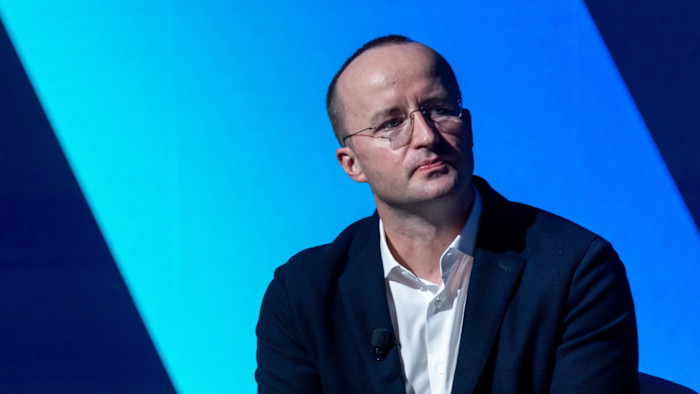
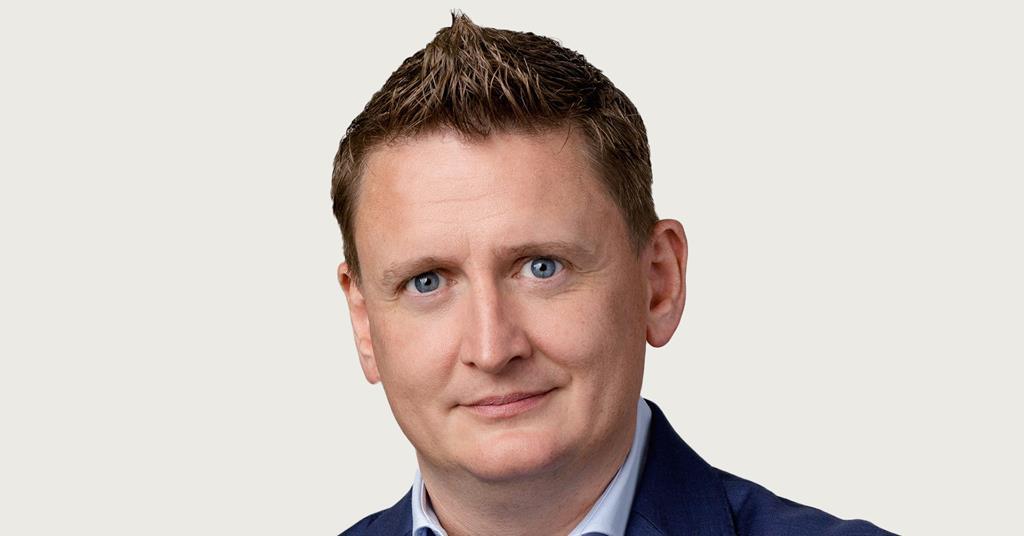
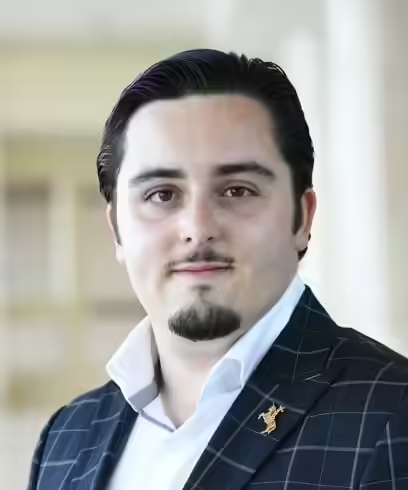
SIMON BROWN: I’m chatting with Andries van Heerden, CEO of Afrimat. Results for the six months ending August saw revenue up 29.9%, Heps up 92.3%, and a dividend of 20 cents declared.
Andries, appreciate the time today. Let’s dig into construction materials because that’s where Lafarge South Africa is sitting. Good progress being made there. It’s moving in the right direction. We’ve chatted before about the delay in the acquisition not being ideal, but you’re getting things in the right direction and it is looking good at Lafarge.
ANDRIES VAN HEERDEN: Simon, yes. It is, really. When we bought the business we saw a lot of potential there and when we got in there we knew we had a lot of work to do to get the turnaround done. The turnaround is progressing really, really well and I think the bottom line is we’re starting to see the value that we thought would be there.
SIMON BROWN: You also mentioned you are regaining lost market share, which is always one of those things, always the plan. But you hoped the customers would come back and they are, which means you’ve got the product mix and you’ve got the pricing.
ANDRIES VAN HEERDEN: Yes. We’ve been very blessed in that market. The product mix that we have and the price point at which we can make it available is really working very well for us. The cement business was in a very, very difficult position when we took it over and we’re glad to say that it’s starting to make a small contribution.
SIMON BROWN: In the construction materials over the last couple of times we have chatted as results have come, you’ve mentioned Transnet sort of coming there. They are a client of yours. You’re obviously also a customer of theirs. Are you still seeing activity from Transnet? I ask because we’re seeing some green shoots and you’re one of the indicators of those green shoots.
ANDRIES VAN HEERDEN: Yes, we see it from both sides. They are a big customer, as you say. We can see that there are very, very serious with their maintenance in the way they approach it and how they are spending on the right aspects of their business to get that right.
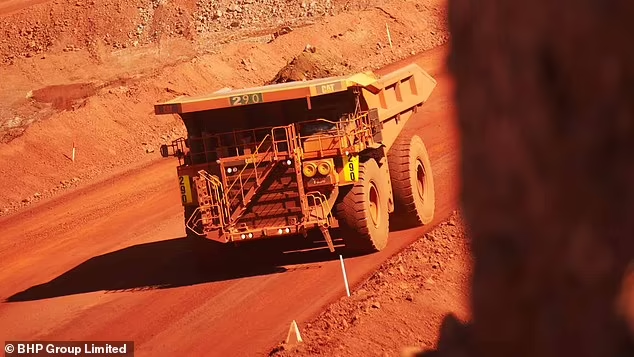
On the other hand, we are also a customer in the fact that we use them on our iron-ore line. You would have seen that our volumes on the export side have also increased because of better performance from Transnet.
SIMON BROWN: Yes, that’s about commodities. You mentioned that in H2 they’re going to be doing some maintenance. Maintenance is a good thing, make no mistake around that.
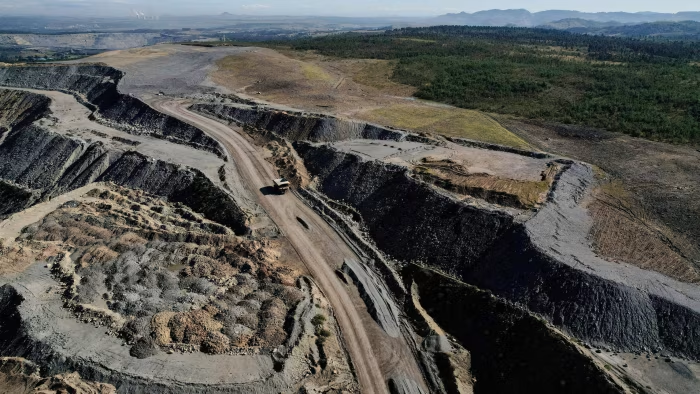
The bulk commodities – iron ore good; really good domestic sales there. That had a really good period. H2 may be a little harder with the ArcelorMittal SA shuttering of Newcastle, but [commodities are] doing very well.
ANDRIES VAN HEERDEN: That H2 will still be significantly better than H2 of last year is what we expect, but we had a bit of a windfall in the first half when there was a bit of an extension at Newcastle that we didn’t expect. We saw a bit of extra sales which now have fallen away. But the bulk of our sales have always been to Vanderbijlpark.
SIMON BROWN: Yes. In commodities the anthracite. The challenge here is the ferrochrome smelters locally being shuttered. I think you actually mentioned that as of August 2025 locally they are all shuttered.
ANDRIES VAN HEERDEN: Yes, that was a shock. Nkomati was a mine that we bought a few years ago. There was also a turnaround and it really, really started to perform very well in the first half of this year. We saw the culmination of all the turnaround activities actually getting to a point where the mine was performing very well. And then all of a sudden the domestic market fell away. So yes, that was a big pity.
The good thing about that is we now are putting extra effort into the international market and exporting from our mine. So when the ferrochrome smelters come back that will actually just make us stronger.
SIMON BROWN: The international? Is that the shipping into Mozambique?
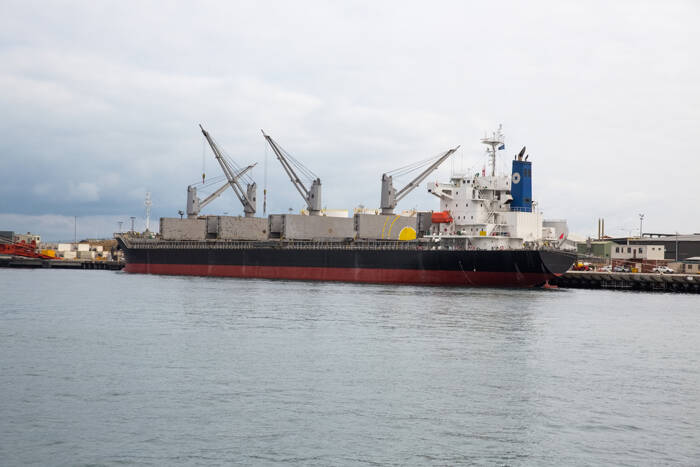
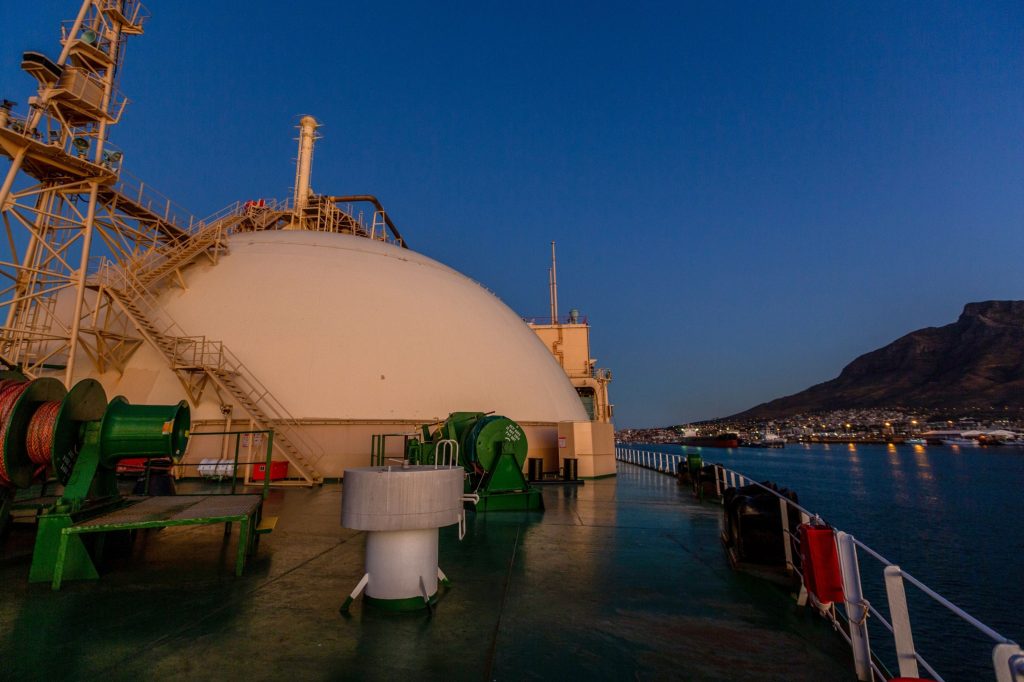
ANDRIES VAN HEERDEN: Yes. We export from Mozambique, from Maputo. That mostly goes to the Middle East and Europe.
SIMON BROWN: Nkomati – how is the mine operating? Obviously there are some challenges. You mentioned the ferrochrome smelters, but the mine operationally itself – how is that doing?
ANDRIES VAN HEERDEN: We were doing really, really well; we actually broke all-time records in the last couple of weeks before we had to start slowing down because of the fall in demand. Operationally [in] this business we’ve got a very, very strong team that we’ve built up over a couple of years. We have overcome all the known obstacles in terms of graves that had to be moved and power lines and EIAs [environmental impact assessments] and everything. So everything was sorted out when the market started declining and we hope to be able to ramp up very quickly as soon as the market returns.
SIMON BROWN: Cash flows– lots going to working capital. I’m looking at the headline numbers. I thought we’d see more into the cash flow, but then it occurred to me – I’m imagining a lot into working capital. You’re getting Lafarge operating and that will start to flow in maybe H2, maybe FY 2027.
ANDRIES VAN HEERDEN: We do expect in the second half of this year to see a significant improvement in cash generation. Comparing this first half of this year with the first half of last year already saw a big improvement. But, as you say, with the extra sales, especially on the domestic iron-ore market where we sell on a on a 60-day payment term, and the significant increase, that has taken quite a big investment in working capital. But that should stabilise and maybe even unwind a little in the second half. And we expect very strong cash flow in the second half.
SIMON BROWN: The other thing is debt. The debt is mostly around Lafarge. That will then help bring the debt down. You also talk around selling some smaller assets to reduce the debt burden.
ANDRIES VAN HEERDEN: Correct. We have been selling a couple of smaller assets that were not contributing to the bottom line and some of the very small assets would be much better suited to a small private business, so we’ve sold them.
We’re also in the process the disposal of assets that the Competition Commission required us to do, so that hopefully, if everything goes well, can be concluded in the second half of this year.
SIMON BROWN: A last question. A very small part but probably a big part of the future is your future materials and metals. Still small, but huge opportunity here. It’s generating some revenues, and we’re not absolutely going to knock it. How is that going? That really is a future bet in many senses.
ANDRIES VAN HEERDEN: Yes, that’s so true. We’ve actually done some really exciting R&D [research and development] work in the recent past. I think that this business two or three years from now can be a very, very serious contributor to our bottom line. But unfortunately it’s not a business that will just fire up immediately. It’s going to take us another two years or so to develop it to its full [capacity].
SIMON BROWN: We’ll leave it there. Andrias van Heerden, CEO of Afrimat, I appreciate the time.
Listen to the full MoneywebNOW podcast every weekday morning here.